*********************************************************************************************************************************************
MAY 2026 UPDATE
*********************************************************************************************************************************************
STU DAVIES
*********************************************************************************************************************************************
KIER HARDY
*********************************************************************************************************************************************
KARL CROWTHER
*********************************************************************************************************************************************
TIM SHACKLETON
*********************************************************************************************************************************************
GREG BROOKES
*********************************************************************************************************************************************
MIKE WHITCHURCH
*********************************************************************************************************************************************
*********************************************************************************************************************************************

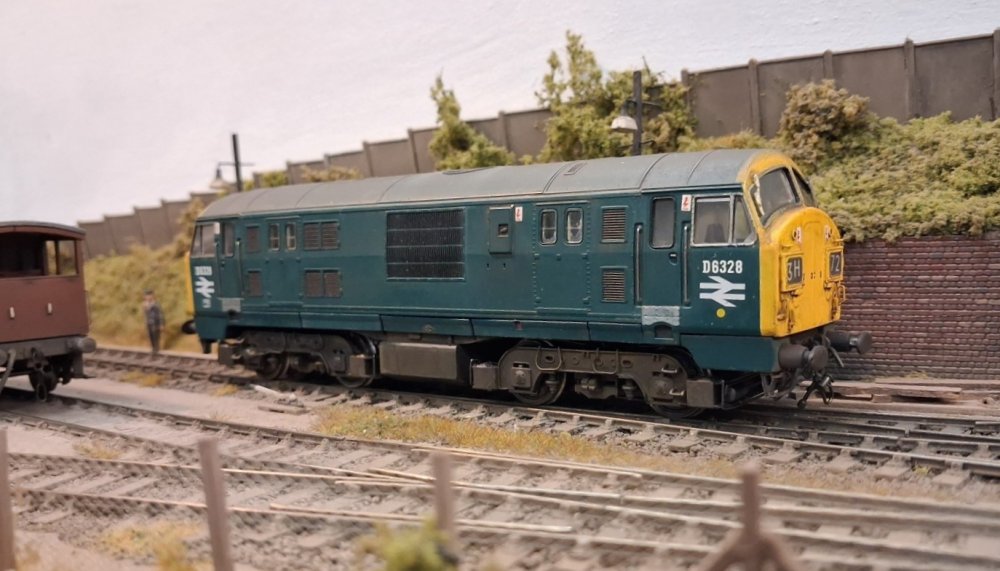 NBL Class 22 D6328. I finally decided I couldn't live with Dapol's attempt at Rail Blue so it's
had a repaint, re-number and light weathering. I don't usually get too bothered by factory
colours but Dapol (and Hornby) managed to get it badly wrong at times. Modellers have their
own preferences but for those of a certain age I still think Humbrol's 60s era HR135 is still
the best. Occasionally unopened pots still turn up.
NBL Class 22 D6328. I finally decided I couldn't live with Dapol's attempt at Rail Blue so it's
had a repaint, re-number and light weathering. I don't usually get too bothered by factory
colours but Dapol (and Hornby) managed to get it badly wrong at times. Modellers have their
own preferences but for those of a certain age I still think Humbrol's 60s era HR135 is still
the best. Occasionally unopened pots still turn up.
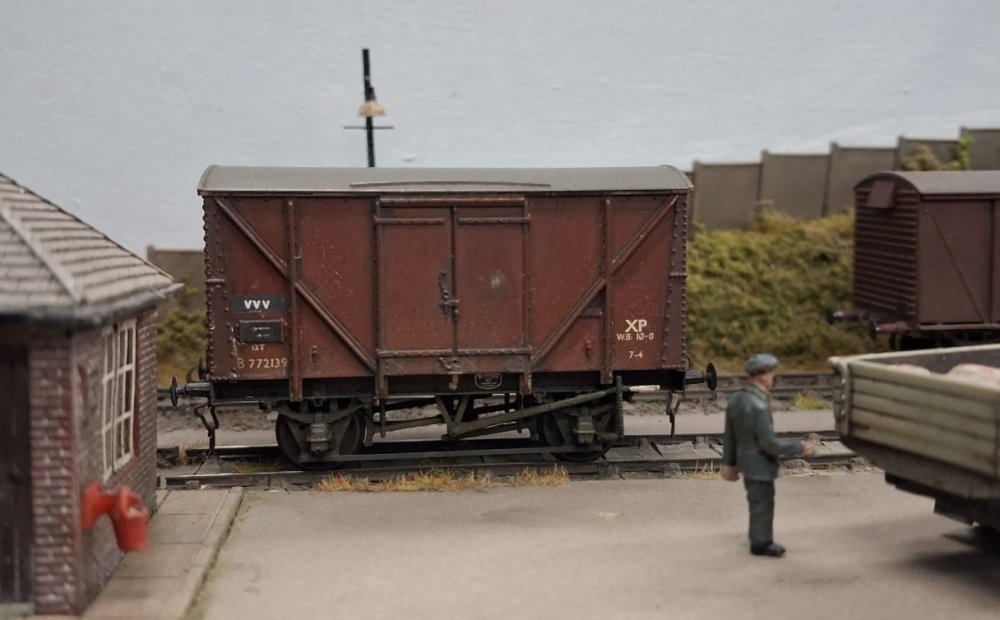 VVV 12t Van. Based on a photo, a Bachmann 12t van edges into the TOPS era with the addition of
a VVV code. A quick and easy update that adds variety. Decals from my carefully horded SMS sheets.
VVV 12t Van. Based on a photo, a Bachmann 12t van edges into the TOPS era with the addition of
a VVV code. A quick and easy update that adds variety. Decals from my carefully horded SMS sheets.
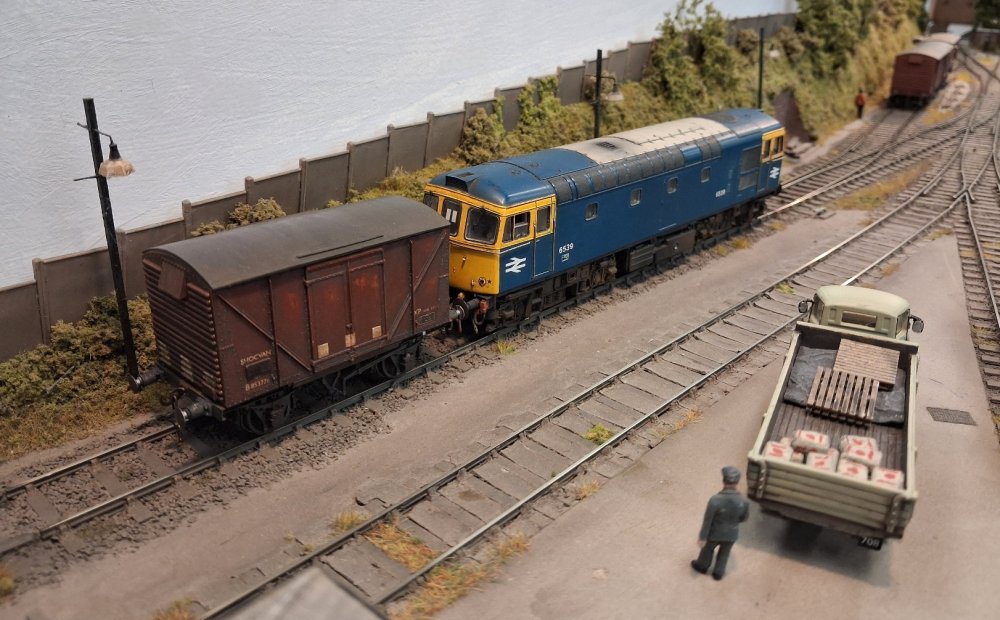 A Crompton shunts a Parkside Shocvan in the yard.
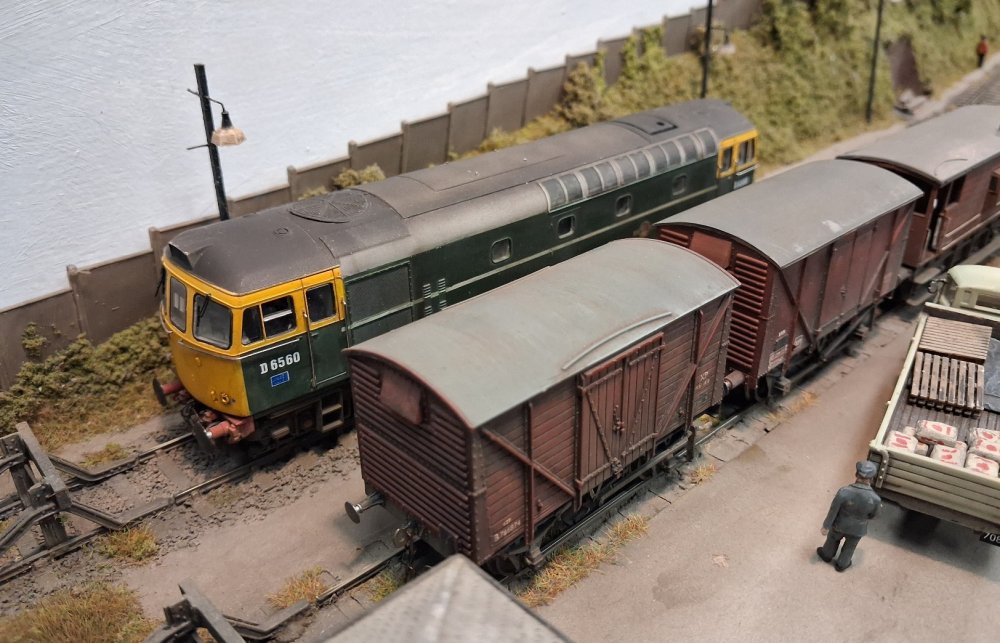 Here's a mk1 Heljan Crompton that I backdated a long time ago to the early exhaust arrangement.
Subsequently I found that that the last few standard Cromptons were built with the revised
arrangement. I'll keep half an eye out for a replacement body, but now Accurascale have teken
over we will see what happens.
Here's a mk1 Heljan Crompton that I backdated a long time ago to the early exhaust arrangement.
Subsequently I found that that the last few standard Cromptons were built with the revised
arrangement. I'll keep half an eye out for a replacement body, but now Accurascale have teken
over we will see what happens.

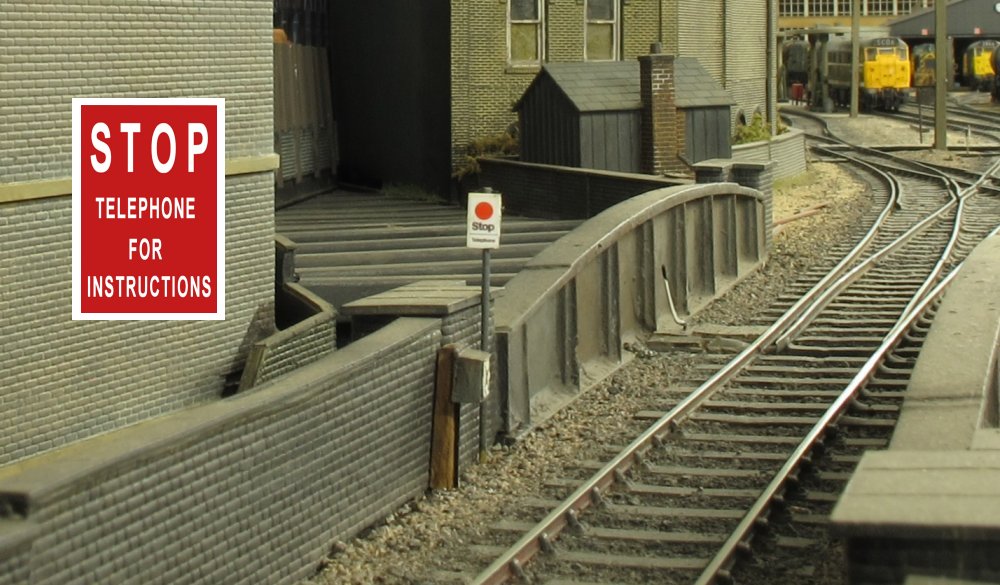 A recent comment on the Hornsey Road Motive Power Depot video -
One very small thing (from a retired driver), the 'stop' board with the red circle is slightly
too modern for a pre TOPS layout. It would have been a simple 'stop and telephone' instruction.
I spotted the phone on the wall! A depot of this size would have a sizeable set of shedmen with
a dedicated link, usually older drivers off the mainline and secondmen from a lower link
answering to a traction arranger / depot foreman. And there is always a Reliant Regal in the
carpark! Only thing missing from the walk back is a betting shop and chippy.
This anomoly is being addressed with the artwork (inset) having been
drawn and ready for printing.
A recent comment on the Hornsey Road Motive Power Depot video -
One very small thing (from a retired driver), the 'stop' board with the red circle is slightly
too modern for a pre TOPS layout. It would have been a simple 'stop and telephone' instruction.
I spotted the phone on the wall! A depot of this size would have a sizeable set of shedmen with
a dedicated link, usually older drivers off the mainline and secondmen from a lower link
answering to a traction arranger / depot foreman. And there is always a Reliant Regal in the
carpark! Only thing missing from the walk back is a betting shop and chippy.
This anomoly is being addressed with the artwork (inset) having been
drawn and ready for printing.
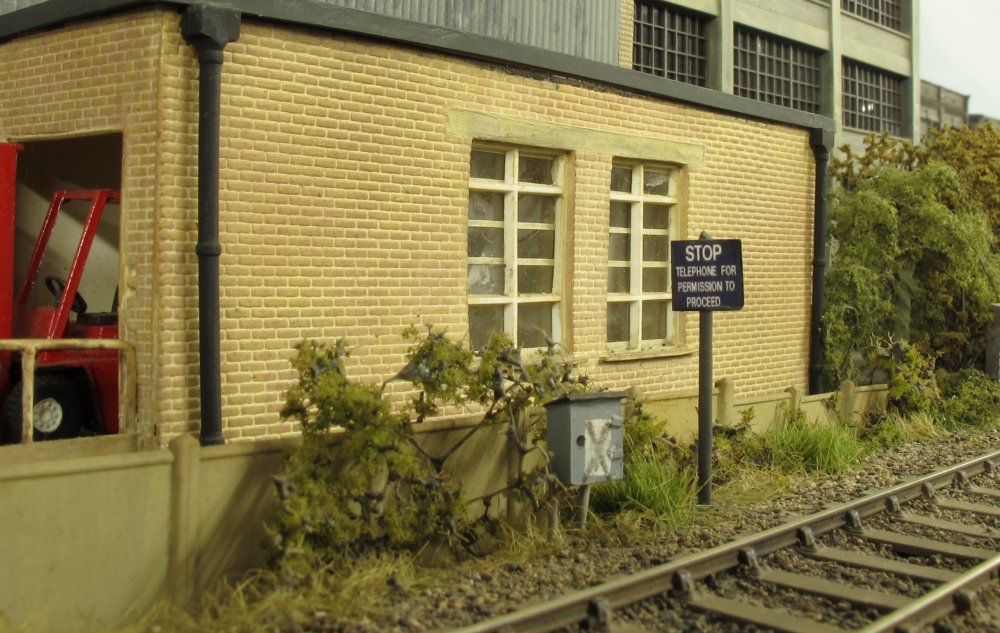 Whilst on the subject of depot signage, here's a selection of signs located around the depot
and associated tracks, the original artwork designed and drawn by Paul James (retired driver).
This is the location of the other depot access from the branch line...
Whilst on the subject of depot signage, here's a selection of signs located around the depot
and associated tracks, the original artwork designed and drawn by Paul James (retired driver).
This is the location of the other depot access from the branch line...
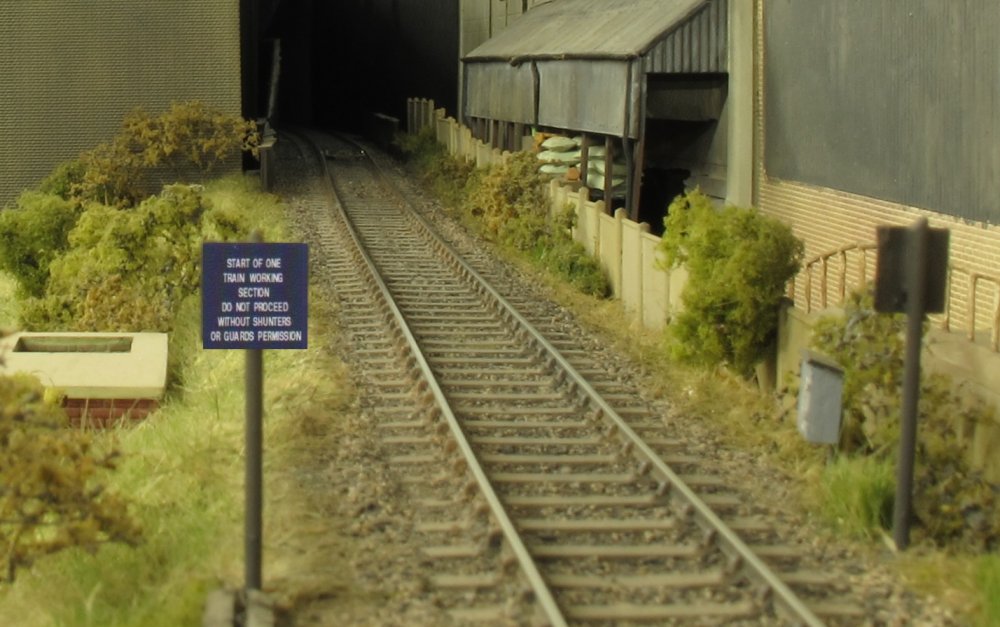 ... And looking the other way with the branch line ahead, this sign reads - START OF ONE TRAIN
WORKING SECTION. DO NOT PROCEED WITHOUT SHUNTERS OR GUARDS PERMISSION.
... And looking the other way with the branch line ahead, this sign reads - START OF ONE TRAIN
WORKING SECTION. DO NOT PROCEED WITHOUT SHUNTERS OR GUARDS PERMISSION.
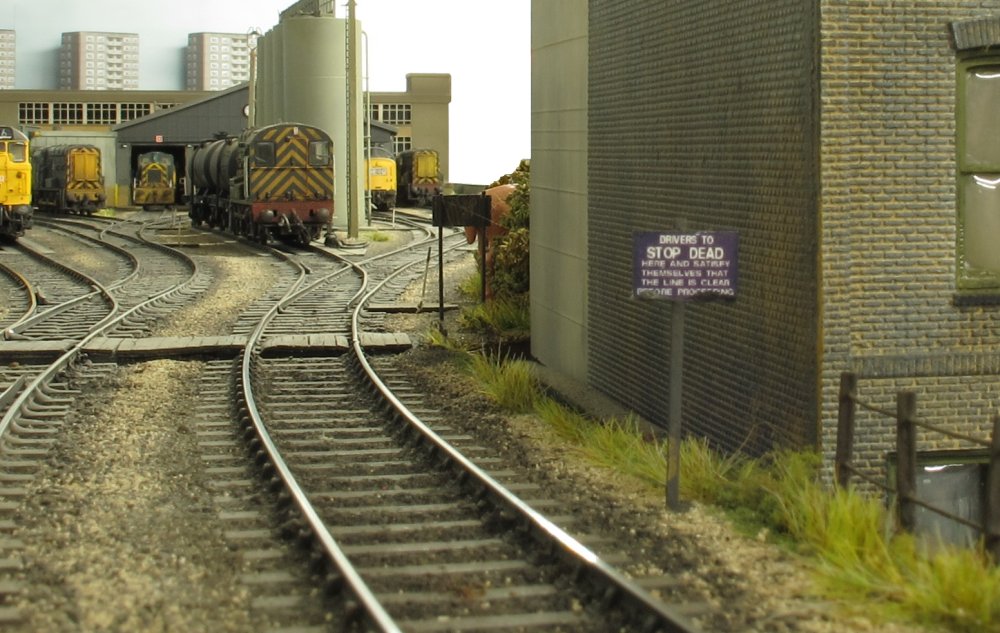 On entry to the light maintenance side of the depot and the stabling sidings, this sign reads
- DRIVERS TO STOP DEAD HERE AND SATISFY THEMSELVES THAT THE LINE IS CLEAR BEFORE PROCEEDING.
On entry to the light maintenance side of the depot and the stabling sidings, this sign reads
- DRIVERS TO STOP DEAD HERE AND SATISFY THEMSELVES THAT THE LINE IS CLEAR BEFORE PROCEEDING.
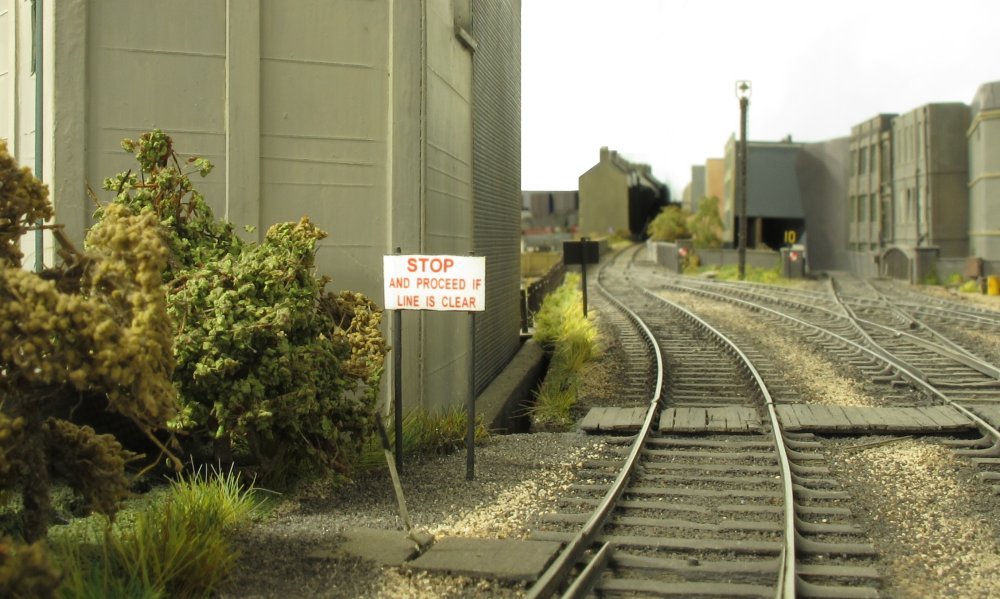 Looking in the opposite direction, this sign shows the exit from the light maintenance
side of the depot and stabling sidings.
Looking in the opposite direction, this sign shows the exit from the light maintenance
side of the depot and stabling sidings.
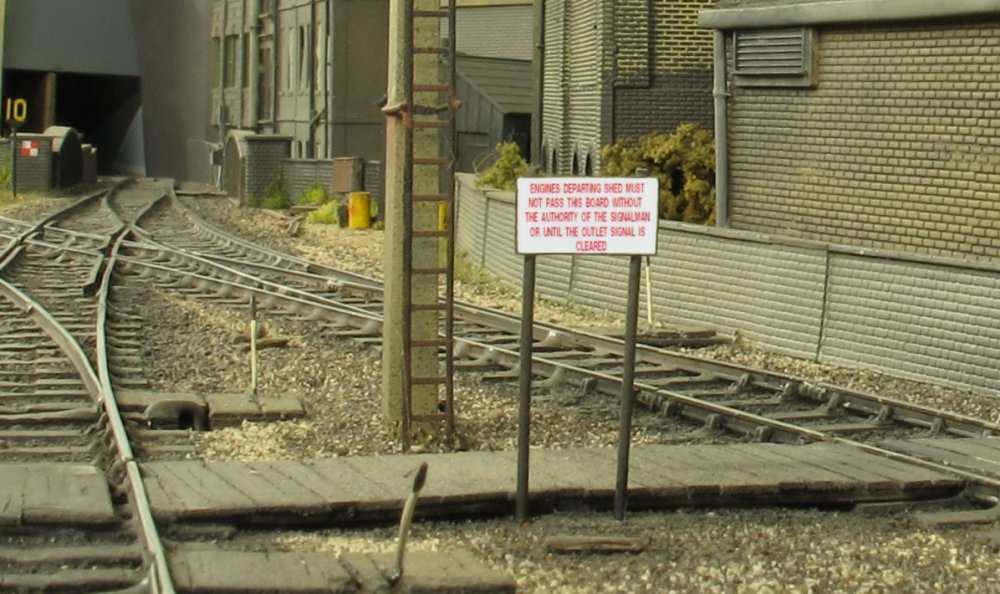 The exit from the fuelling point and route back to the station reads - ENGINES DEPARTING
SHED MUST NOT PASS THIS BOARD WITHOUT THE AUTHORITY OF THE SIGNALMAN OR UNTIL THE OUTLET
SIGNAL IS CLEARED.
The exit from the fuelling point and route back to the station reads - ENGINES DEPARTING
SHED MUST NOT PASS THIS BOARD WITHOUT THE AUTHORITY OF THE SIGNALMAN OR UNTIL THE OUTLET
SIGNAL IS CLEARED.
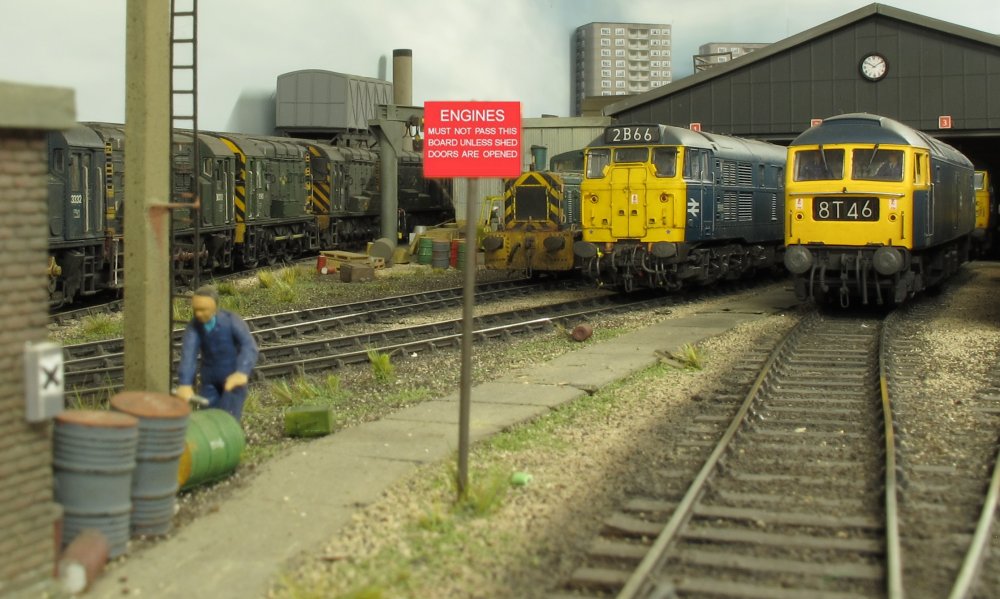 On the approach to the depot building - ENGINES MUST NOT PASS THIS BOARD UNLESS SHED
DOORS ARE OPENED.
On the approach to the depot building - ENGINES MUST NOT PASS THIS BOARD UNLESS SHED
DOORS ARE OPENED.
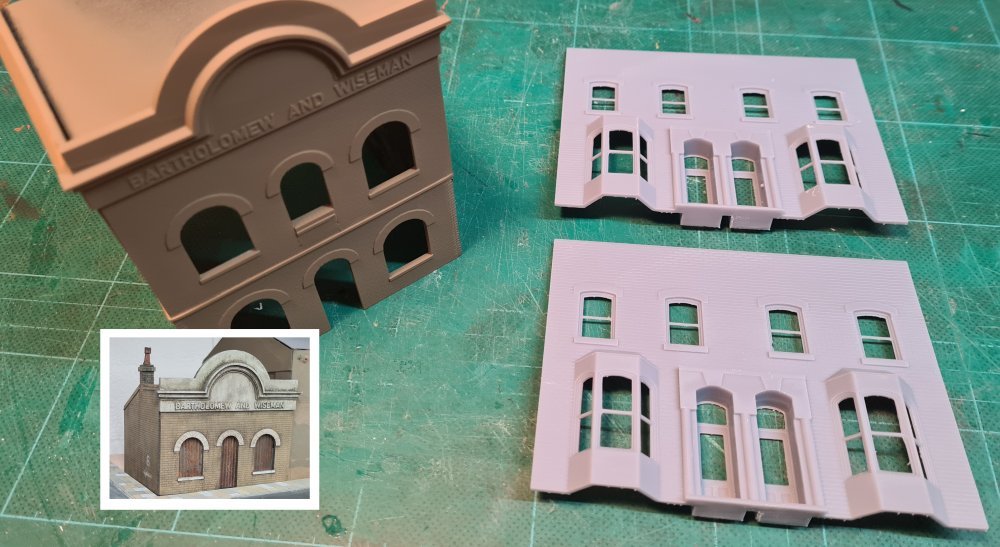 Further progress on the new East London layout in the form of background buildings. Jonny
Duffett has designed and printed these latest 3D structures. His design for a single storey
19th Century building derived from a photograph of it in Deptford. I've adapted it into a
double storey version using the unwanted rear section grafted underneath. Also a pair of
semi-detached houses are on the workbench awaiting attention. These designs are available
as a free download from
Thingiverse.
Further progress on the new East London layout in the form of background buildings. Jonny
Duffett has designed and printed these latest 3D structures. His design for a single storey
19th Century building derived from a photograph of it in Deptford. I've adapted it into a
double storey version using the unwanted rear section grafted underneath. Also a pair of
semi-detached houses are on the workbench awaiting attention. These designs are available
as a free download from
Thingiverse.
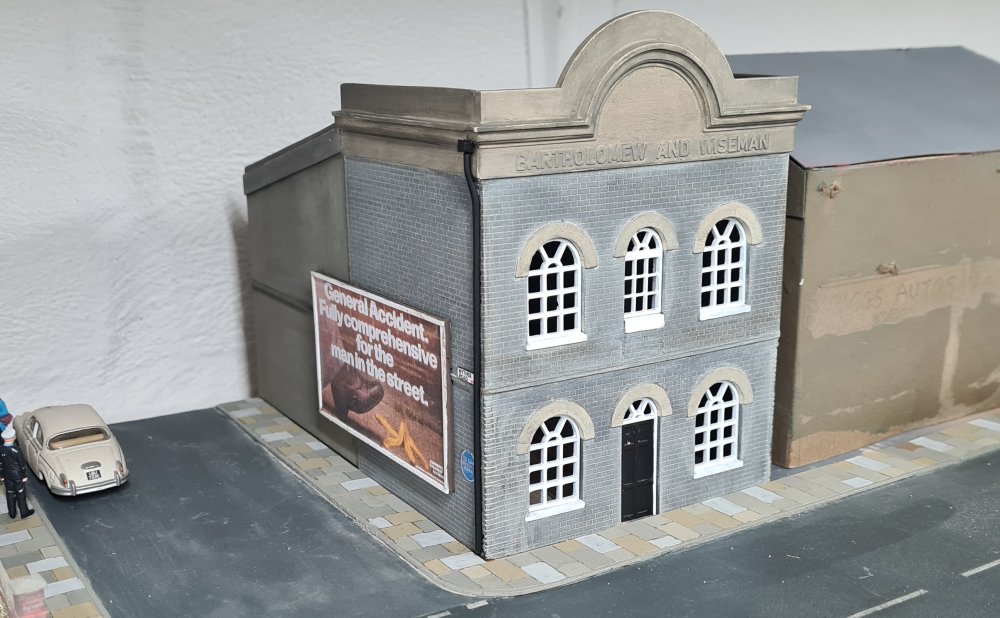 The B&W building is seen planted here, awaiting some signage and finishing.
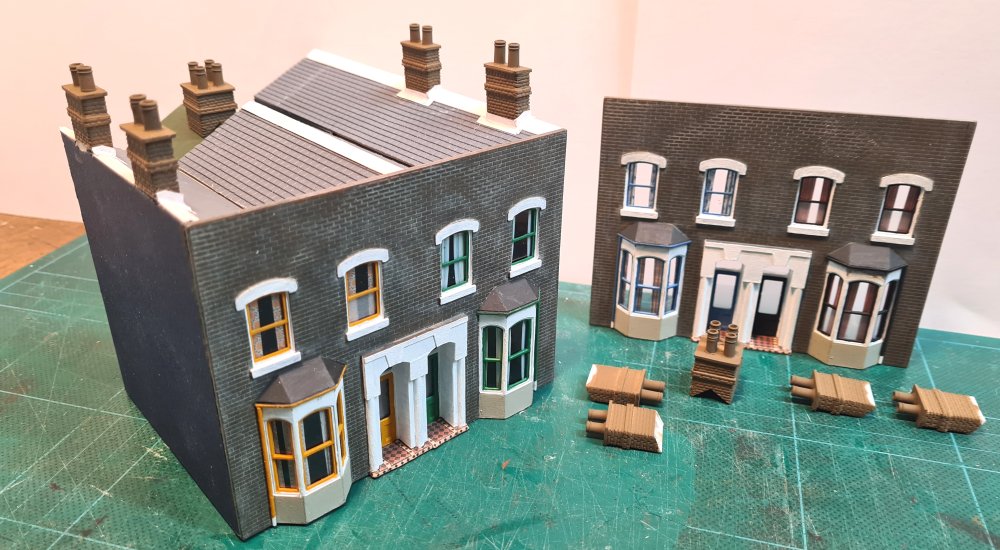 The semi-detached building facades have been painted, glazed and fitted with curtains. A
day was spent making chinmey stacks (with Jonny's 3D printed pots) which have been fitted
to the roof of one building, and in stock for the other. The sides will represent a rendered
finish, as they're close to each other and saves adding brickwork which wouldn't be seen anyway.
The semi-detached building facades have been painted, glazed and fitted with curtains. A
day was spent making chinmey stacks (with Jonny's 3D printed pots) which have been fitted
to the roof of one building, and in stock for the other. The sides will represent a rendered
finish, as they're close to each other and saves adding brickwork which wouldn't be seen anyway.
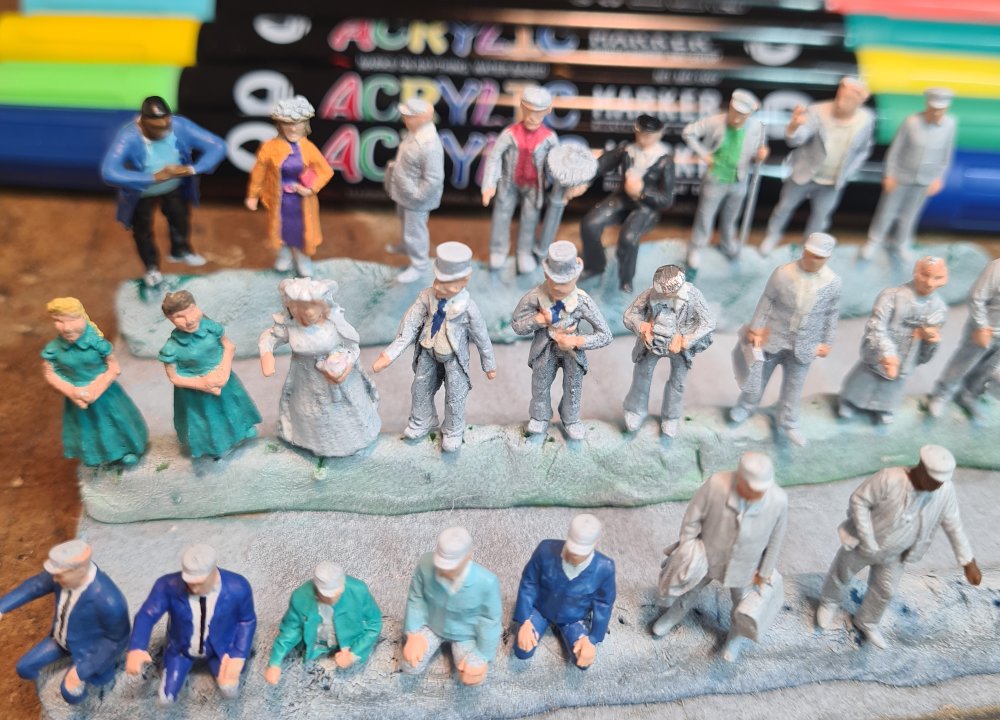 Another side project has been some figure painting using acrylic paint pens from Magi and others
by Artecho. Their use is slightly limited, but the bolder colours save a lot of brush painting.
The figures are a mix of 3D printed, proprietry plastic and whitemetal from a variety of sources.
Another side project has been some figure painting using acrylic paint pens from Magi and others
by Artecho. Their use is slightly limited, but the bolder colours save a lot of brush painting.
The figures are a mix of 3D printed, proprietry plastic and whitemetal from a variety of sources.
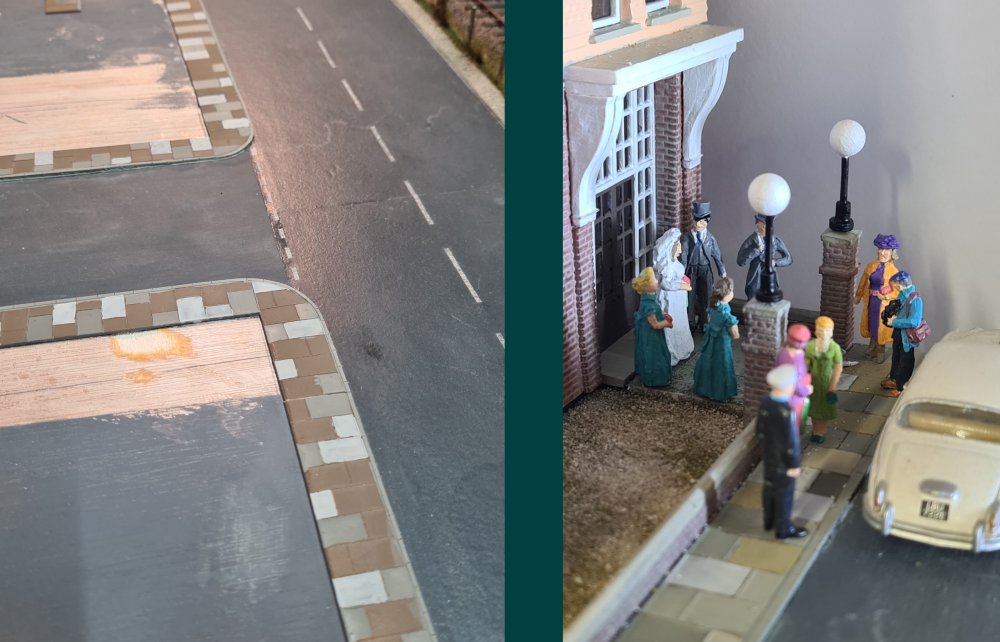 The paving slabs have been treated to different shades of brown and grey, and once given a light
wash will show a subtle variety of colour. The wedding party are seen having their reception at the
Tate Institute during a photograph session outside. For now, a Jaguar car has been borrowed from the
car lot until something else comes along, facing away to hide the price stickers in the windscreen.
The paving slabs have been treated to different shades of brown and grey, and once given a light
wash will show a subtle variety of colour. The wedding party are seen having their reception at the
Tate Institute during a photograph session outside. For now, a Jaguar car has been borrowed from the
car lot until something else comes along, facing away to hide the price stickers in the windscreen.

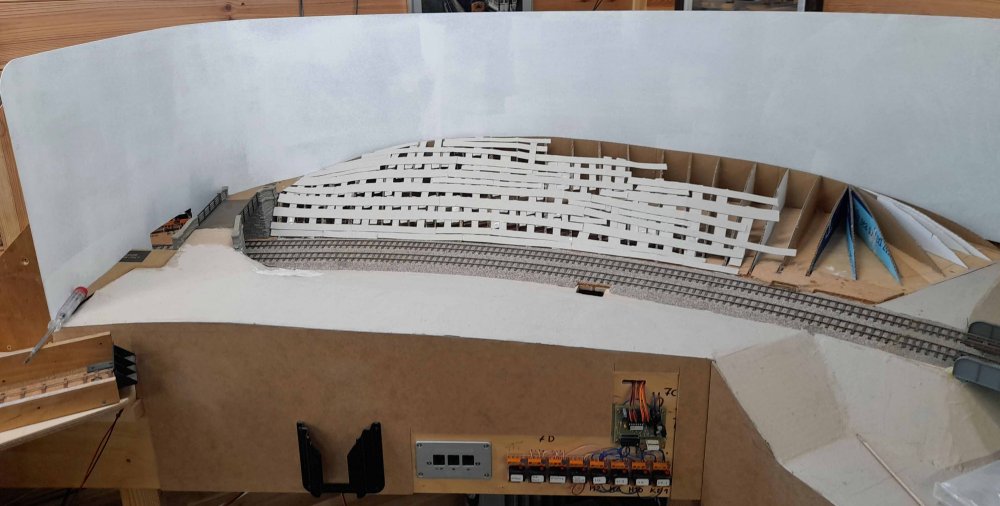 With the viaduct installed, work has now progressed onto the adjoining hillside. Fundamental
to this has been the decision to form the curved backscene from 0.8mm Aluminium sheet, an
idea I got from Paul Bambrick. I have to say this has worked even better than expected. I
got mine from Metals4u, where you can specify any required size. Before priming it first
needs to be roughed with something like 150 grit sandpaper and then curved to something like
the required shape. Painting done with a mini-roller, first priming with a metal primer,
then a top coat comprising, first a base of while emulsion, followed by the sky colour.
I’m so impressed with the results, all the remaining backscenes will be done this way, and
it doesn’t work out that much more expensive than wood. With the backscene in position, the
outline of the hillside was made using packing box card profile pieces with cereal box card
strips hot glued on top. I felt this would be a lot less messy than using expanded polystyrene foam.
With the viaduct installed, work has now progressed onto the adjoining hillside. Fundamental
to this has been the decision to form the curved backscene from 0.8mm Aluminium sheet, an
idea I got from Paul Bambrick. I have to say this has worked even better than expected. I
got mine from Metals4u, where you can specify any required size. Before priming it first
needs to be roughed with something like 150 grit sandpaper and then curved to something like
the required shape. Painting done with a mini-roller, first priming with a metal primer,
then a top coat comprising, first a base of while emulsion, followed by the sky colour.
I’m so impressed with the results, all the remaining backscenes will be done this way, and
it doesn’t work out that much more expensive than wood. With the backscene in position, the
outline of the hillside was made using packing box card profile pieces with cereal box card
strips hot glued on top. I felt this would be a lot less messy than using expanded polystyrene foam.
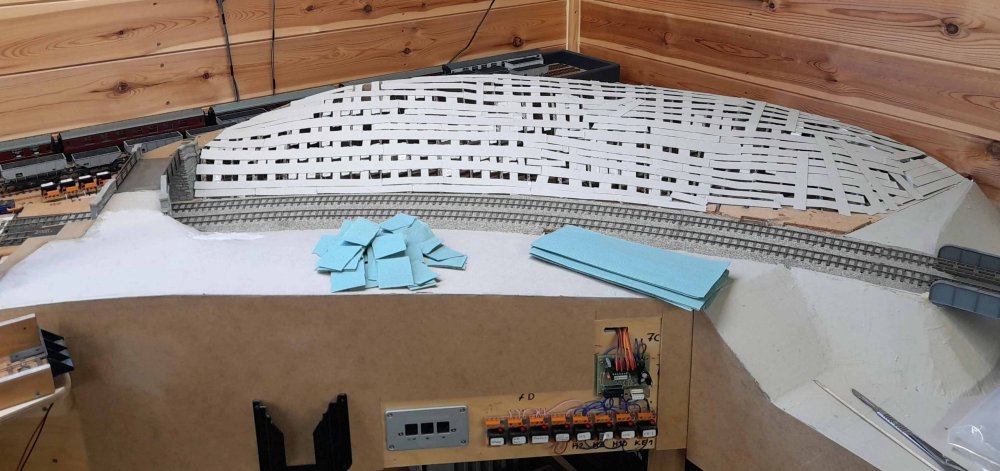 All the card now fixed, ready to start the ground surface. Backscene removed to stop it from
getting messed up. You can see the paper towels it’s going to initially get covered with.
All the card now fixed, ready to start the ground surface. Backscene removed to stop it from
getting messed up. You can see the paper towels it’s going to initially get covered with.
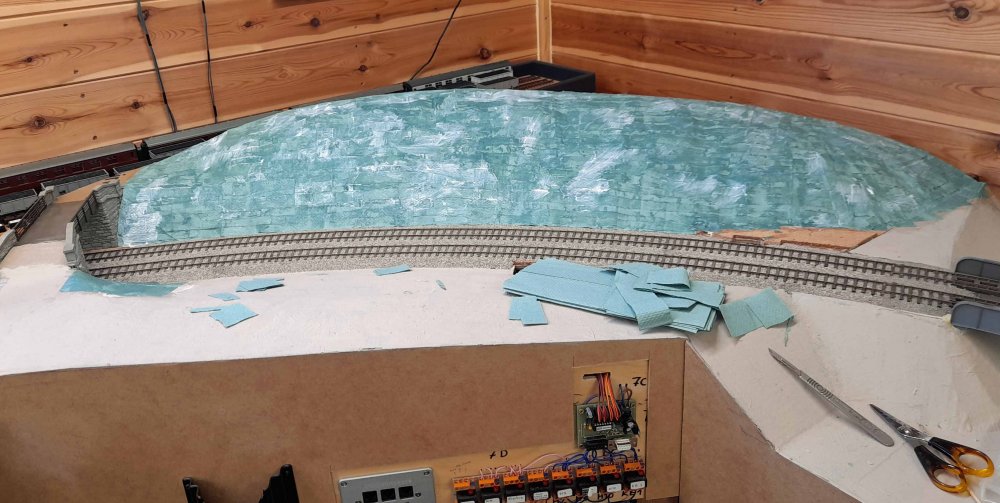 As with the earlier work, the first layer of paper towel was glued down with a generous coating
of neat PVA (Febond) brushed on. Looks a real mess at this point – very ‘lumpy’.
As with the earlier work, the first layer of paper towel was glued down with a generous coating
of neat PVA (Febond) brushed on. Looks a real mess at this point – very ‘lumpy’.
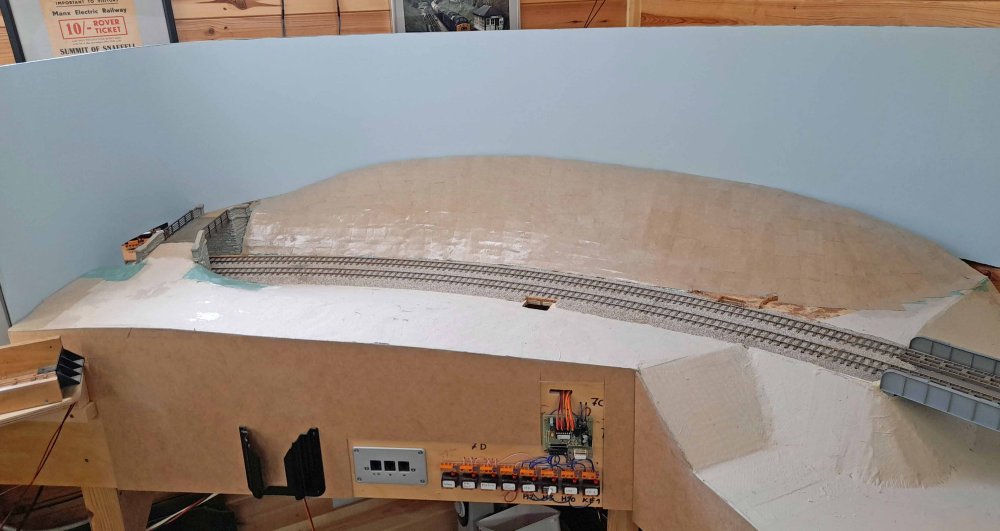 With the first layer dried, a second layer of brown paper has been added in similar fashion,
which makes it look a lot smoother. The different type of paper was to ensure everything got
a second covering. However, still quite obvious undulations are present and the plan is to
coat with a thin layer of papier mâché pulp – so will hopefully eport next month on results of this….
With the first layer dried, a second layer of brown paper has been added in similar fashion,
which makes it look a lot smoother. The different type of paper was to ensure everything got
a second covering. However, still quite obvious undulations are present and the plan is to
coat with a thin layer of papier mâché pulp – so will hopefully eport next month on results of this….
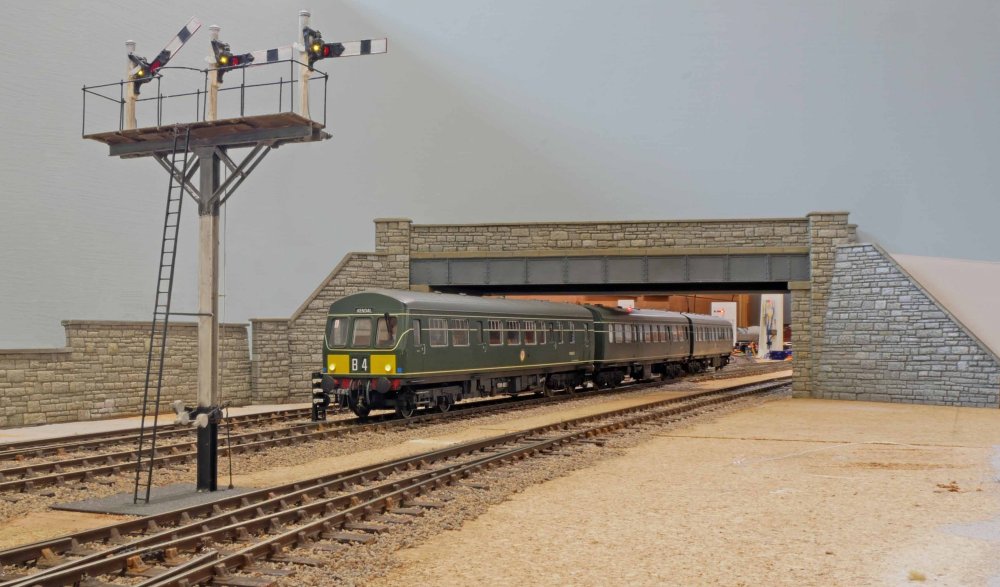 At a recent operating session, a Class 101 DMU arrives at Kendal 08.25 with working 2L86 the
07.44 Carnforth-Kendal Castle. This will then form 1N53 the 09.00 to Leeds City North.
At a recent operating session, a Class 101 DMU arrives at Kendal 08.25 with working 2L86 the
07.44 Carnforth-Kendal Castle. This will then form 1N53 the 09.00 to Leeds City North.

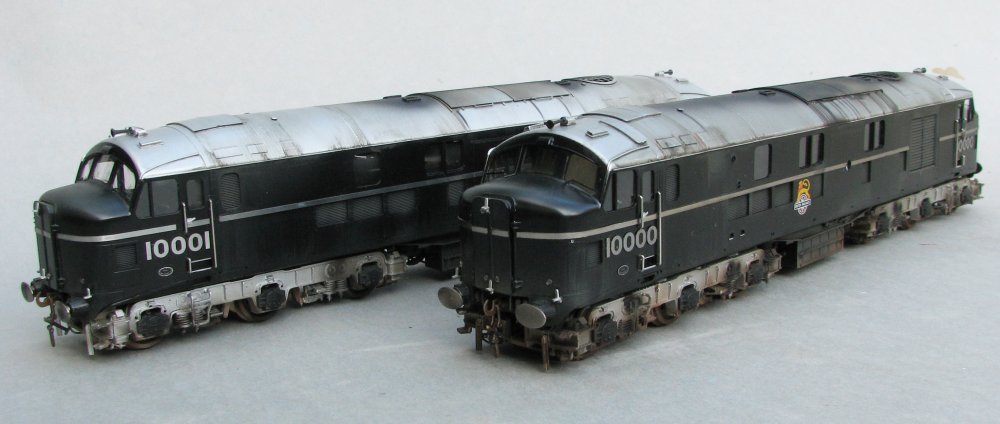 Like everyone else, I’m massively impressed by what I see these days from the likes of Cavalex
and Sutton Locomotive Works but, whether the doting fanboys of RMWeb realise it or not, there’s
long been a level of RTR that goes beyond this! More than a decade before we became used to
buying beautifully detailed, big-ticket diesels in stylish designer boxes, a small online
operation in the North of England had done exactly this in a bid to push the boundaries of
finescale diesel modelling further than they’d ever been pushed before.
Like everyone else, I’m massively impressed by what I see these days from the likes of Cavalex
and Sutton Locomotive Works but, whether the doting fanboys of RMWeb realise it or not, there’s
long been a level of RTR that goes beyond this! More than a decade before we became used to
buying beautifully detailed, big-ticket diesels in stylish designer boxes, a small online
operation in the North of England had done exactly this in a bid to push the boundaries of
finescale diesel modelling further than they’d ever been pushed before.
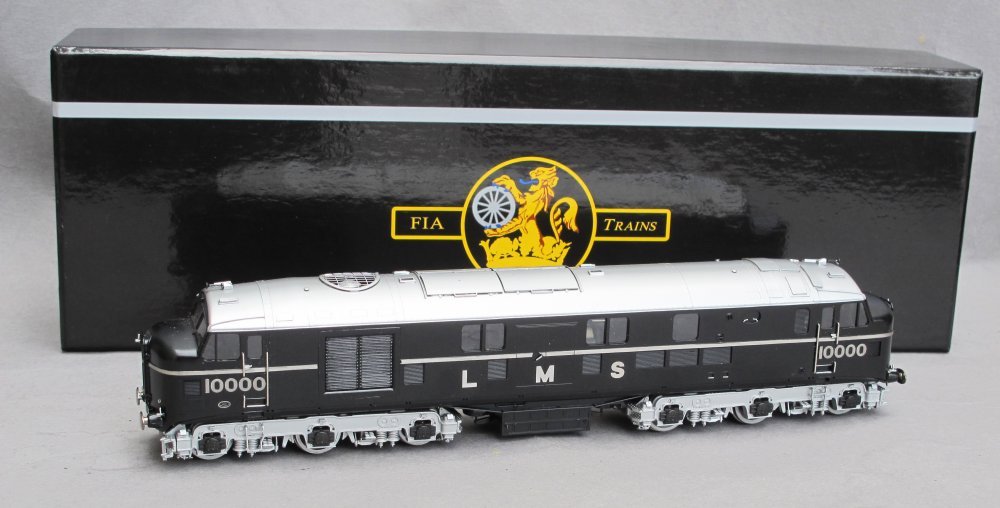 The driving force behind FIA Trains was a Lancashire businessman called Marc Knowle. He had an
impressive home layout in OO and more significantly already ran a company importing and
distributing high-end toys. Sensing there was both a profit and a point to be made, around 20
years ago he had the idea of expanding into trains, specifically to bring to the UK market the
kind of quality the US had long enjoyed with its expensive Korean brass imports. Through
intermediaries he contacted Ajin Precision – the leading Korean manufacturer and the go-to
supplier for brands like Overland Models – and arranged for them to produce different batches
of the LMS ‘twins’ 10000/1 to a quality (and a price) hitherto unknown over here. The results
were breathtaking. There was nothing by way of electronics, sound, DCC or even onboard lights
but back in 2007 these beautifully engineered models still retailed for a hefty £479.99 – the
equivalent of around £750 today. Just 402 models were produced of each ‘Twin’, with multiple livery options.
The driving force behind FIA Trains was a Lancashire businessman called Marc Knowle. He had an
impressive home layout in OO and more significantly already ran a company importing and
distributing high-end toys. Sensing there was both a profit and a point to be made, around 20
years ago he had the idea of expanding into trains, specifically to bring to the UK market the
kind of quality the US had long enjoyed with its expensive Korean brass imports. Through
intermediaries he contacted Ajin Precision – the leading Korean manufacturer and the go-to
supplier for brands like Overland Models – and arranged for them to produce different batches
of the LMS ‘twins’ 10000/1 to a quality (and a price) hitherto unknown over here. The results
were breathtaking. There was nothing by way of electronics, sound, DCC or even onboard lights
but back in 2007 these beautifully engineered models still retailed for a hefty £479.99 – the
equivalent of around £750 today. Just 402 models were produced of each ‘Twin’, with multiple livery options.
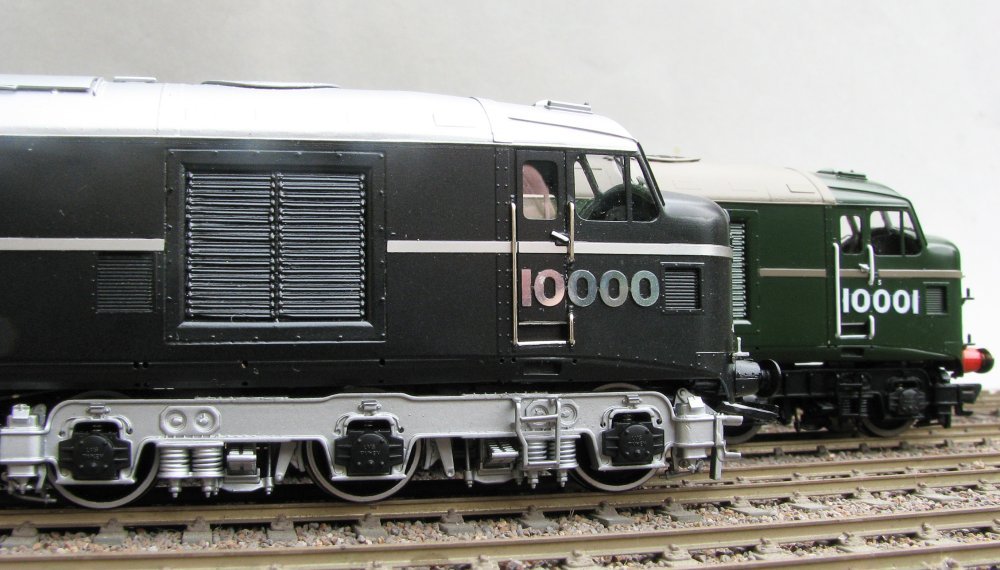 I became involved in the project at the stage when deliveries were starting and Marc wanted me
to review the models for MRJ – he’d sent me this pair of pilot models to play with. Then it all
happened very fast - various friends from the Retford group were early purchasers and while
massively impressed they'd found problems, as had other customers. I think it was only the
early batches that were affected, but the returns started coming back. With unsaleable locos
cluttering up the warehouse and more due in from Korea a note of panic began to sound. Ajin
sat on their hands so we offered to help the guy find a solution – Marc was a good bloke and a
sound businessman but he was neither an engineer nor much of a hands-on craft modeller.
I became involved in the project at the stage when deliveries were starting and Marc wanted me
to review the models for MRJ – he’d sent me this pair of pilot models to play with. Then it all
happened very fast - various friends from the Retford group were early purchasers and while
massively impressed they'd found problems, as had other customers. I think it was only the
early batches that were affected, but the returns started coming back. With unsaleable locos
cluttering up the warehouse and more due in from Korea a note of panic began to sound. Ajin
sat on their hands so we offered to help the guy find a solution – Marc was a good bloke and a
sound businessman but he was neither an engineer nor much of a hands-on craft modeller.
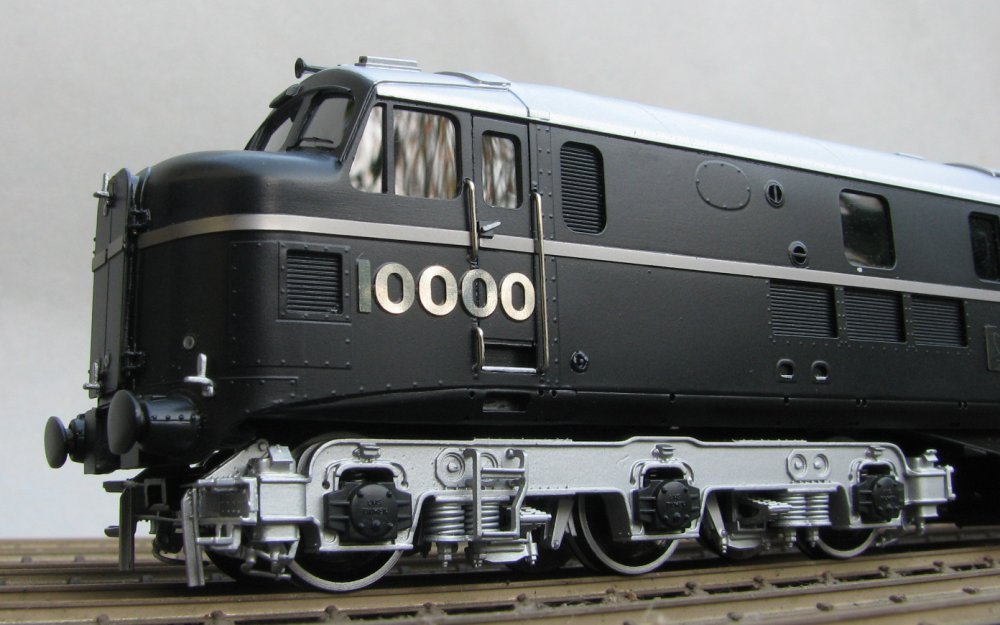 The detailing of the FIA twins was great, the accuracy exceptional, the finish remarkable. The
main problem was that, as supplied, they wouldn't go round curves tighter than about 3ft radius
– forced tight against the railhead, the leading wheelset would pop up and drop off the track.
The bogie wheelbase of the real thing was particularly long, just four inches short of 16ft
and only a couple of inches more than the Alco PA that had the biggest wheelbase of any American
diesel – Ajin had been successfully manufacturing models of these units for years, and 10000/1
used many of the same drive-train components. The problem was that the Alco was HO scale but
the LMS diesel, in 4mm, had a bogie wheelbase almost half an inch longer and consequently
it got stuck on curves.
The detailing of the FIA twins was great, the accuracy exceptional, the finish remarkable. The
main problem was that, as supplied, they wouldn't go round curves tighter than about 3ft radius
– forced tight against the railhead, the leading wheelset would pop up and drop off the track.
The bogie wheelbase of the real thing was particularly long, just four inches short of 16ft
and only a couple of inches more than the Alco PA that had the biggest wheelbase of any American
diesel – Ajin had been successfully manufacturing models of these units for years, and 10000/1
used many of the same drive-train components. The problem was that the Alco was HO scale but
the LMS diesel, in 4mm, had a bogie wheelbase almost half an inch longer and consequently
it got stuck on curves.
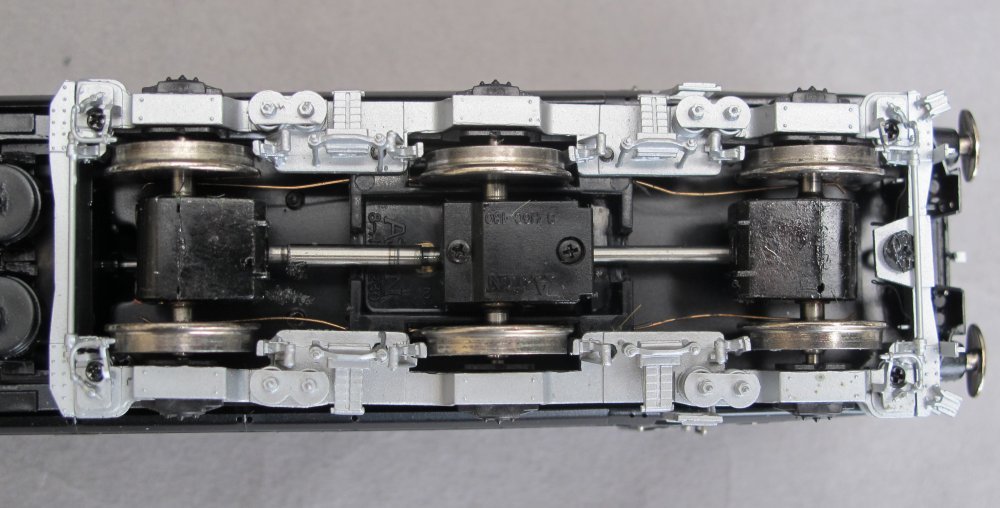 The back-to-backs were fine, the locos ran beautifully on straight and gently curved track but
it didn’t help that while the axle boxes were sprung, as Korean brass locomotives generally are,
there was little or no sideplay because each bogie had six-wheel rigid drive, with gearboxes
linked by a common drive shaft – an A1A-A1A arrangement might have been better. Eventually I
think it was Pete Hill who, while converting his 10001 to EM Gauge, realised the standard Ajin
wheels were fine on an HO scale loco on HO track but when transposed on to a 4mm loco with
such a huge wheelbase they rode up over the outer rail on curves. He swapped the Ajin wheels
for Alan Gibson ‘Deltic’ wheels and all was fine. The full story is in Pete’s MRJ article in issue 182.
The back-to-backs were fine, the locos ran beautifully on straight and gently curved track but
it didn’t help that while the axle boxes were sprung, as Korean brass locomotives generally are,
there was little or no sideplay because each bogie had six-wheel rigid drive, with gearboxes
linked by a common drive shaft – an A1A-A1A arrangement might have been better. Eventually I
think it was Pete Hill who, while converting his 10001 to EM Gauge, realised the standard Ajin
wheels were fine on an HO scale loco on HO track but when transposed on to a 4mm loco with
such a huge wheelbase they rode up over the outer rail on curves. He swapped the Ajin wheels
for Alan Gibson ‘Deltic’ wheels and all was fine. The full story is in Pete’s MRJ article in issue 182.
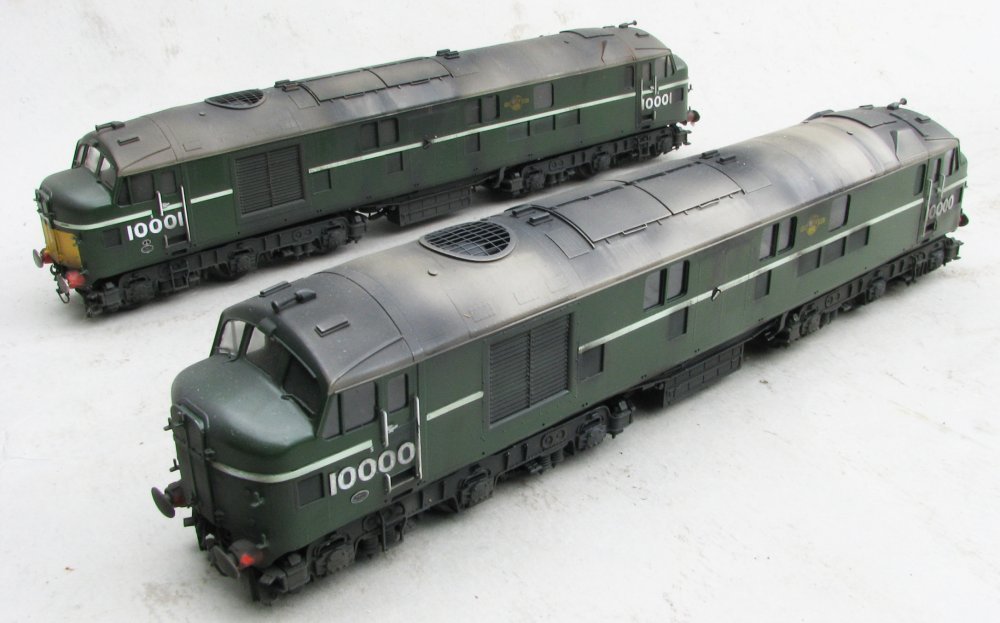 A free exchange scheme was quickly arranged and the spec was changed for later batches. However
by then the damage had been done and FIA's reputation was shot. I'd been having serious
discussions with Marc Knowle about future developments - a Western would have been next on
the agenda, probably to be followed by a Deltic, but neither got very far before he pulled
the plug and went back to toy cars and games. That was great shame, because in my view nothing
looks more like thin sheet metal than thin sheet metal and the FIA trains ‘Twins’ captured this
quality to perfection.
A free exchange scheme was quickly arranged and the spec was changed for later batches. However
by then the damage had been done and FIA's reputation was shot. I'd been having serious
discussions with Marc Knowle about future developments - a Western would have been next on
the agenda, probably to be followed by a Deltic, but neither got very far before he pulled
the plug and went back to toy cars and games. That was great shame, because in my view nothing
looks more like thin sheet metal than thin sheet metal and the FIA trains ‘Twins’ captured this
quality to perfection.
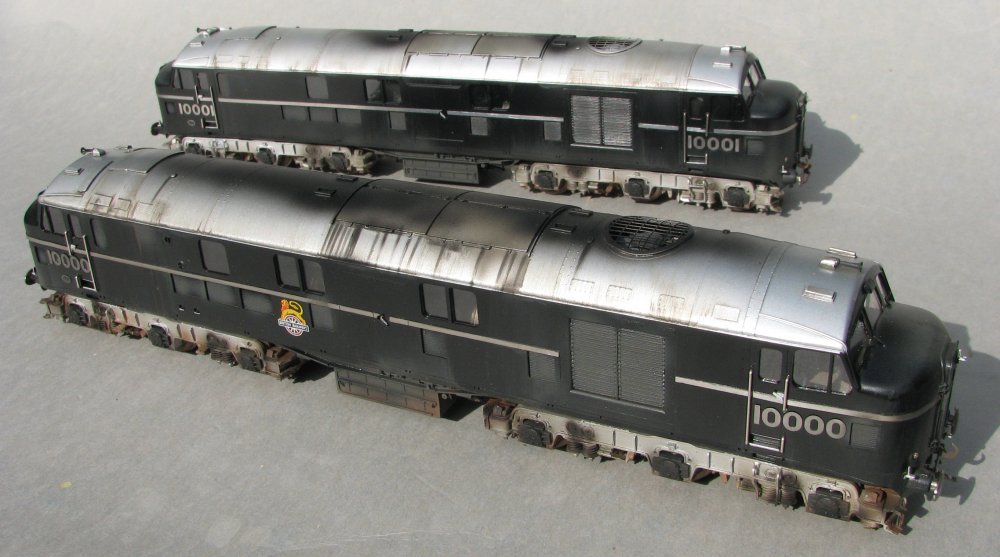 In recent years I've collected quite a few brass US-outline models, many of them built like
the twins by Ajin Precision on behalf of its main US client, Overland Models (OMI). Even with
models from the 1980s the quality of build, detail and operation is exceptional and while custom
brass isn't the force it once was, the standard now coming from Division Point and other new
kids on the block is stratospheric, as is the price. There are European manufacturers such as
Micro-Metakit working to similar protocols but the idea has never really caught on in the UK,
probably because while our skills at building our own models from scratch or from kits are
(or were) very much higher than anyone else’s, we simply lack the kind of incomes necessary to
join the custom-brass club! Nevertheless I’d like to think that the FIA Trains ‘Twins’ – and
the UK finescale movement in general – helped show conservative British manufacturers just what
could (and should) be done. Decades later, we’re finally reaping the rewards . . .
In recent years I've collected quite a few brass US-outline models, many of them built like
the twins by Ajin Precision on behalf of its main US client, Overland Models (OMI). Even with
models from the 1980s the quality of build, detail and operation is exceptional and while custom
brass isn't the force it once was, the standard now coming from Division Point and other new
kids on the block is stratospheric, as is the price. There are European manufacturers such as
Micro-Metakit working to similar protocols but the idea has never really caught on in the UK,
probably because while our skills at building our own models from scratch or from kits are
(or were) very much higher than anyone else’s, we simply lack the kind of incomes necessary to
join the custom-brass club! Nevertheless I’d like to think that the FIA Trains ‘Twins’ – and
the UK finescale movement in general – helped show conservative British manufacturers just what
could (and should) be done. Decades later, we’re finally reaping the rewards . . .

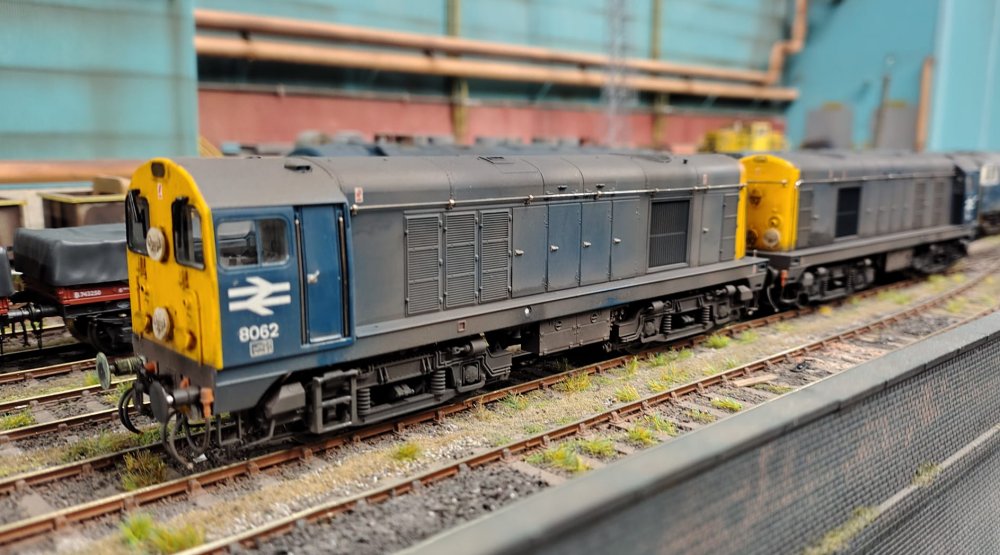 New into the fleet are a pair of Class 20s, 8062 and 8042, D16 Nottingham Division allocated.
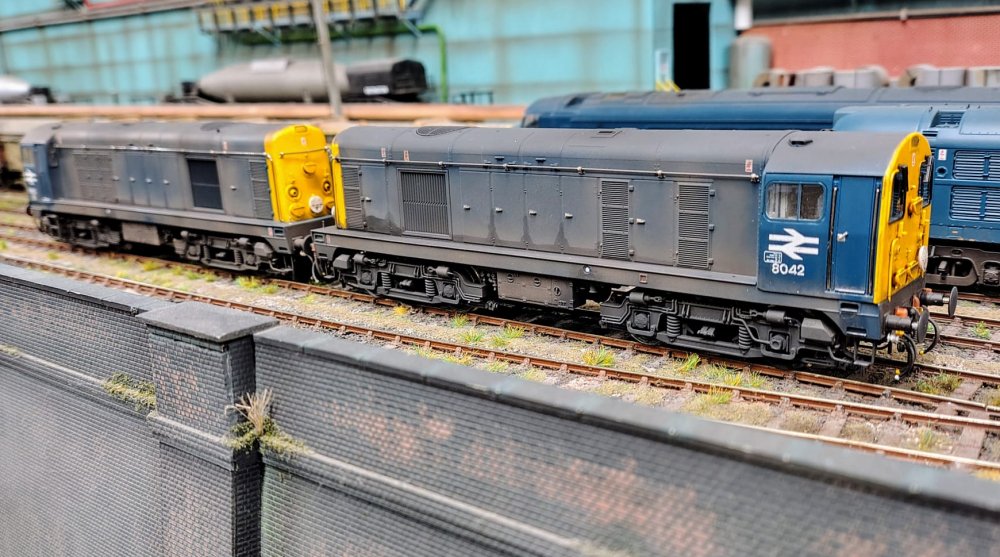 Both Bachmann models are fitted with Legomanbiffo sound decoders.
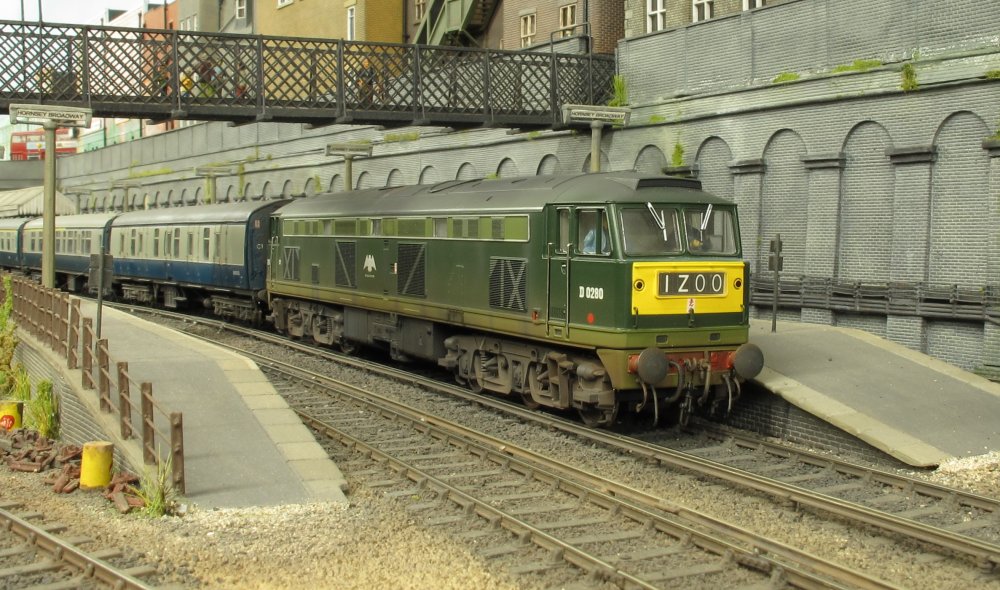
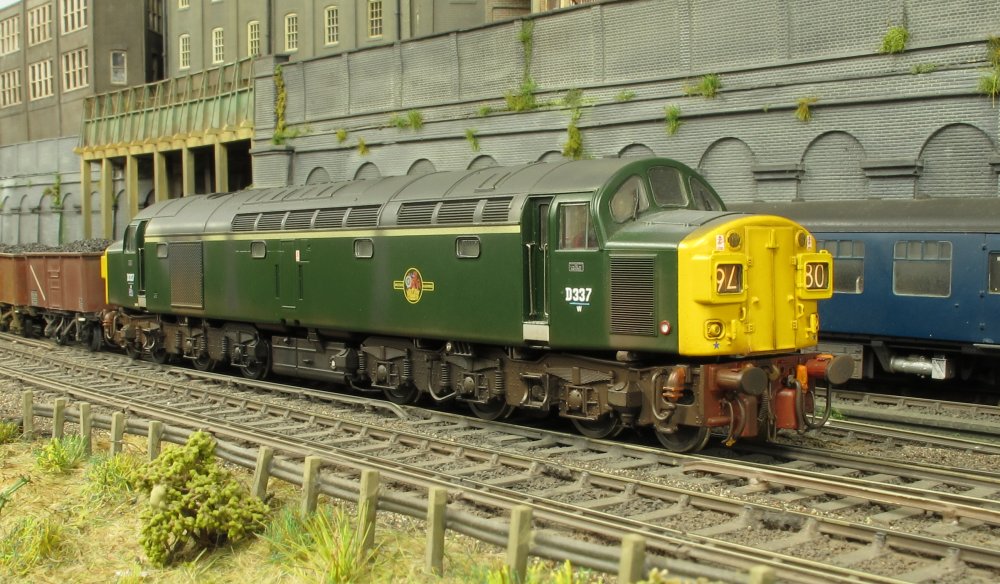 Long term resident D337 has also recently been fitted with a Legomanbiffo sound decoder,
captured here on test at Hornsey Broadway.
Long term resident D337 has also recently been fitted with a Legomanbiffo sound decoder,
captured here on test at Hornsey Broadway.
 Another locomotive which has been in the fleet for a number of years has been upgraded and
improved sand boxes fitted. Now fitted with a Jamie Goodman sound decoder.
Another locomotive which has been in the fleet for a number of years has been upgraded and
improved sand boxes fitted. Now fitted with a Jamie Goodman sound decoder.

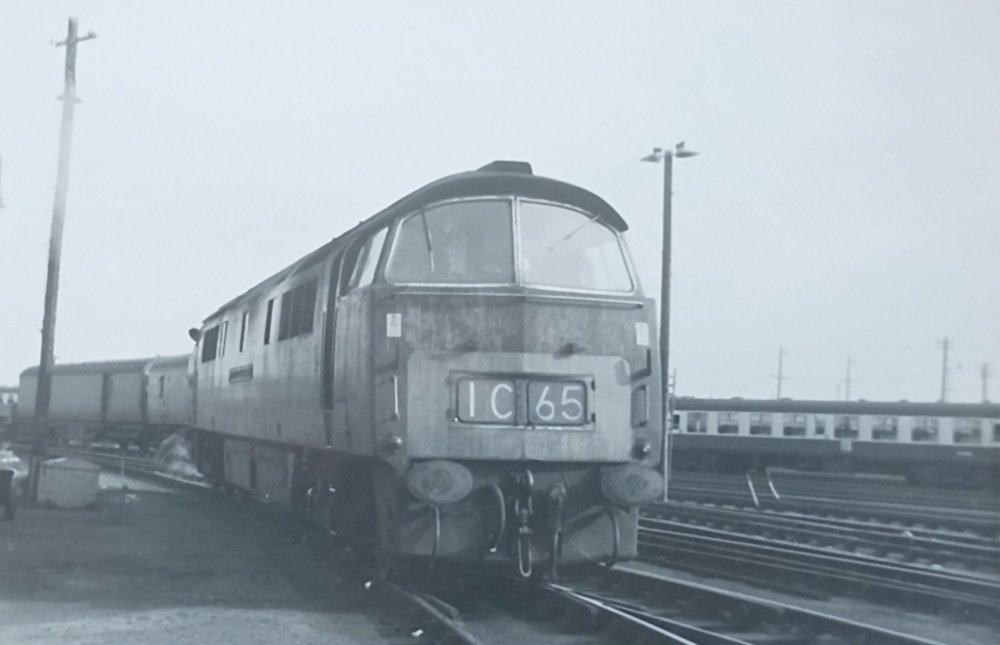 Here's another selection of my early photographs, starting off with D1019
Western Challenger at Old Oak Common on the 4th of October 1969.
Here's another selection of my early photographs, starting off with D1019
Western Challenger at Old Oak Common on the 4th of October 1969.
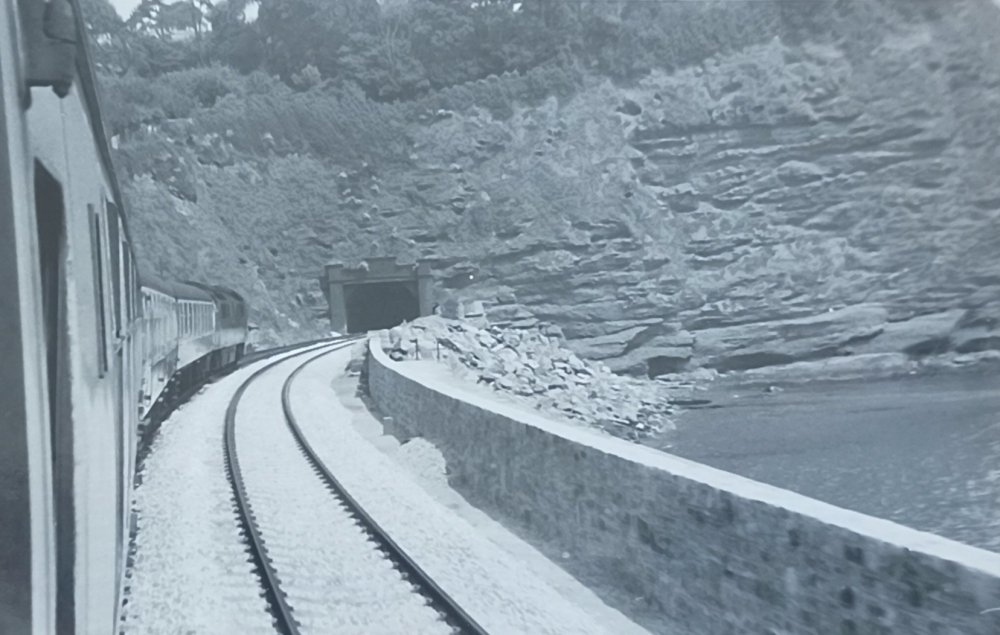 D1004 Western Crusader about to enter Parsons Tunnel on the 7th of June 1970.
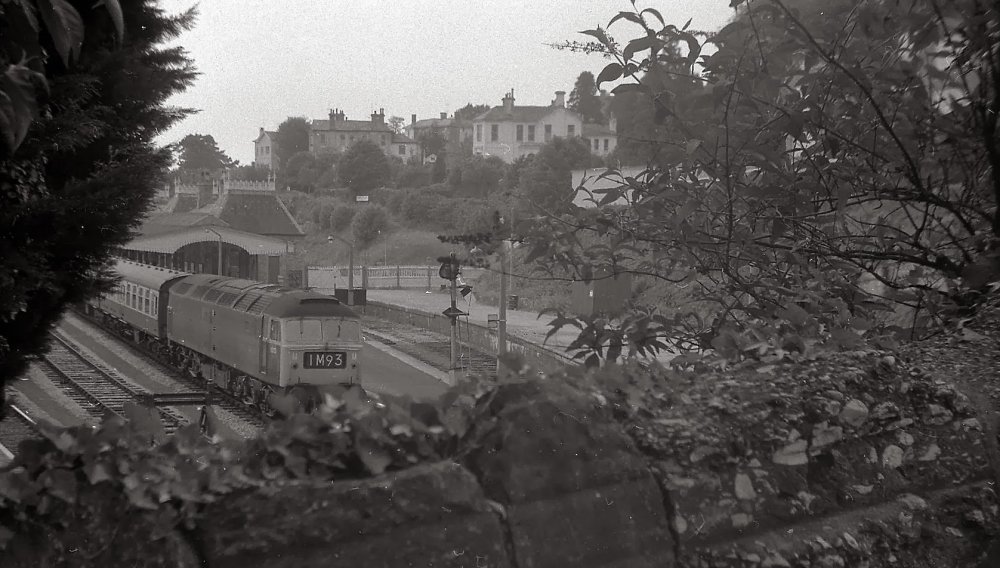 A glimpse of 1913 at Torquay in June 1970.
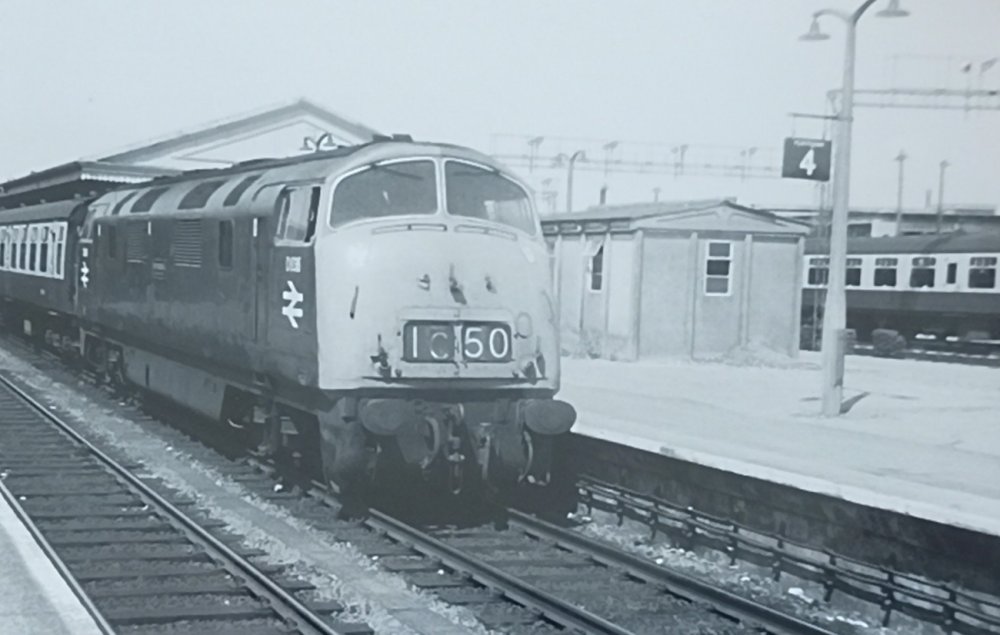 836 Powerful at Newton Abbot on the 8th of June 1970.
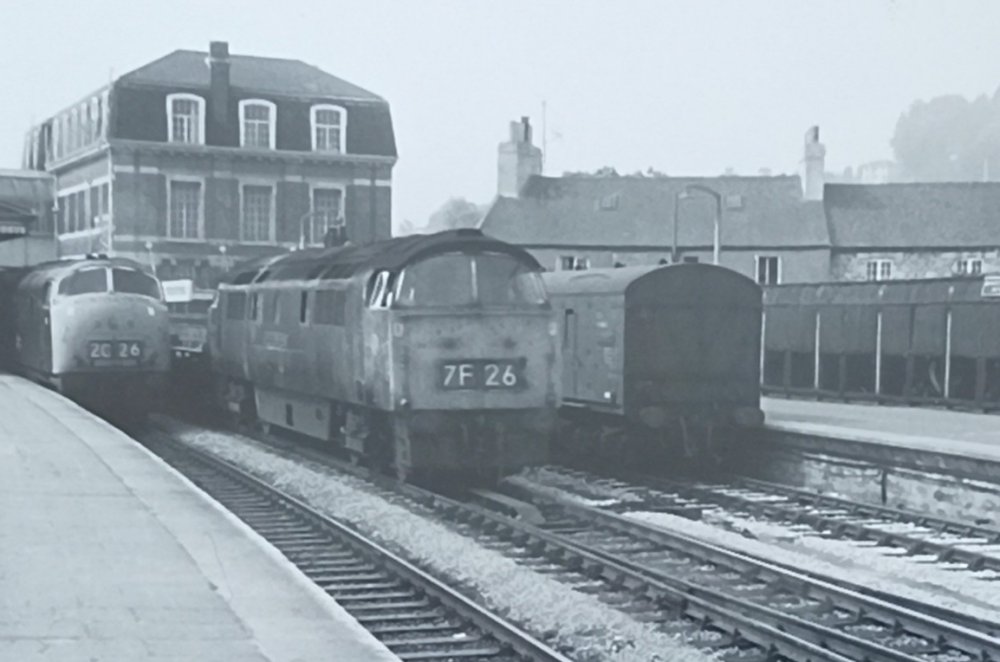 845 Sprightly and D1001 Western Pathfinder at Newton Abbot on the 10th of June 1970.
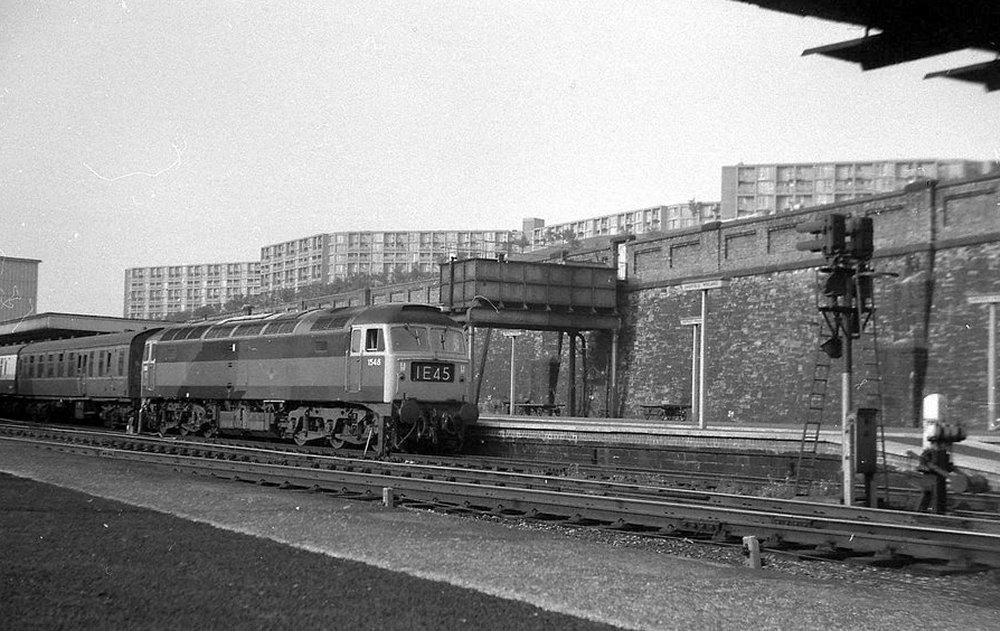 Brush type 4 number 1546 at Sheffield Midland on a Summer Saturday.
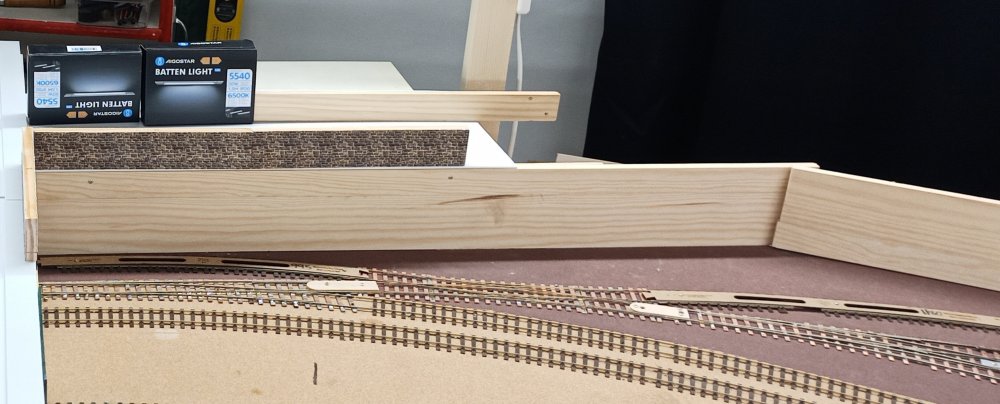 Work continues on the Motorail corner of the layout, a wooden structure being built to hide
the track below and provide some real estate for the terminal itself.
Work continues on the Motorail corner of the layout, a wooden structure being built to hide
the track below and provide some real estate for the terminal itself.
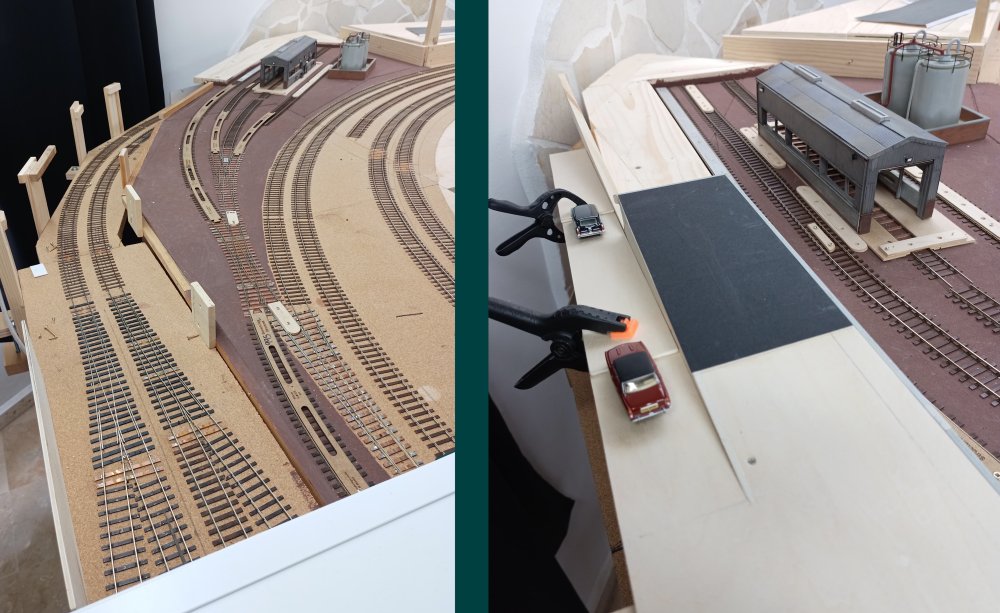 The basic framework and support system completed.
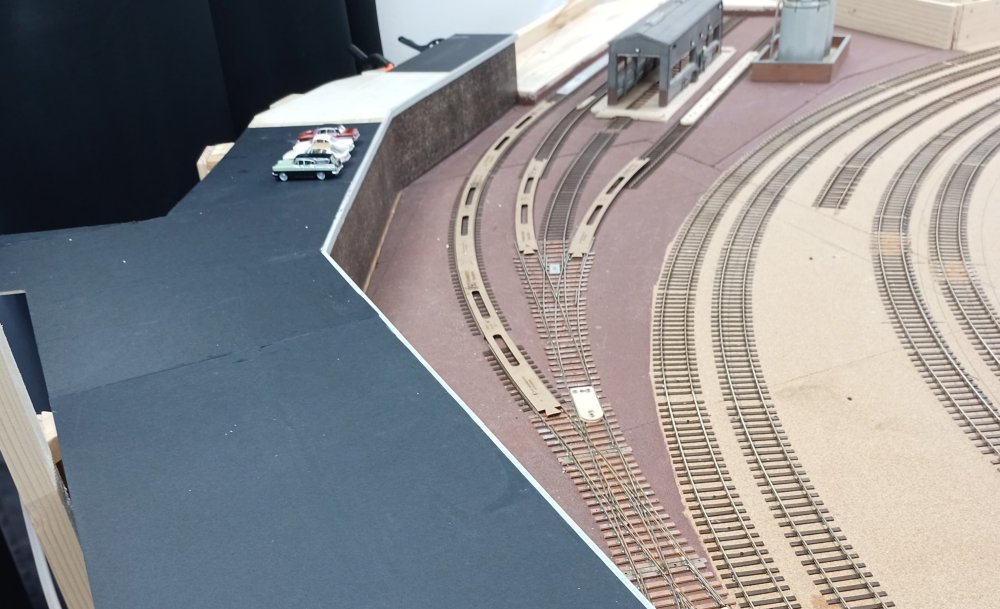 Covered in black card to give a better grip for the following road and ground surfaces.
For
speed, although maybe not quality, I am using a selection of Metcalfe and Scale Model Scenery textures.
Covered in black card to give a better grip for the following road and ground surfaces.
For
speed, although maybe not quality, I am using a selection of Metcalfe and Scale Model Scenery textures.
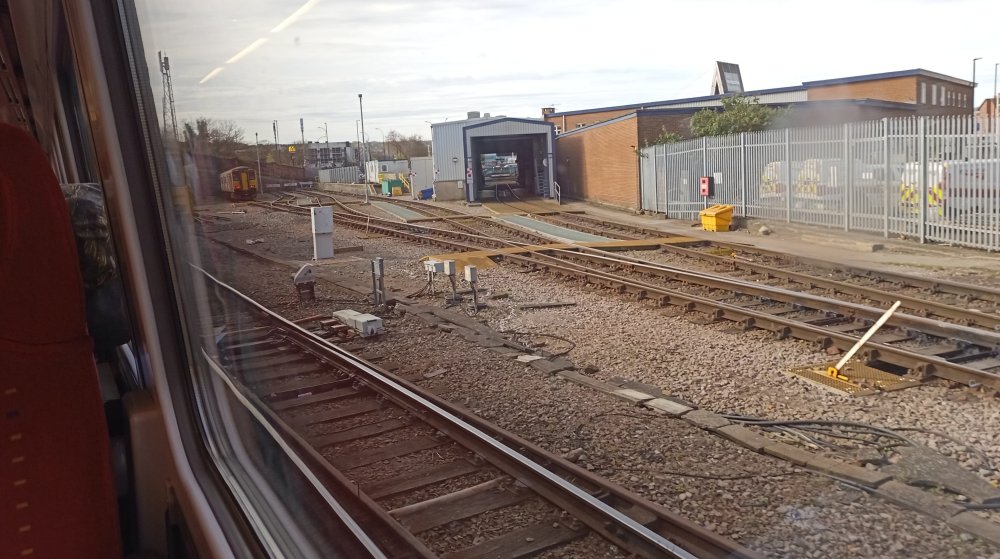 A picture of the real thing, although considerably altered from my era, to give a flavour
of where I'm trying to go with it all.
A picture of the real thing, although considerably altered from my era, to give a flavour
of where I'm trying to go with it all.
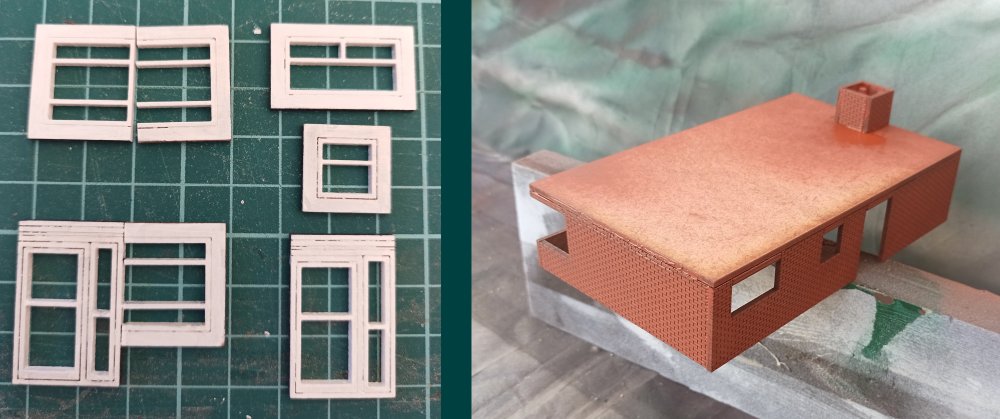 For the Motorail office building a Northumbrian Painting Services mess hut picked up at York
exhibition has been used.
For the Motorail office building a Northumbrian Painting Services mess hut picked up at York
exhibition has been used.
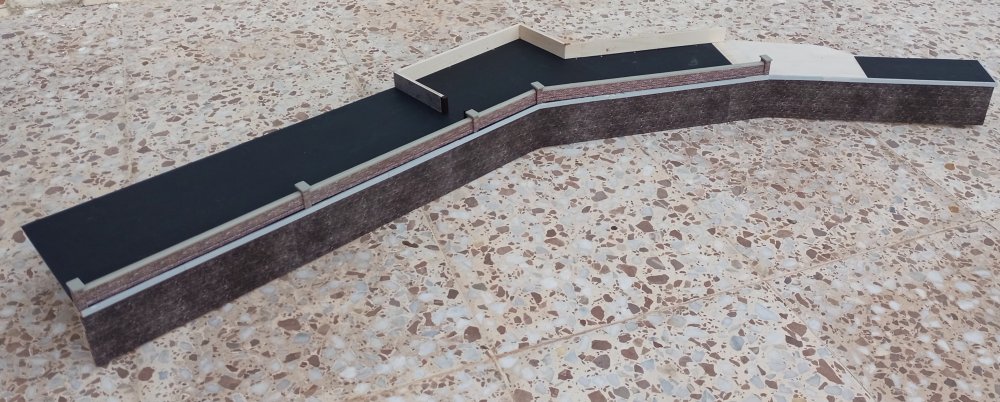 The completed structure awaiting dressing up. I have made it as a stand alone unit to make
access easier. Showing my method of wall construction, all built with various sizes of timber
cut to size on the mini table saw.
The completed structure awaiting dressing up. I have made it as a stand alone unit to make
access easier. Showing my method of wall construction, all built with various sizes of timber
cut to size on the mini table saw.
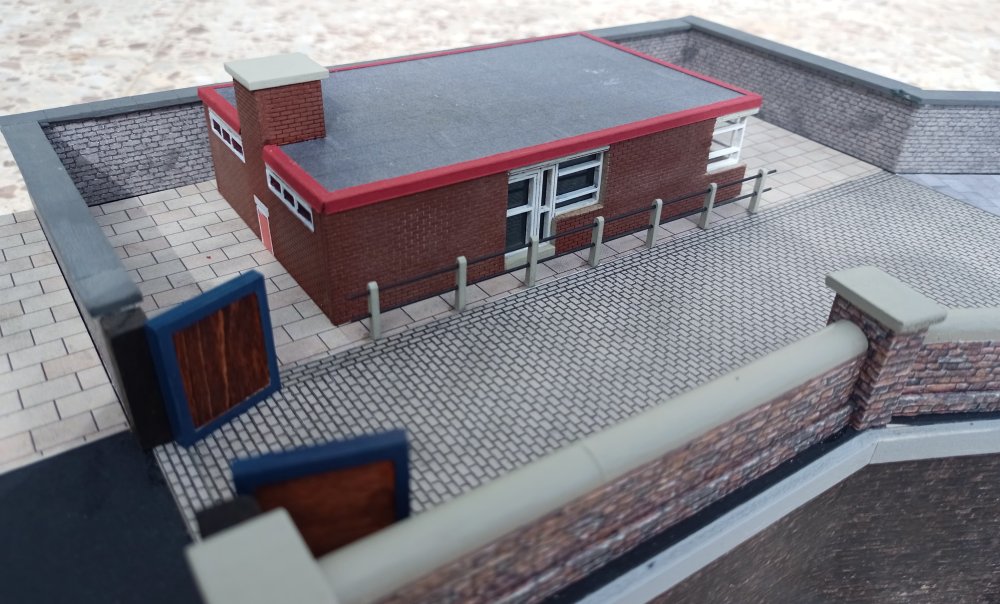 The reception building in place with SMS fencing protecting pedestrians.
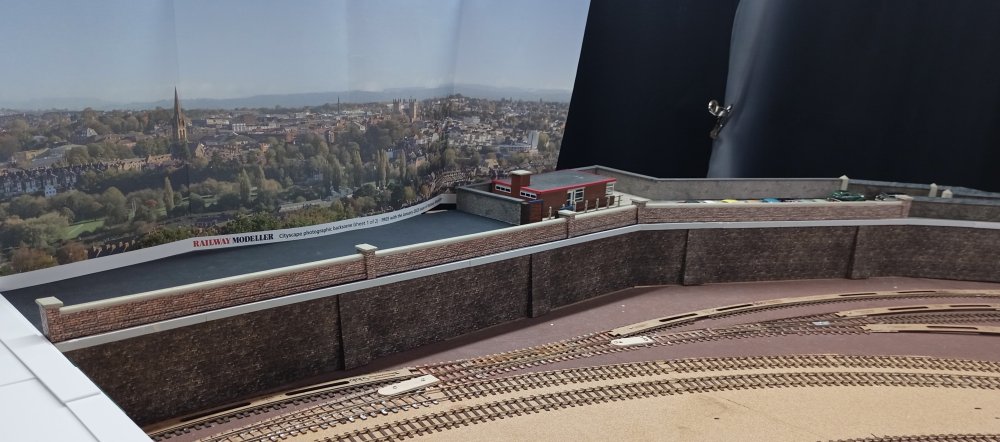 Dropped into position on the layout, with a backscene in place for ideas as a possibility.
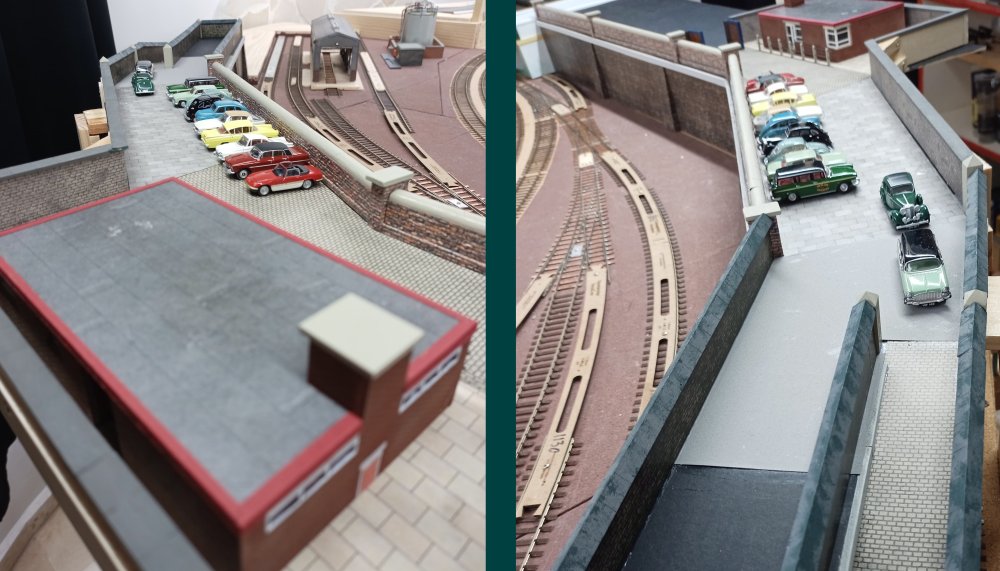 With a few cars in position to give an idea of the operation.
Cars enter and park up, then
register in reception and drive down the slope to the platform to load onto the wagons.
I've
tried to recreate the ad-hoc conversion of the area with varying wall and floor finishes.
Further details and weathering will be applied to attempt to bring it together.
The flat area
adjacent to the ramp will become some form of BR maintenance yard, and I have a couple of conflat
containers in mind with maybe workbenches or similar.
The black area approaching the gates will
have some sort of low relief buildings with a left turn road junction by the yard wall.
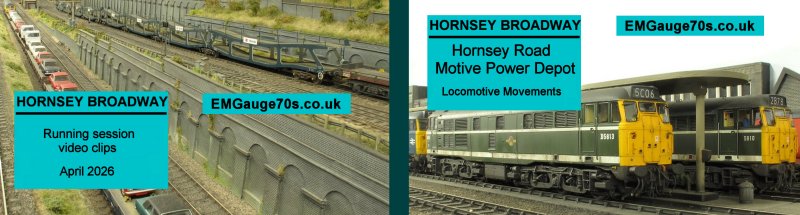
Please click on the above image to view the latest videos, featuring April running session
clips, and a tour of Hornsey Road Motive Power Depot.
With a few cars in position to give an idea of the operation.
Cars enter and park up, then
register in reception and drive down the slope to the platform to load onto the wagons.
I've
tried to recreate the ad-hoc conversion of the area with varying wall and floor finishes.
Further details and weathering will be applied to attempt to bring it together.
The flat area
adjacent to the ramp will become some form of BR maintenance yard, and I have a couple of conflat
containers in mind with maybe workbenches or similar.
The black area approaching the gates will
have some sort of low relief buildings with a left turn road junction by the yard wall.
Please click on the above image to view the latest videos, featuring April running session
clips, and a tour of Hornsey Road Motive Power Depot.