*********************************************************************************************************************************************
APRIL 2026 UPDATE
*********************************************************************************************************************************************
KARL CROWTHER
*********************************************************************************************************************************************
STEVE HARROD
*********************************************************************************************************************************************
MIKE WHITCHURCH
*********************************************************************************************************************************************
PAUL JAMES
*********************************************************************************************************************************************
ANDY LEE
*********************************************************************************************************************************************
GREG BROOKES
*********************************************************************************************************************************************
TIM SHACKLETON
*********************************************************************************************************************************************
KIER HARDY
*********************************************************************************************************************************************
*********************************************************************************************************************************************
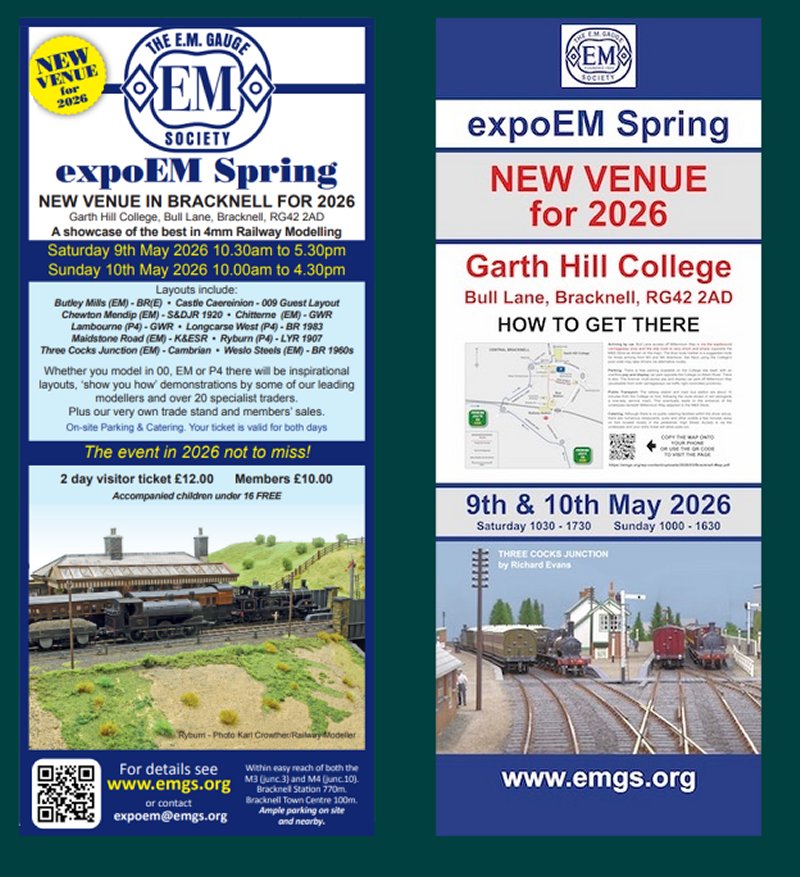
Notice for expoEM Spring - 9th & 10th of May 2026.
Garth Hill College, Bull Lane, Bracknell, RG42 2AD.
*********************************************************************************************************************************************

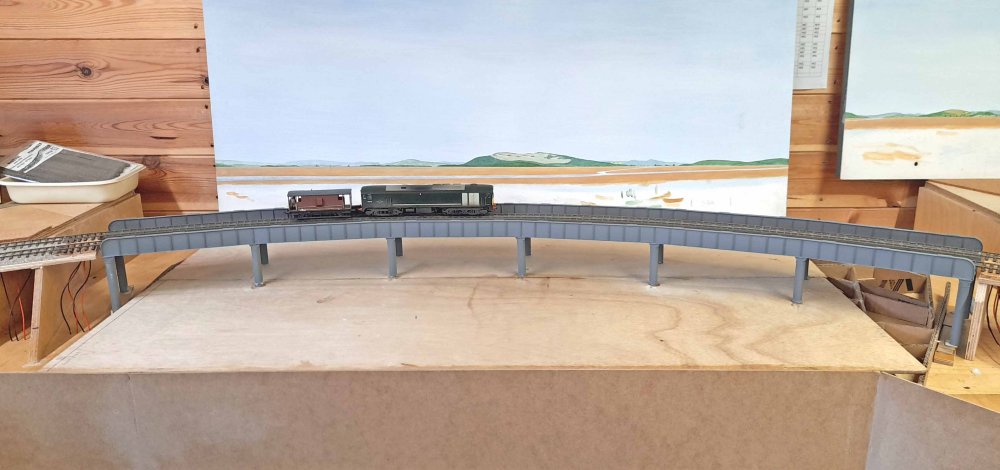
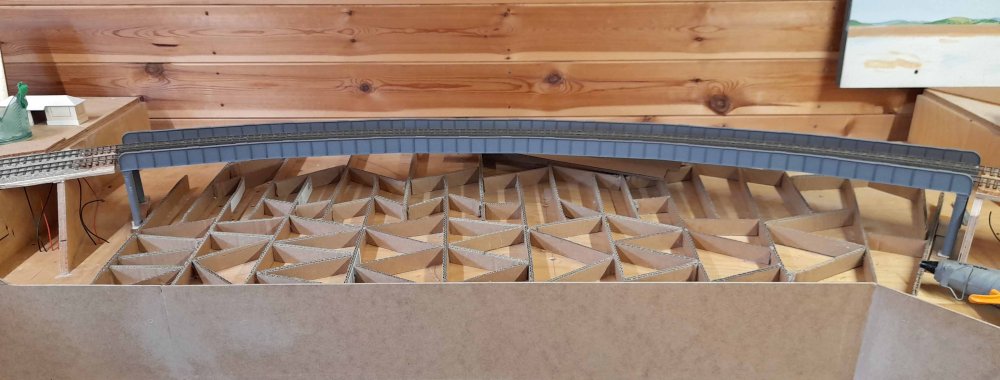 The viaduct is now in – here in the process of being installed. Having carefully marked and cut
out what of the original, temporary structure that needed removing, the rails of the viaduct
were carefully cut to length to meet the adjacent tracks. This involved the placement of some
additional sleepers as required. Then a temporary support was placed centrally and the viaduct
fixed in place via just the support columns at each end. The structure then was pretty much
stiff enough to be self-supporting with this achieved, as can be seen here. Then, a card
lattice was created to support what would become the estuary bed beneath the viaduct.
The viaduct is now in – here in the process of being installed. Having carefully marked and cut
out what of the original, temporary structure that needed removing, the rails of the viaduct
were carefully cut to length to meet the adjacent tracks. This involved the placement of some
additional sleepers as required. Then a temporary support was placed centrally and the viaduct
fixed in place via just the support columns at each end. The structure then was pretty much
stiff enough to be self-supporting with this achieved, as can be seen here. Then, a card
lattice was created to support what would become the estuary bed beneath the viaduct.
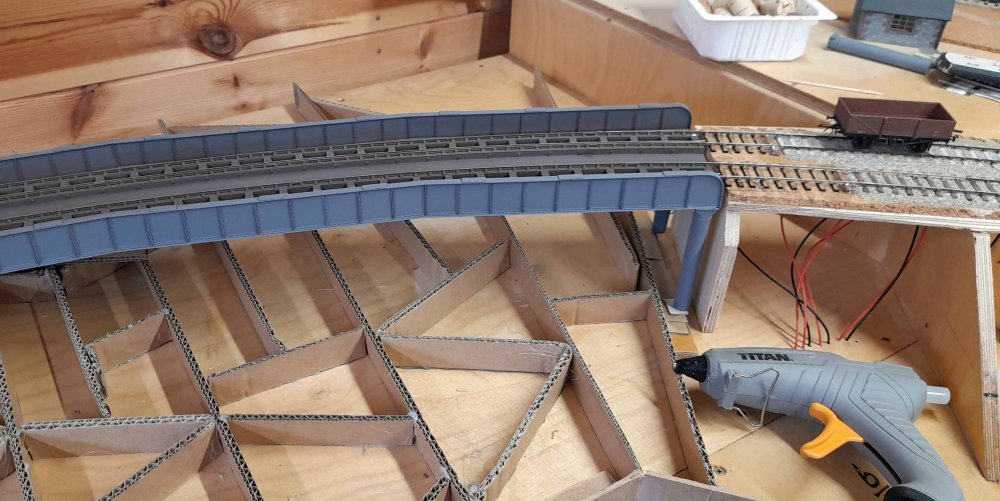 This gives a better view of the supporting lattice, built up from corrugated packing card
attached via the hot glue gun. The new sleepers on the approaching trackwork can be seen here
(half chairs added either side later on). I was relieved that the tracks across the viaduct
matched up well with those adjoining as this would have been a major headache to sort out if not.
This gives a better view of the supporting lattice, built up from corrugated packing card
attached via the hot glue gun. The new sleepers on the approaching trackwork can be seen here
(half chairs added either side later on). I was relieved that the tracks across the viaduct
matched up well with those adjoining as this would have been a major headache to sort out if not.
 A handy offcut of cheap 4mm plywood proved perfect for the top surface of the estuary bed,
glued with a generous application of PVA and then various weights placed on top overnight. With
that done, the remaining support columns could be cut to the required length and fixed in place.
Here we see all of the necessary wiring completed and the first test run taking place across the viaduct.
A handy offcut of cheap 4mm plywood proved perfect for the top surface of the estuary bed,
glued with a generous application of PVA and then various weights placed on top overnight. With
that done, the remaining support columns could be cut to the required length and fixed in place.
Here we see all of the necessary wiring completed and the first test run taking place across the viaduct.
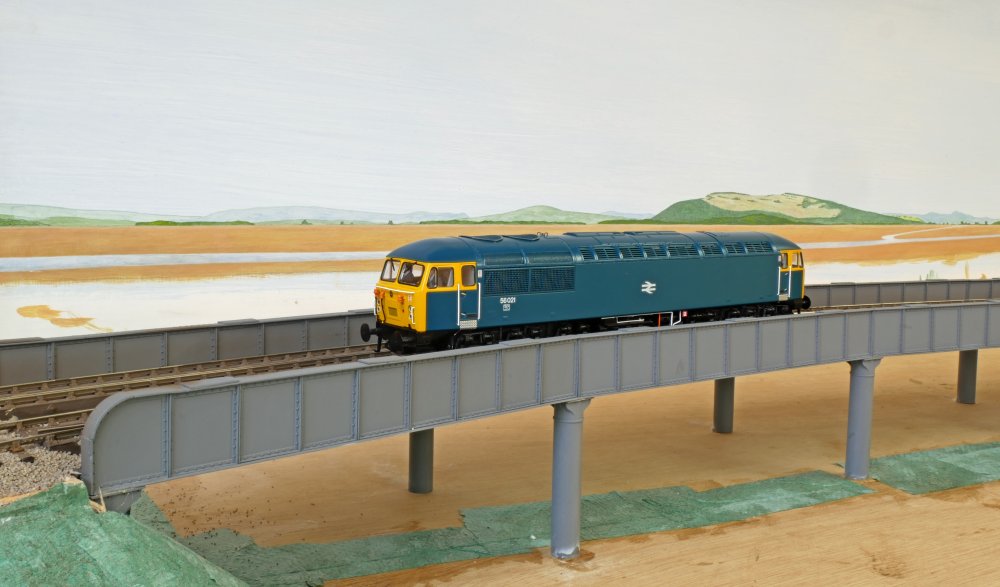 Shortly to be followed by my newly arrived Cavalex Class 56 which was a dream to convert to EM
using their supplied wheelsets. Yes, I know it’s out of period and location for the layout, but
this website is EM70s after all! I remember seeing one of the Romanian 56s on a test train over
the S&C in 1976, so that’s my excuse. Actually, this was quite an important test to check
clearances, especially the overhang of stock on the inner curve. Luckily all was well. The
backscene from the original Kentside exhibition layout has about the correct horizon for the
new one and the composition of the view here will essentially be the same, with Whitbarrow Scar
in a prominent position.
Shortly to be followed by my newly arrived Cavalex Class 56 which was a dream to convert to EM
using their supplied wheelsets. Yes, I know it’s out of period and location for the layout, but
this website is EM70s after all! I remember seeing one of the Romanian 56s on a test train over
the S&C in 1976, so that’s my excuse. Actually, this was quite an important test to check
clearances, especially the overhang of stock on the inner curve. Luckily all was well. The
backscene from the original Kentside exhibition layout has about the correct horizon for the
new one and the composition of the view here will essentially be the same, with Whitbarrow Scar
in a prominent position.
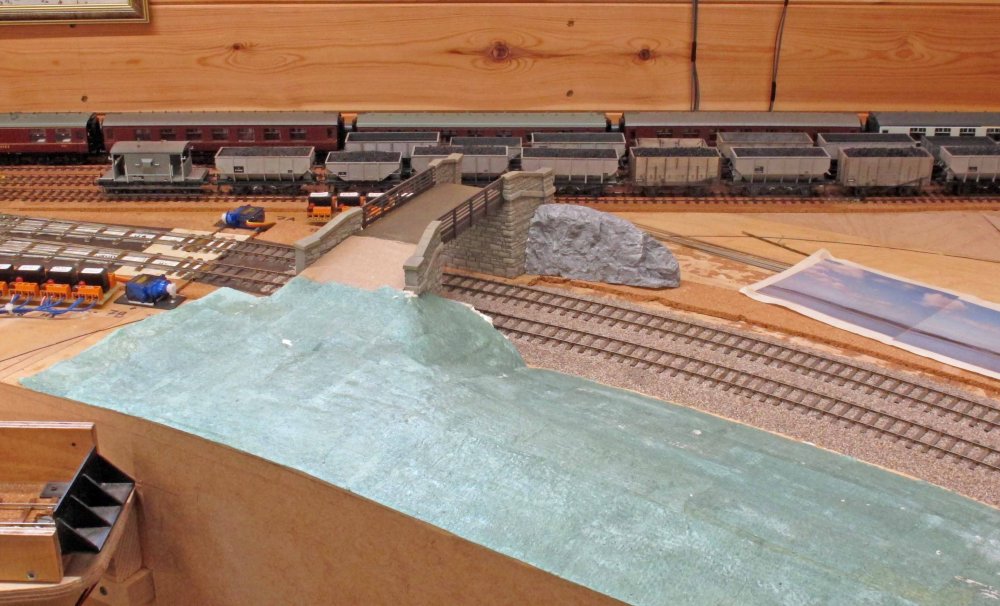 Then it was on with making a start on some of the adjacent groundwork, built up from a combination
of shaped foam blocks and various card offcuts. The ‘top surface’ was made from paper hand towels
secured with a generous helping of neat PVA applied with an old paintbrush.
Then it was on with making a start on some of the adjacent groundwork, built up from a combination
of shaped foam blocks and various card offcuts. The ‘top surface’ was made from paper hand towels
secured with a generous helping of neat PVA applied with an old paintbrush.
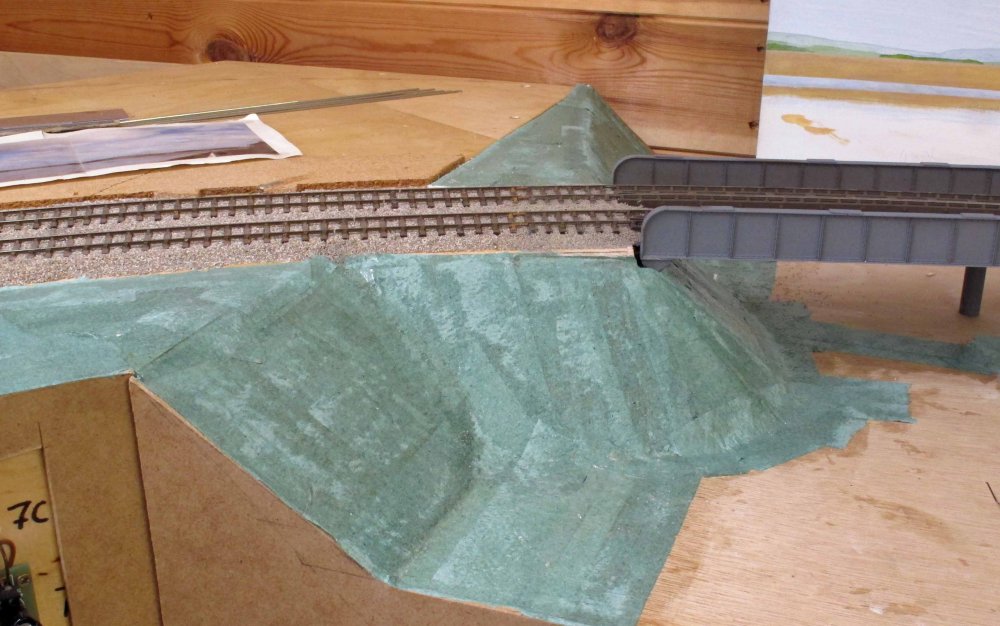 The approach tracks have now been painted and ballasted to match the rest.
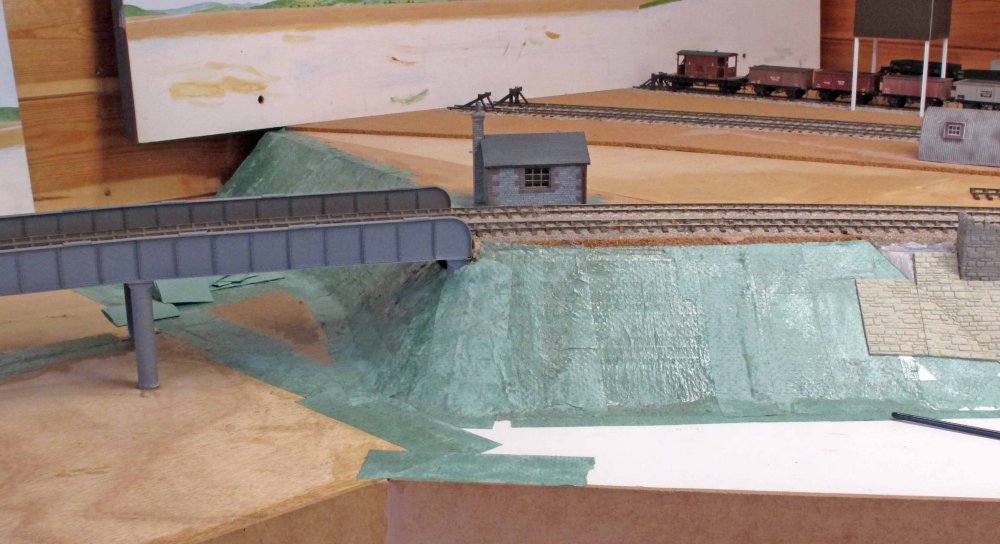 And at the Kentside end – the problem here will be how to deal with the stonework approaching
the viaduct. As it won’t really be possible to fit the stone sheet around the curve, the plan is
to ‘merge’ this into some sort of boulders, well we shall see….
And at the Kentside end – the problem here will be how to deal with the stonework approaching
the viaduct. As it won’t really be possible to fit the stone sheet around the curve, the plan is
to ‘merge’ this into some sort of boulders, well we shall see….
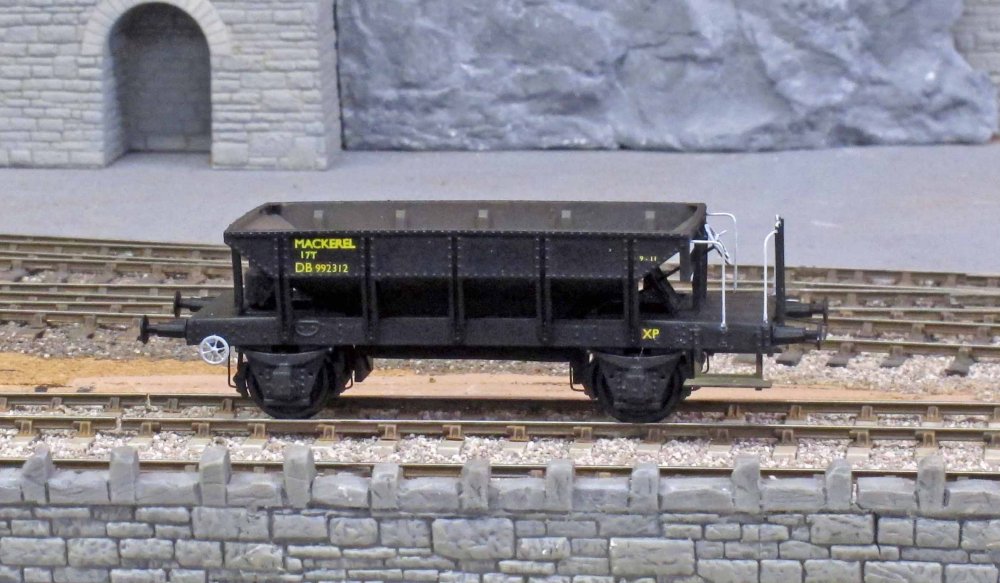 And to round off, the 3D printed Mackerel wagon shown last time is now complete and looks at
home within the quarry setting.
And to round off, the 3D printed Mackerel wagon shown last time is now complete and looks at
home within the quarry setting.

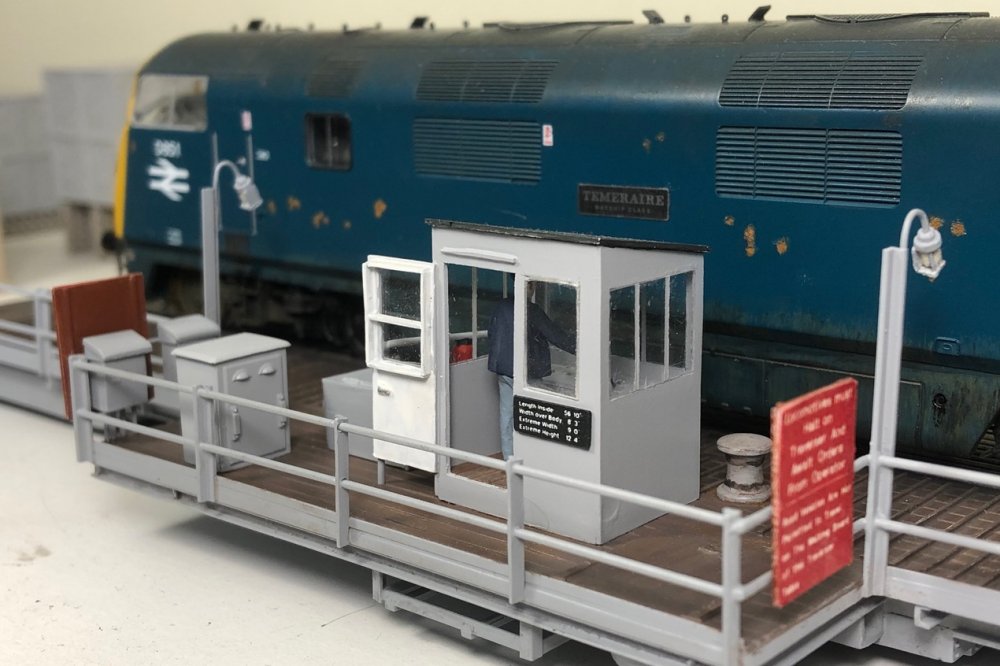 D851 Temeraire on the Newton Abbot traverser still with nameplates fitted.
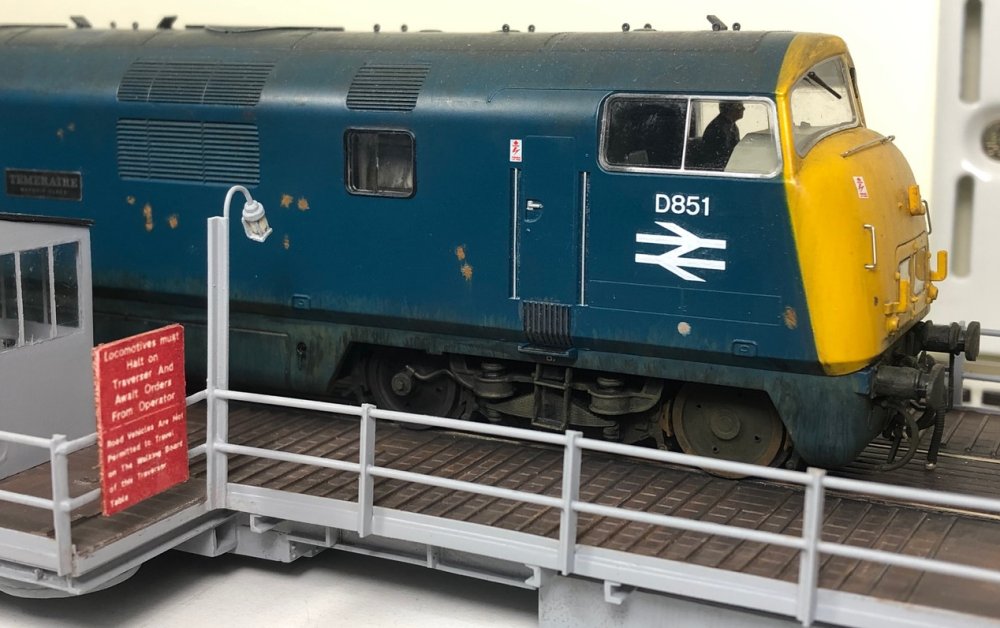 This locomotive was stored on the NA dump with them fitted in April 1971 but were removed
by May 71, so I've now also removed the plates from the model.
This locomotive was stored on the NA dump with them fitted in April 1971 but were removed
by May 71, so I've now also removed the plates from the model.
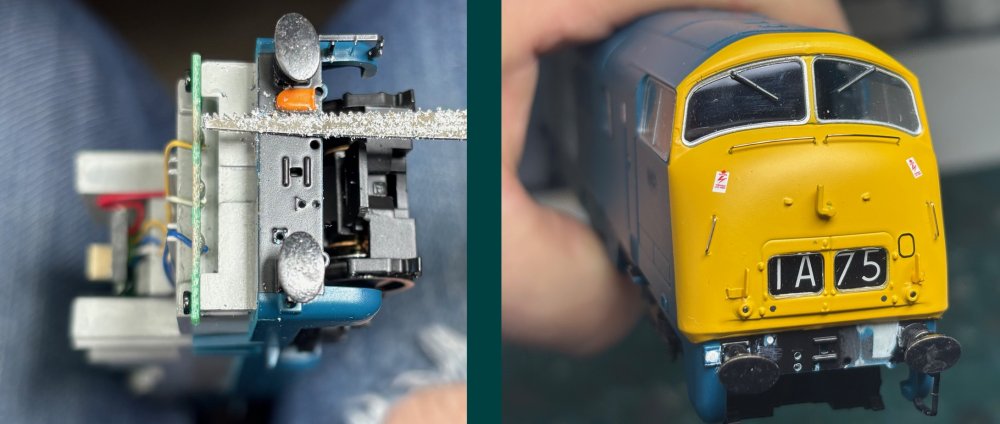 I've recently acquired a Bachmann Class 43 Warship which will become 854 Tiger, converted it
to EM gauge and trimmed the brake blocks with a scalpel for clearance. It was originally 842,
so I've removed all the numbers, logo, and the flashes from the B end as Tiger had these in
a unique position. I then took a swordfish saw blade to remove the MU jumper socket and filled
the holes with Milliput.
I've recently acquired a Bachmann Class 43 Warship which will become 854 Tiger, converted it
to EM gauge and trimmed the brake blocks with a scalpel for clearance. It was originally 842,
so I've removed all the numbers, logo, and the flashes from the B end as Tiger had these in
a unique position. I then took a swordfish saw blade to remove the MU jumper socket and filled
the holes with Milliput.

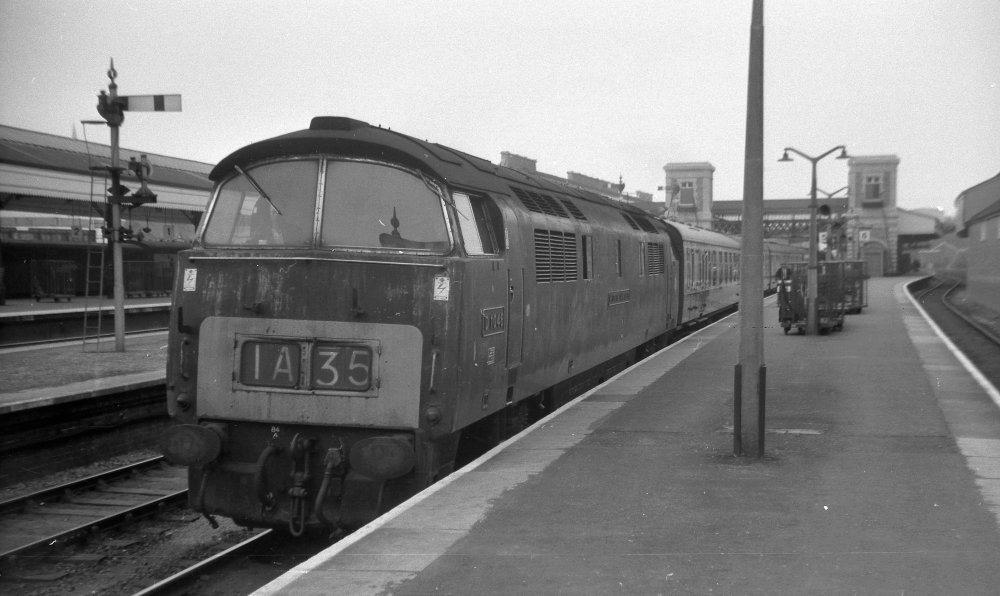 Another selection of photographs taken during the summer of 1970, starting off with
D1046 Western Marquis at Exeter St Davids on the 11th of June 1970.
Another selection of photographs taken during the summer of 1970, starting off with
D1046 Western Marquis at Exeter St Davids on the 11th of June 1970.
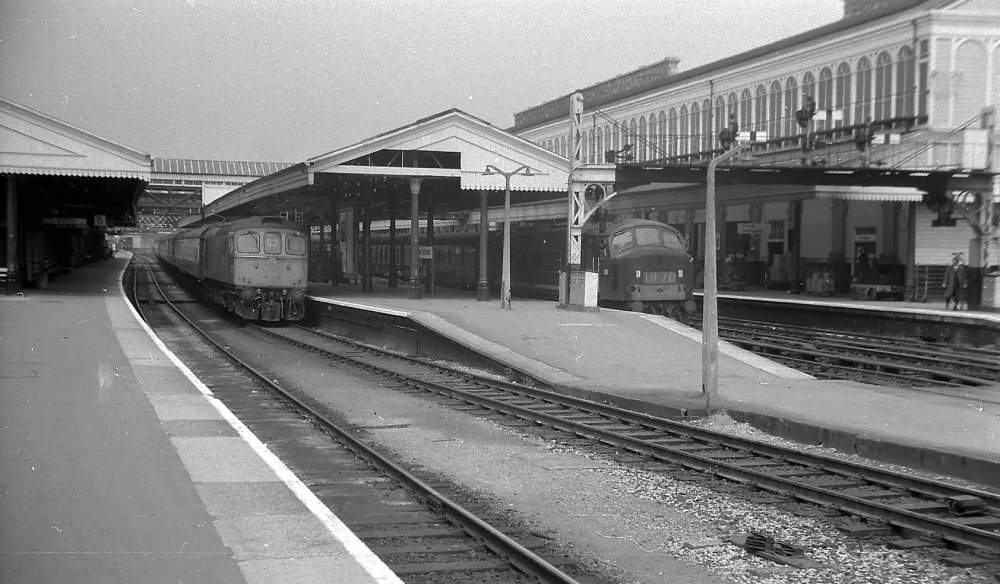 6577 and D189 at Exeter St Davids in June 1970.
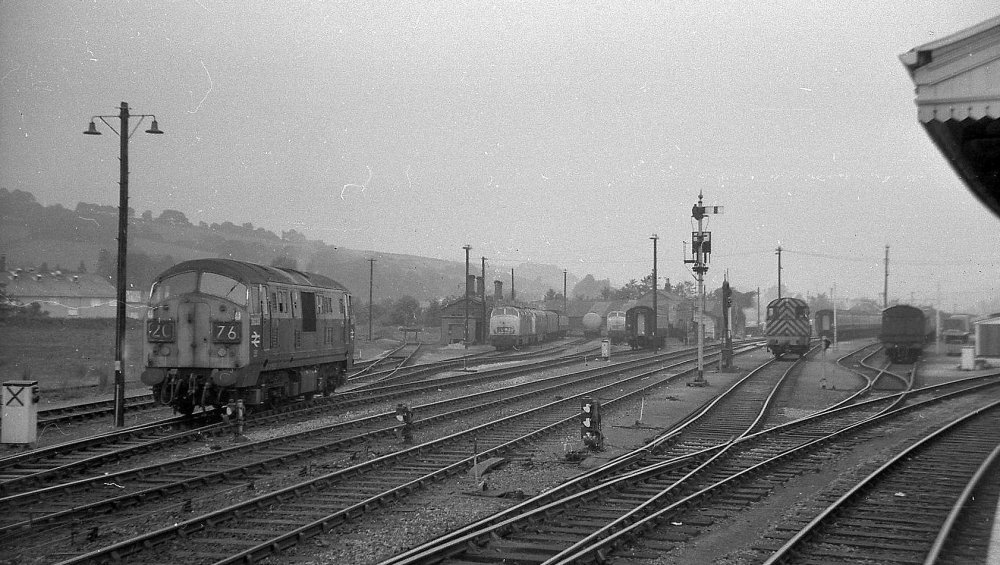 D6339, D842 Royal Oak, D817 Foxhound and D809 Champion at Exeter shed in June 1970.
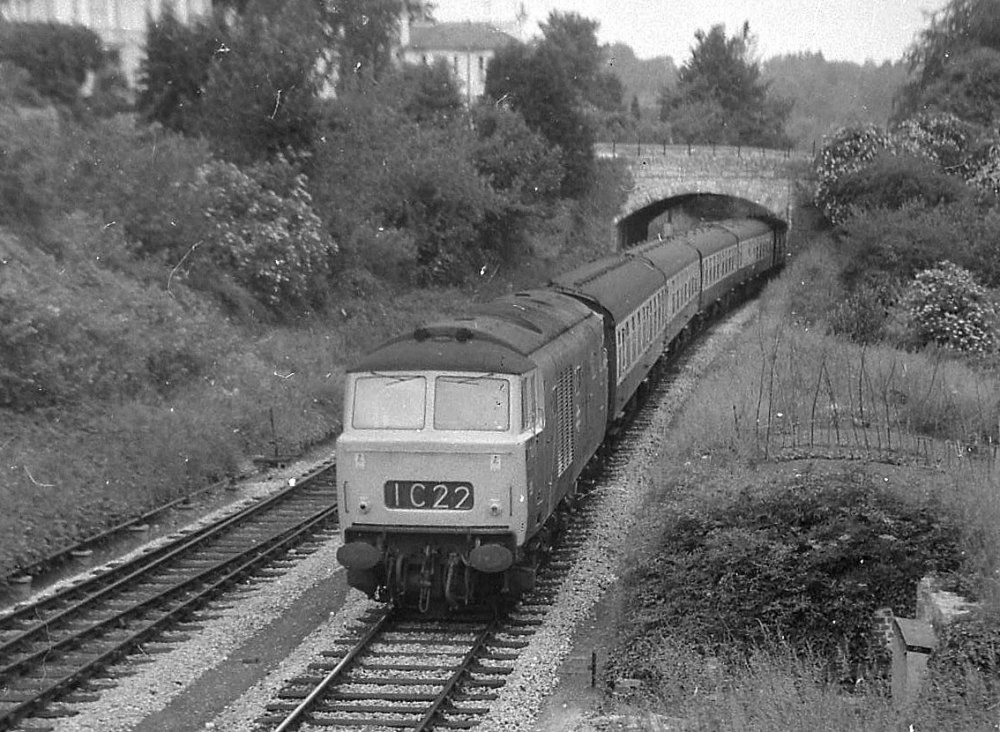 Hymek 7027 at Torquay in June 1970.
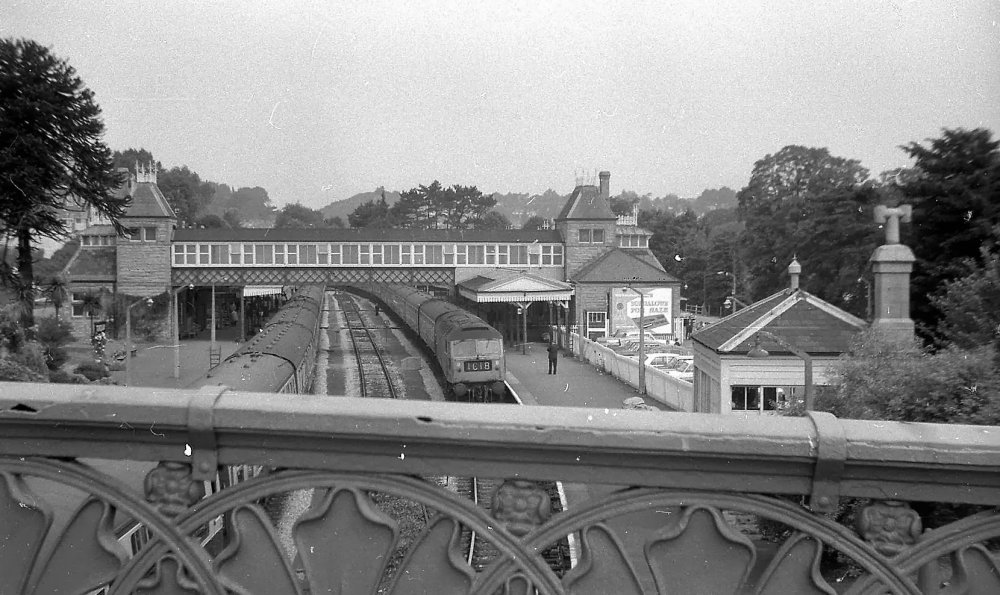 Brush 4 number 1670 Mammoth at Torquay in June 1970.
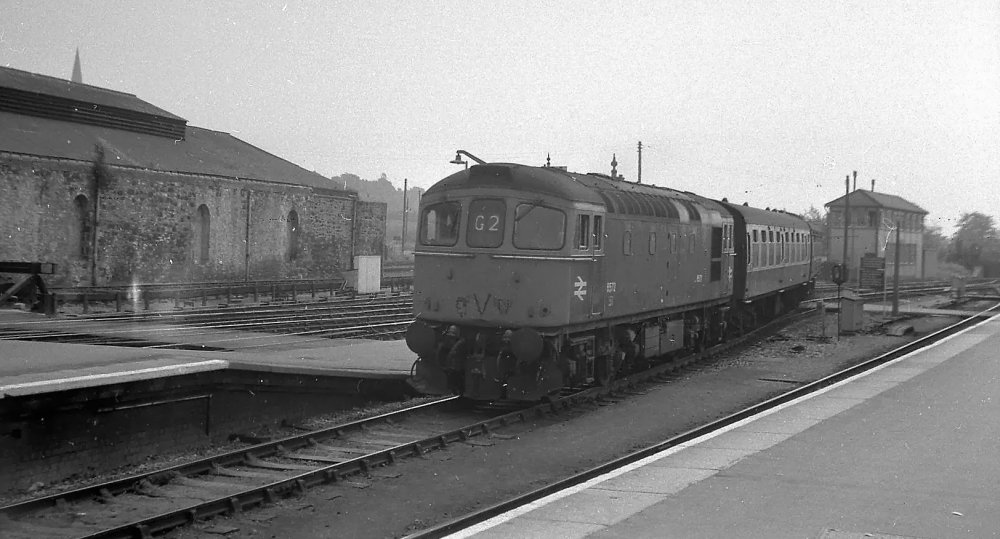 D6572 at Exeter St Davids in June 1970.
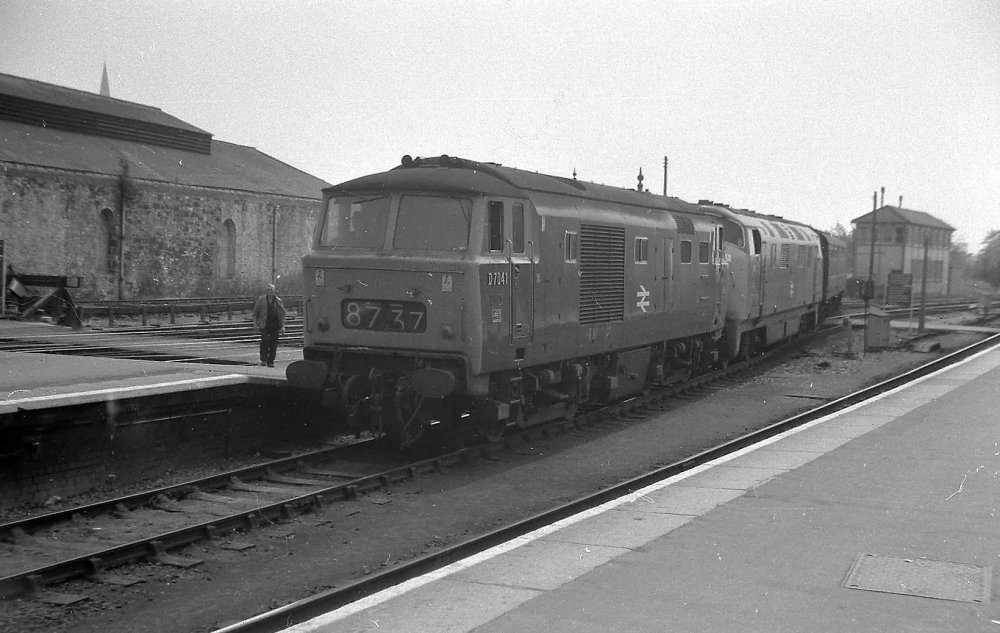 D7041 has rescued an ailing 816 Eclipse on the 1V09 Waterloo to Exeter in June 1970.

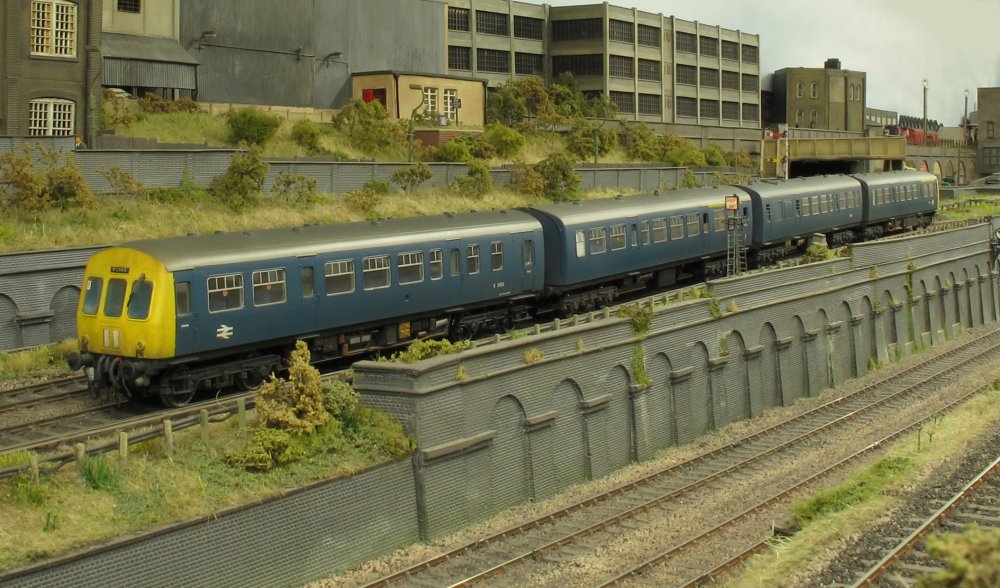 A regular from the Wibdenshaw days is this 4-car Class 101 DMU, brought out of storage for
a test run at Hornsey Broadway. This set comprises DMBS - TCL - TSLRB - DMC.
A regular from the Wibdenshaw days is this 4-car Class 101 DMU, brought out of storage for
a test run at Hornsey Broadway. This set comprises DMBS - TCL - TSLRB - DMC.
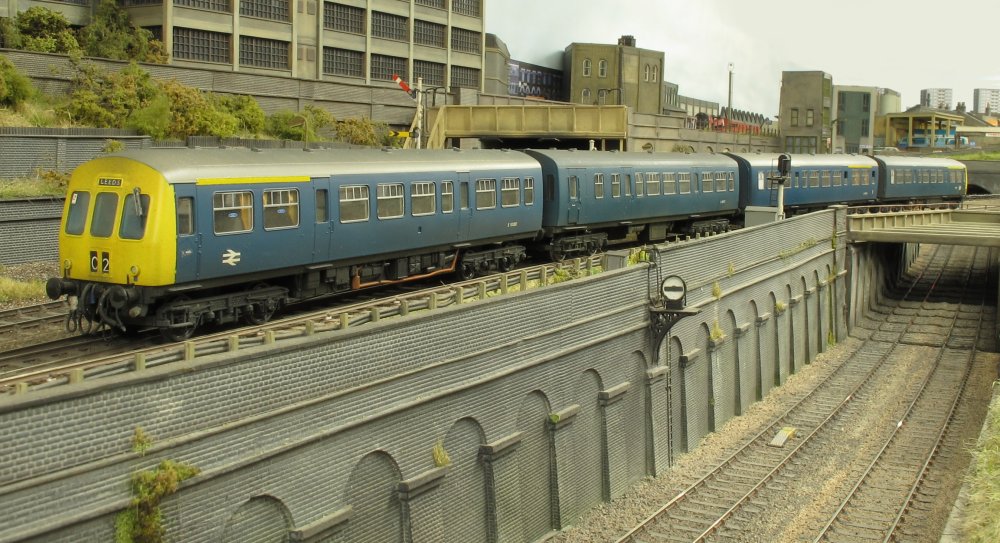 Another 4-car Class 101 DMU, this time comprises DMC - TBS - TCL - DMC.
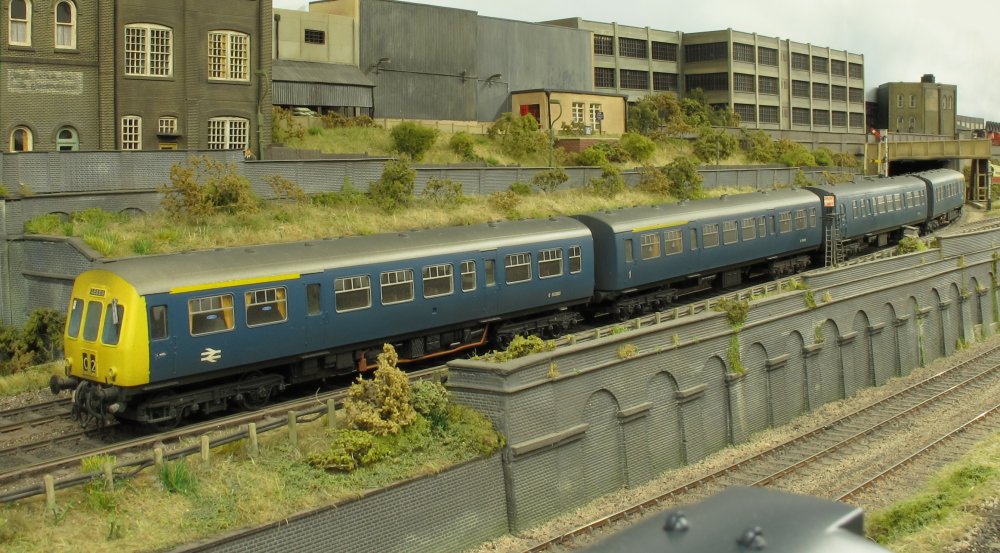 Here just for the fun of it is the same unit reformed DMC - TCL - TBS - DMC.
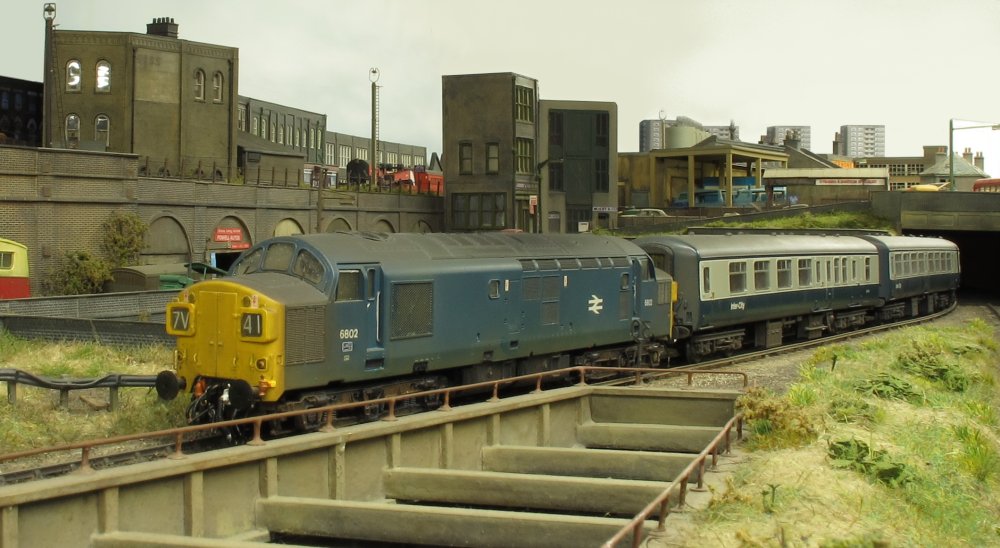 Another model recently dug out of storage is 6802, which was a double motored analogue
Lima Class 37, now united with a Vitrains chassis and fitted with a ESU Locsound chip.
Another model recently dug out of storage is 6802, which was a double motored analogue
Lima Class 37, now united with a Vitrains chassis and fitted with a ESU Locsound chip.

 I picked up a couple of Cavalex HAA hopper wagons at the Doncaster show recently as they were
selling off seconds that had a slight assembly errors on them, although I couldn't see anything
noticeably wrong with the two I got. After fitting Gibson 14mm wheels I then weathered them
using my usual IPA techniques, and added the very distinctive lines along the sides using a
piece of card with slits and cheap eyeshadow on a cotton bud, sealed with Tamiya matt varnish.
I picked up a couple of Cavalex HAA hopper wagons at the Doncaster show recently as they were
selling off seconds that had a slight assembly errors on them, although I couldn't see anything
noticeably wrong with the two I got. After fitting Gibson 14mm wheels I then weathered them
using my usual IPA techniques, and added the very distinctive lines along the sides using a
piece of card with slits and cheap eyeshadow on a cotton bud, sealed with Tamiya matt varnish.

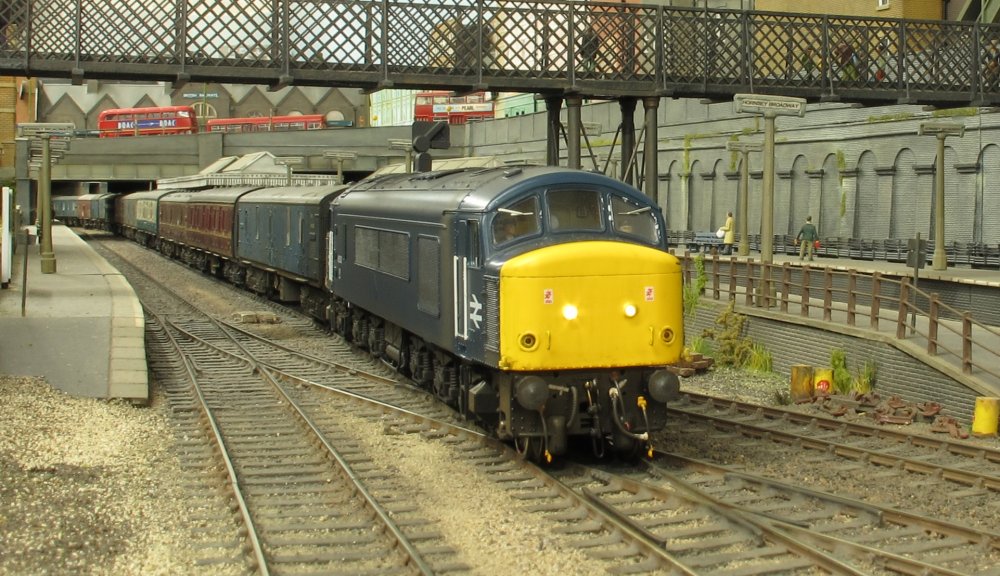 New arrivals into the Shenston Road fleet, captured at Hornsey Broadway is 45003 - a
Heljan model fitted with a Legomanbiffo sound chip.
New arrivals into the Shenston Road fleet, captured at Hornsey Broadway is 45003 - a
Heljan model fitted with a Legomanbiffo sound chip.
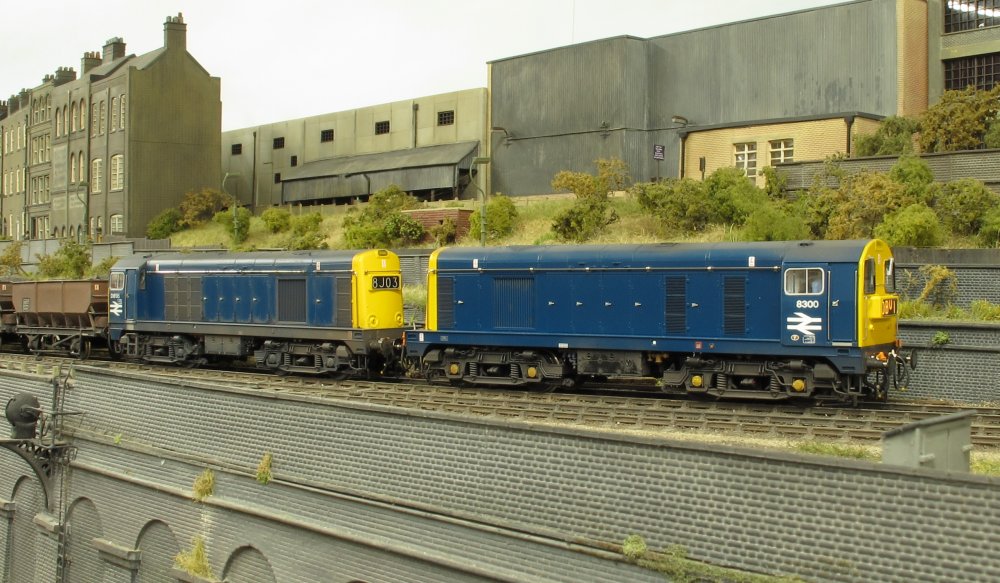 English Electric type 1 D8195 and 8300 are both the latest generation Bachmann factory
sound fitted models.
English Electric type 1 D8195 and 8300 are both the latest generation Bachmann factory
sound fitted models.
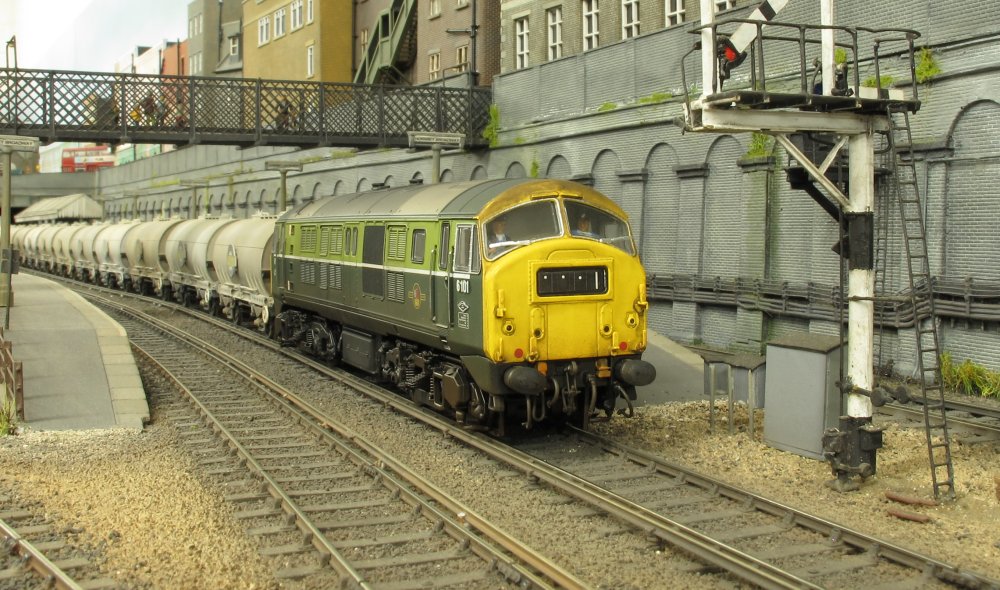 North British DE Class 29 - 6101 has been in the fleet for some time, now fitted with a
Legomanbiffo sound chip.
North British DE Class 29 - 6101 has been in the fleet for some time, now fitted with a
Legomanbiffo sound chip.

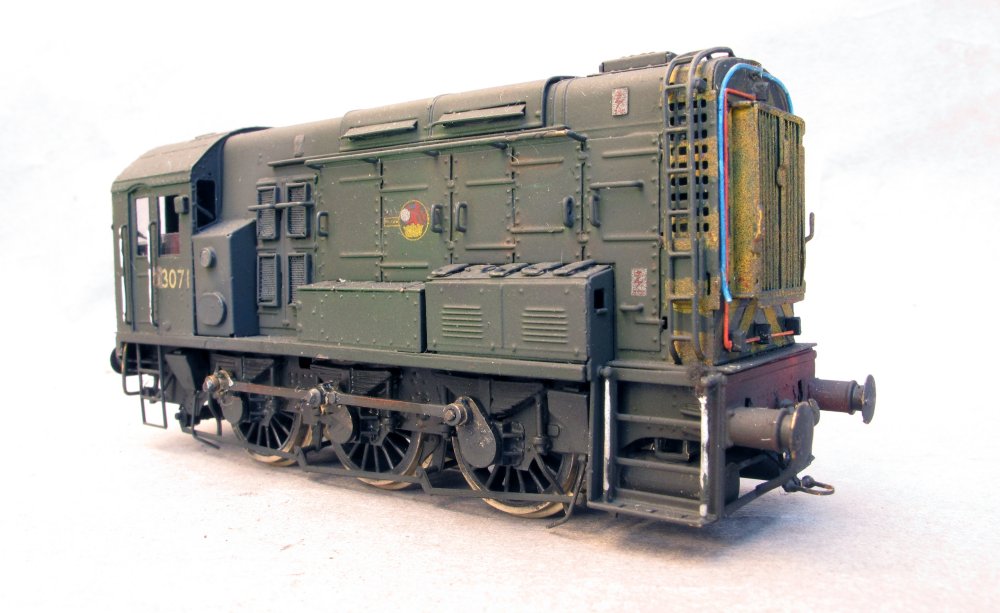 A bit more finescale archaeology this month. The Modern Outline Kits class 08 is an astonishing
thing – its introduction dates to the very early days of MRJ and the cover that everyone
remembers, with blue 08200 built by Tony Wilson effortlessly climbing over a matchstick.
A bit more finescale archaeology this month. The Modern Outline Kits class 08 is an astonishing
thing – its introduction dates to the very early days of MRJ and the cover that everyone
remembers, with blue 08200 built by Tony Wilson effortlessly climbing over a matchstick.
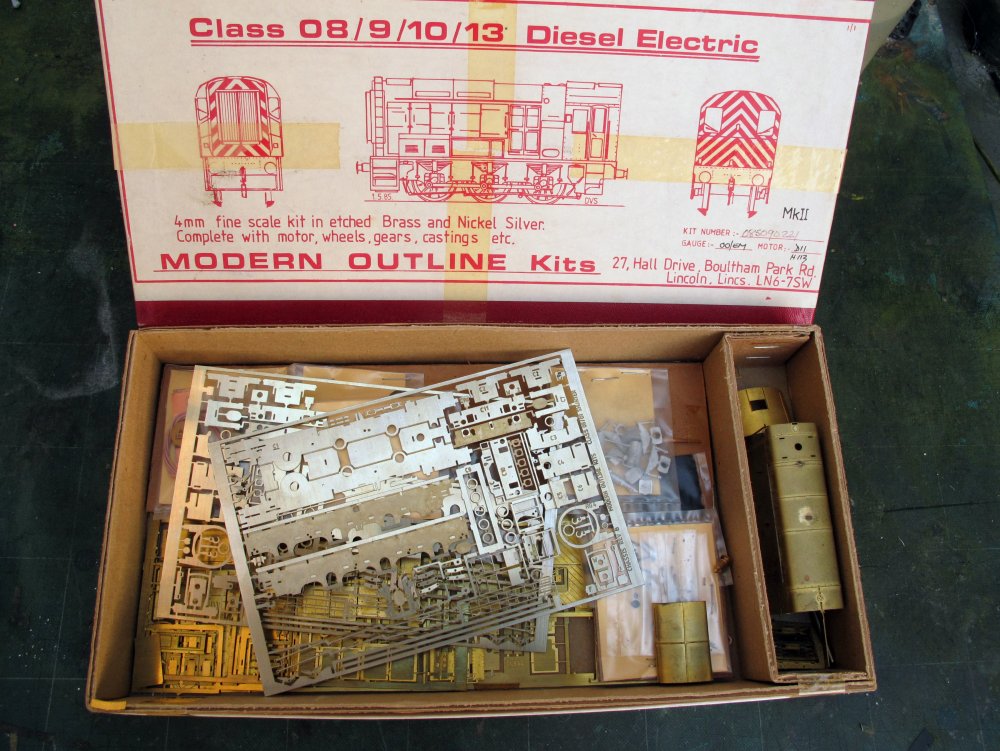 The kit is mostly etched – brass for the bodyshell (with pre-formed bonnet) and nickel for
the chassis. The quality of the hand-drawn artwork is exceptional and, despite minimal
instructions, the assembly sequence is clear and logical. The product shows its age though,
with the provision of an open-frame Anchoridge D13 motor and Romford gears, although a
Portescap RG4 was available as an option. If it had turned out to be a ‘whiner’, I think
I’d have gone with the D13, well geared down.
The kit is mostly etched – brass for the bodyshell (with pre-formed bonnet) and nickel for
the chassis. The quality of the hand-drawn artwork is exceptional and, despite minimal
instructions, the assembly sequence is clear and logical. The product shows its age though,
with the provision of an open-frame Anchoridge D13 motor and Romford gears, although a
Portescap RG4 was available as an option. If it had turned out to be a ‘whiner’, I think
I’d have gone with the D13, well geared down.
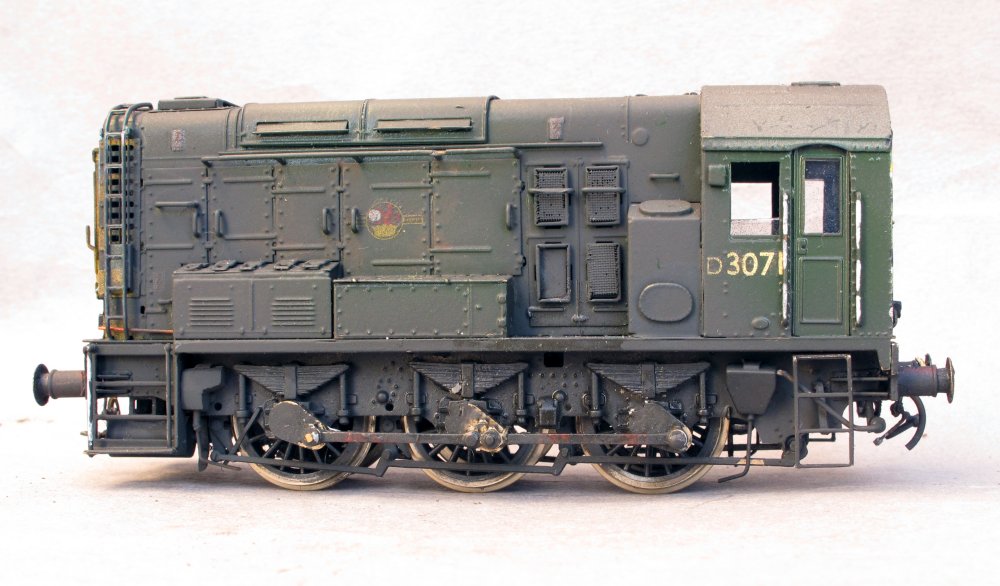 The first MOK Class 08 I saw in the flesh was built in EM – impeccably by Vernon Harrod and
it made occasional appearances shunting the yard north of the station on Roy Jackson’s epic
Retford layout. I had to have one for myself but the years passed and I only finished this
model of early-build D3071 in the latter part of 2025. I have two more untouched examples
that I intend to use for a Class 13 (Dave Sharpe’s kit includes the necessary conversion
fittings), as well as an MOK Class 47 that was bought for next to nothing and unquestionably
will never get built.
The first MOK Class 08 I saw in the flesh was built in EM – impeccably by Vernon Harrod and
it made occasional appearances shunting the yard north of the station on Roy Jackson’s epic
Retford layout. I had to have one for myself but the years passed and I only finished this
model of early-build D3071 in the latter part of 2025. I have two more untouched examples
that I intend to use for a Class 13 (Dave Sharpe’s kit includes the necessary conversion
fittings), as well as an MOK Class 47 that was bought for next to nothing and unquestionably
will never get built.
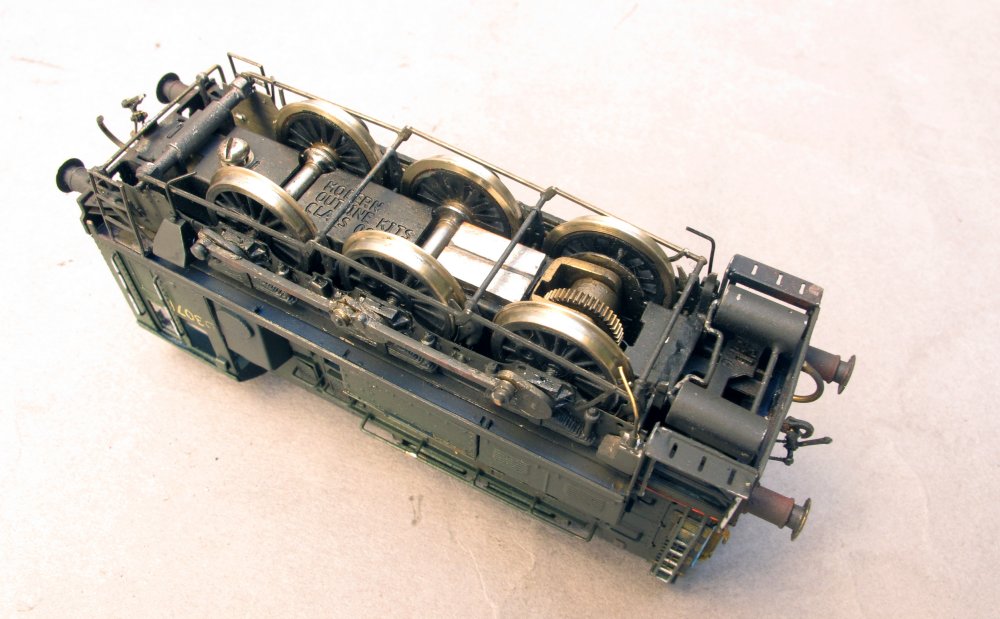
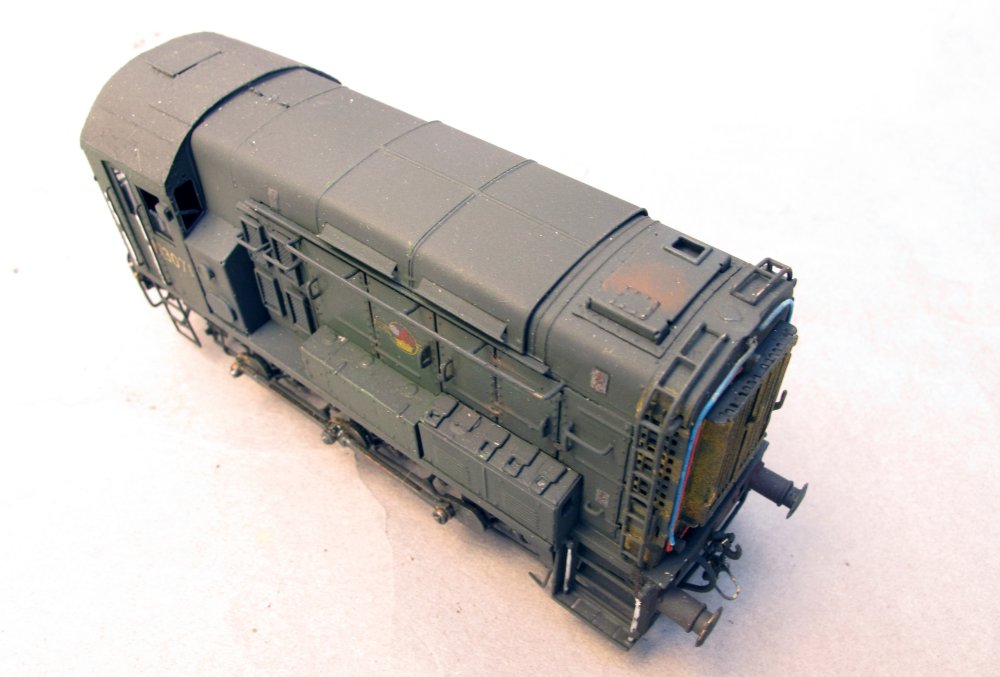 Given how much we rely on reference photographs, clear top-down photographs of even the
commonest classes are hard to find. This is ironic as we mostly view our creations from
several hundred scale feet in the air. Even a footbridge only gives an oblique view and I
can’t think of many places I’ve been – Worcester was one, Tinsley another, where we can look
down on our chosen subject from a fair old height and take in all the lovely detail and weathering.
Given how much we rely on reference photographs, clear top-down photographs of even the
commonest classes are hard to find. This is ironic as we mostly view our creations from
several hundred scale feet in the air. Even a footbridge only gives an oblique view and I
can’t think of many places I’ve been – Worcester was one, Tinsley another, where we can look
down on our chosen subject from a fair old height and take in all the lovely detail and weathering.
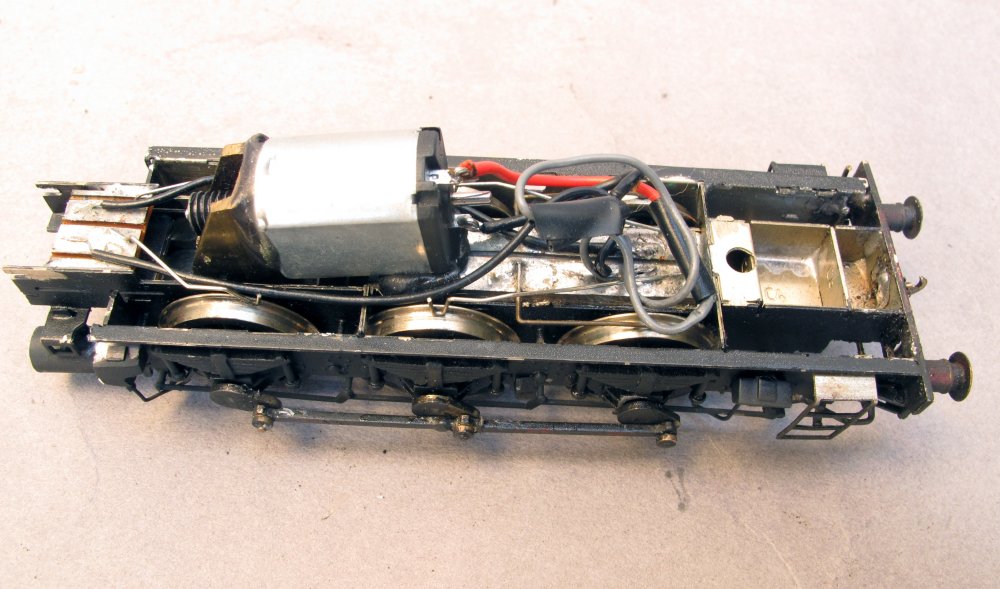 Otherwise built much as intended, my 08 has been upgraded with Ultrascale double-reduction gears
and a High Level iron-core motor. The moment when the transmission first engaged under power and
the loco moved off along my test track, steadily and dead slow, was one of the highlights of the
year just past. Installing pick-ups is something many people detest but for me it’s probably the
most enjoyable part of chassis building. These are of 0.33 brass wire, lightly sprung, with a tiny
half-loop at the business end to minimise the point of contact. I normally prefer 0.22 beryllium
copper which is super-springy but I’d run out. Just ignore the tangle of wiring.
Otherwise built much as intended, my 08 has been upgraded with Ultrascale double-reduction gears
and a High Level iron-core motor. The moment when the transmission first engaged under power and
the loco moved off along my test track, steadily and dead slow, was one of the highlights of the
year just past. Installing pick-ups is something many people detest but for me it’s probably the
most enjoyable part of chassis building. These are of 0.33 brass wire, lightly sprung, with a tiny
half-loop at the business end to minimise the point of contact. I normally prefer 0.22 beryllium
copper which is super-springy but I’d run out. Just ignore the tangle of wiring.
 I’m almost twice as old as the kit itself, so I’ve been through entire generations of 08s and
looked at them from all kinds of angles, from late-50s Kitmaster and Hornby-Dublo three-rail, to
revamped Lima semi-scratchbuilt on a Impetus chassis, to Bachmann, Hornby and 3D-printed BPGV 08s.
The more that’s bought in however, the less I seem to enjoy it. I’m sure the forthcoming Accurascale
08 – exclusively and inadvertently premiered by us as far back as April 2025 will eclipse everything
that’s gone before in terms of overall excellence, but where’s the lasting satisfaction in simply
buying a loco? I look at something as complicated as this 08 and think, how could I have done it better?
I’m almost twice as old as the kit itself, so I’ve been through entire generations of 08s and
looked at them from all kinds of angles, from late-50s Kitmaster and Hornby-Dublo three-rail, to
revamped Lima semi-scratchbuilt on a Impetus chassis, to Bachmann, Hornby and 3D-printed BPGV 08s.
The more that’s bought in however, the less I seem to enjoy it. I’m sure the forthcoming Accurascale
08 – exclusively and inadvertently premiered by us as far back as April 2025 will eclipse everything
that’s gone before in terms of overall excellence, but where’s the lasting satisfaction in simply
buying a loco? I look at something as complicated as this 08 and think, how could I have done it better?

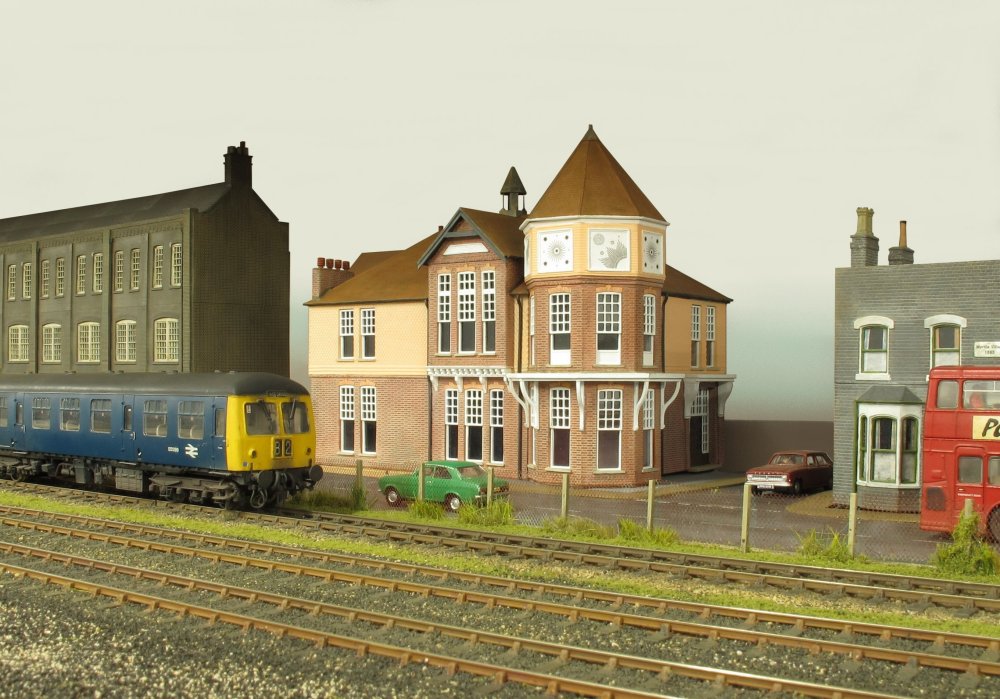 The Tate Institute building is now finished, and a start made on the roadway and pavements
surrounding it. Some buildings have been borrowed from the main layout to form an idea for
the next structures to be constructed.
The Tate Institute building is now finished, and a start made on the roadway and pavements
surrounding it. Some buildings have been borrowed from the main layout to form an idea for
the next structures to be constructed.
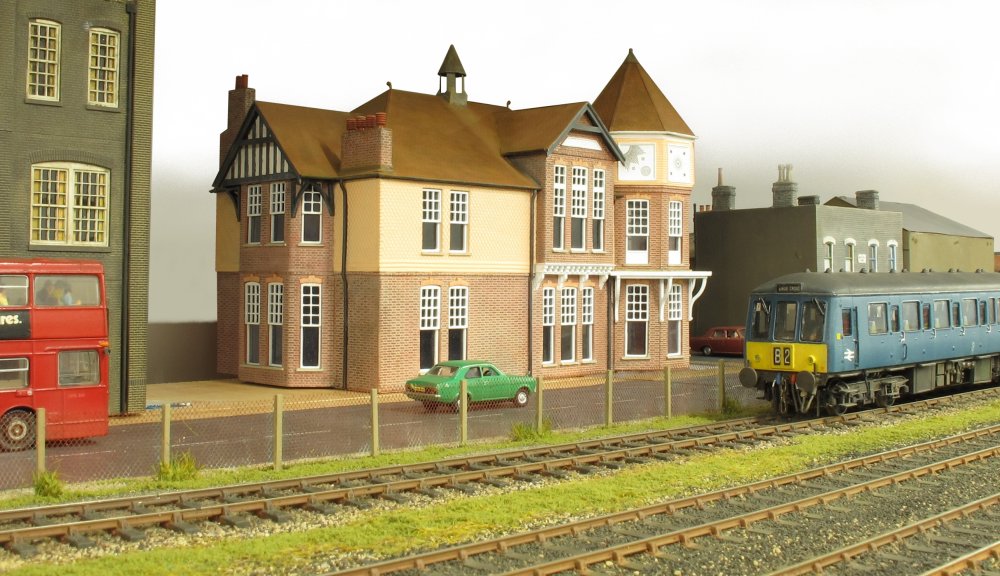 The railway boundary fence with a narrow footpath defines the edge and width of the road,
so the rest of the area can start to be mapped out.
The railway boundary fence with a narrow footpath defines the edge and width of the road,
so the rest of the area can start to be mapped out.
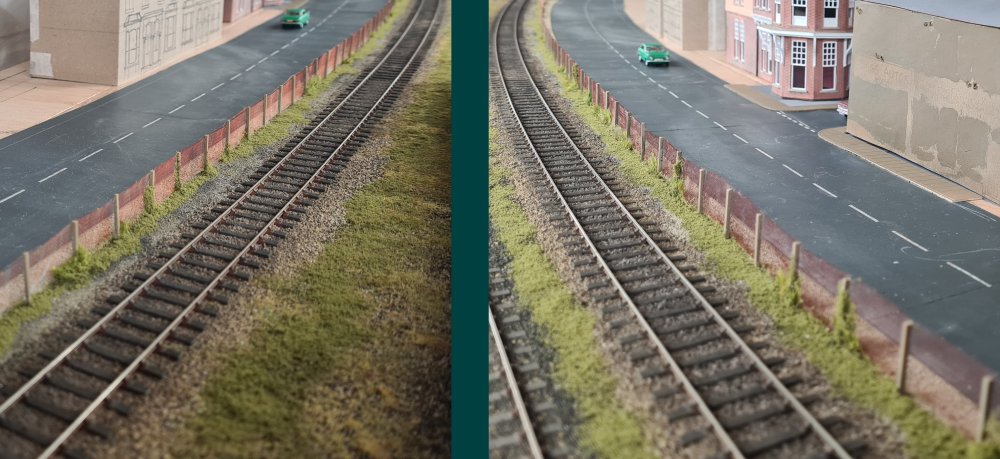 Over 80 fence posts made from 0.060" square Evergreen styrene section have been planted, using
the nylon netting from Ratio for the chainlink fence. The road surface is 1200 grade wet & dry
abrasive paper with the road markings made from strips of masking tape.
Over 80 fence posts made from 0.060" square Evergreen styrene section have been planted, using
the nylon netting from Ratio for the chainlink fence. The road surface is 1200 grade wet & dry
abrasive paper with the road markings made from strips of masking tape.
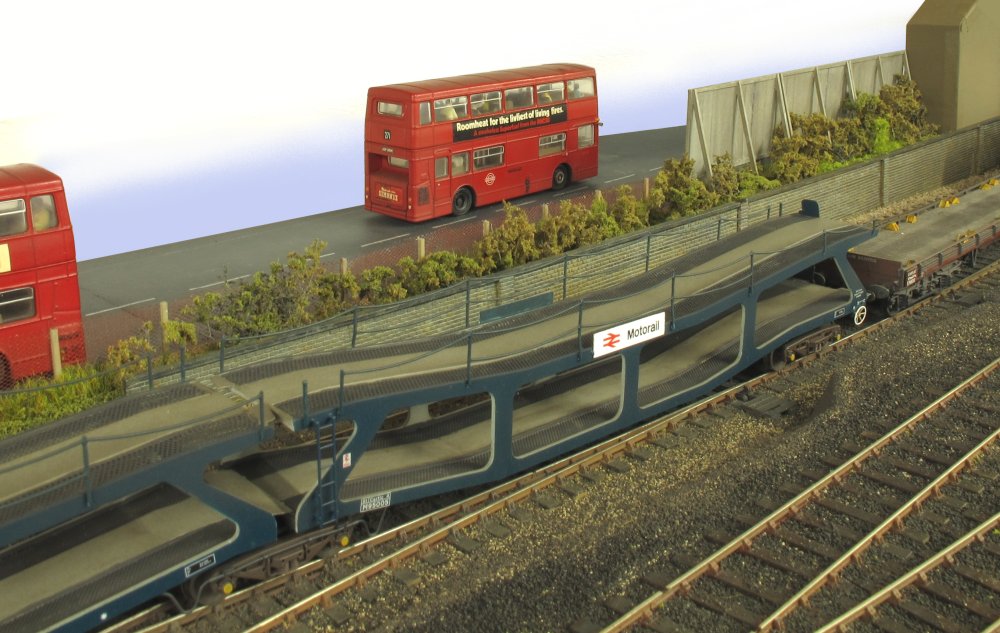 As the road goes off-scene at this end of the layout, advertising hoardings have been built
to provide a transition, with foliage and small trees growing in the inaccessible areas. Also
visible in this view is part of an empty car train formed of Cartic-4 sets and Carflat wagons.
As the road goes off-scene at this end of the layout, advertising hoardings have been built
to provide a transition, with foliage and small trees growing in the inaccessible areas. Also
visible in this view is part of an empty car train formed of Cartic-4 sets and Carflat wagons.
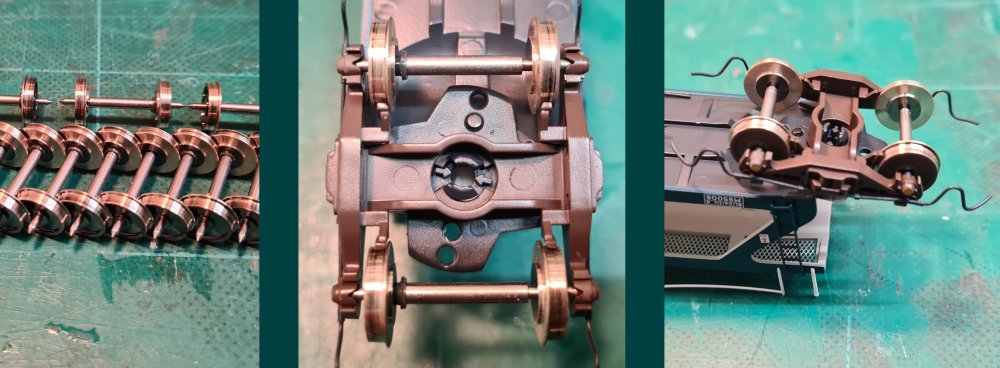 The recent Cartic-4 release by Revolution Trains is an easy conversion to EM gauge utilising
the existing wheels. With 0.45mm faced off the inside and the flanges polished smooth, each
wheel is pulled out on the axle by just over 0.5mm to EM gauge. Despite the insulated bush
staying in place, there's still a lot of width left on the bush to hold the wheel securely,
and in this conversion no trimming was required on the brake blocks. One essential thing at
this stage was to paint the wheel faces, as the factory mirror finish is somewhat glaring.
The recent Cartic-4 release by Revolution Trains is an easy conversion to EM gauge utilising
the existing wheels. With 0.45mm faced off the inside and the flanges polished smooth, each
wheel is pulled out on the axle by just over 0.5mm to EM gauge. Despite the insulated bush
staying in place, there's still a lot of width left on the bush to hold the wheel securely,
and in this conversion no trimming was required on the brake blocks. One essential thing at
this stage was to paint the wheel faces, as the factory mirror finish is somewhat glaring.
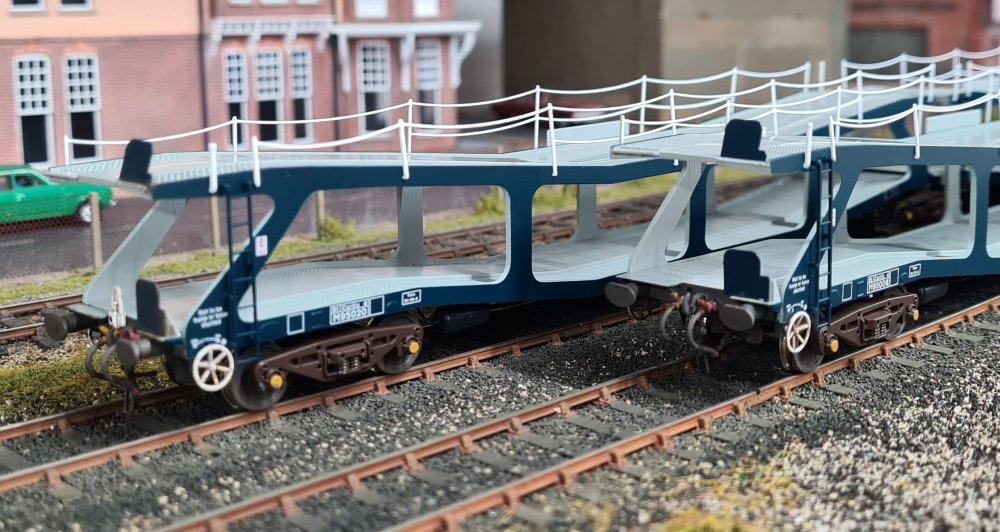 The sets are now ready to roll on the layout but are looking very mid-60s ex-works, so they
are crying out for some customisation to bring them more into their grubby 1970s condition.
The Motorail branded Cartic-4 sets had a relatively short life in Motorail service, instead being
used for deliveries of vehicles from the manufacturing plants to distribution centres. From the
late 1960s onwards, single deck Carflats were used for Motorail services.
The sets are now ready to roll on the layout but are looking very mid-60s ex-works, so they
are crying out for some customisation to bring them more into their grubby 1970s condition.
The Motorail branded Cartic-4 sets had a relatively short life in Motorail service, instead being
used for deliveries of vehicles from the manufacturing plants to distribution centres. From the
late 1960s onwards, single deck Carflats were used for Motorail services.
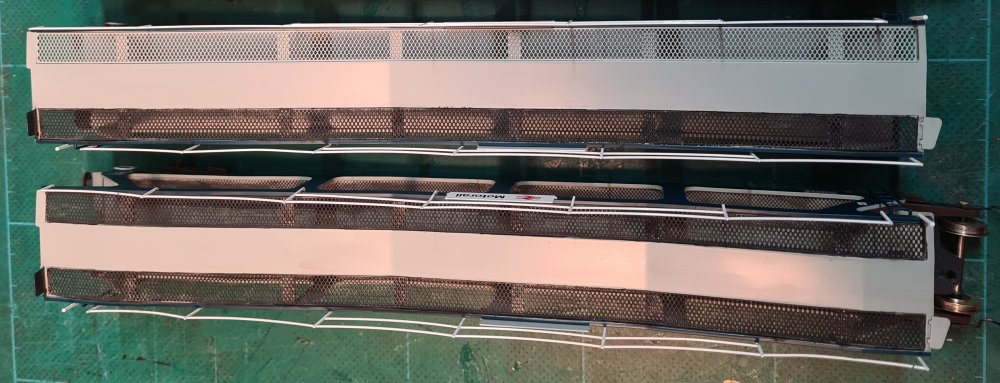 The upper and lower deck tracks were painted using a mix of Humbrol black 33 and
chocolate 98, then stippled to remove any paint clogging up the holes.
The upper and lower deck tracks were painted using a mix of Humbrol black 33 and
chocolate 98, then stippled to remove any paint clogging up the holes.
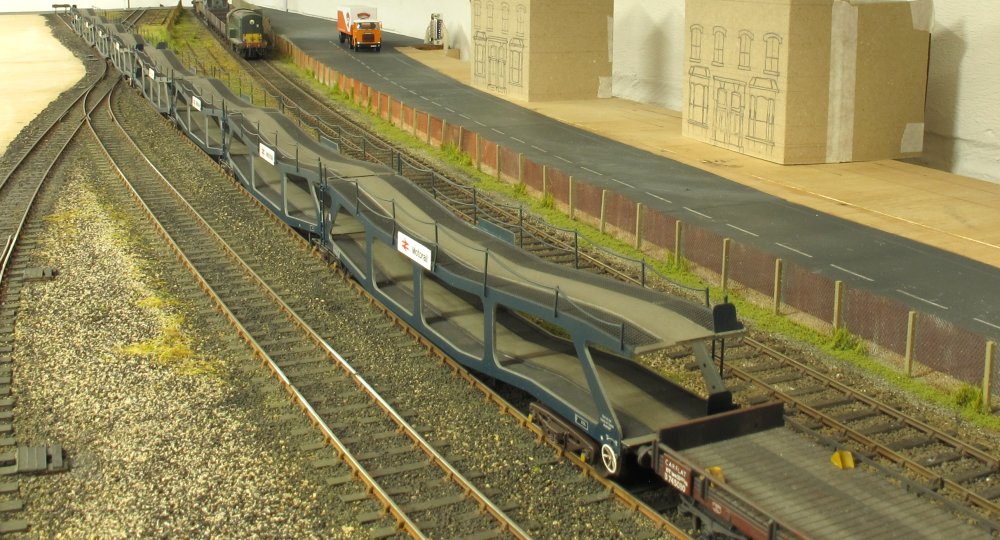 The two finished Cartic-4 sets are captured here ready for service, and will remain as a
empty southbound rake with the addition of a few Carflats (later FVX). Using photographs for
reference, the handrails were painted blue and finished off with some light weathering.
The two finished Cartic-4 sets are captured here ready for service, and will remain as a
empty southbound rake with the addition of a few Carflats (later FVX). Using photographs for
reference, the handrails were painted blue and finished off with some light weathering.
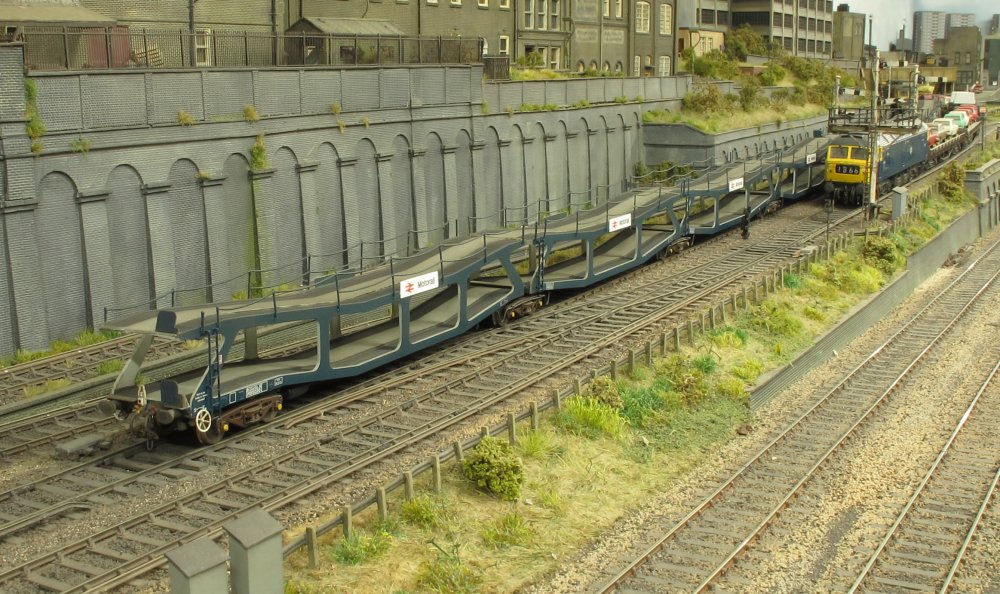 Photographs show a variety of empty car trains heading south along the ECML, branded Toleman, Ford,
and MAT. Some of the Motorail sets had a full set of white Motorail panels and others with a reduced
number. I did look at trying to remove one, but they're stuck fast and the potential damage to the
wagon sides wasn't worth the effort.
Photographs show a variety of empty car trains heading south along the ECML, branded Toleman, Ford,
and MAT. Some of the Motorail sets had a full set of white Motorail panels and others with a reduced
number. I did look at trying to remove one, but they're stuck fast and the potential damage to the
wagon sides wasn't worth the effort.
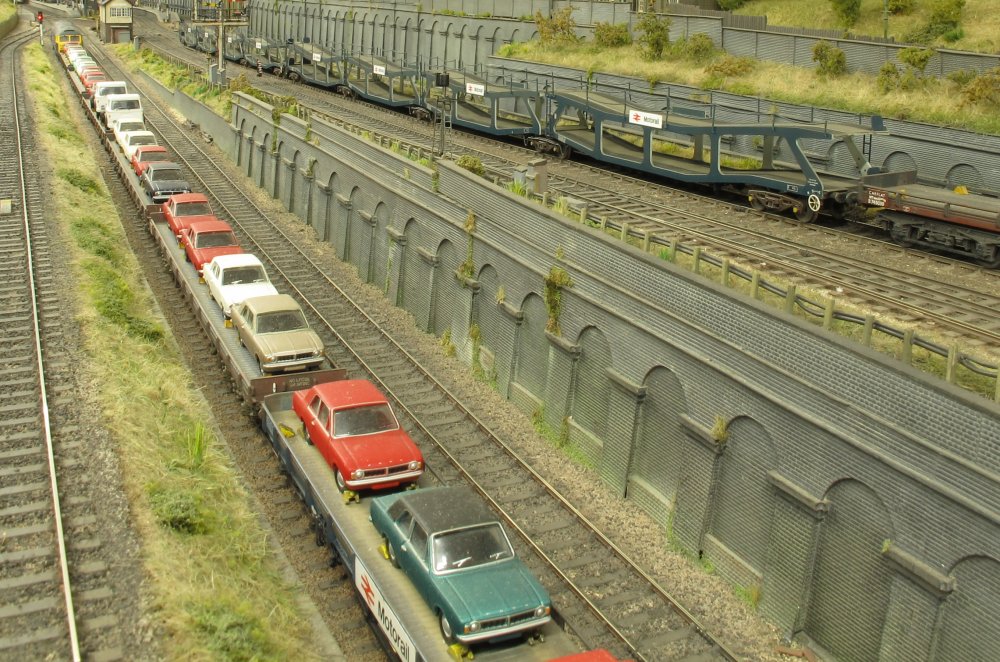 With new Ford vehicles heading north on a mix of BR and LMS Carflats (with one borrowed from the
Motorail fleet), an empty car train is seen heading south to Dagenham for loading.
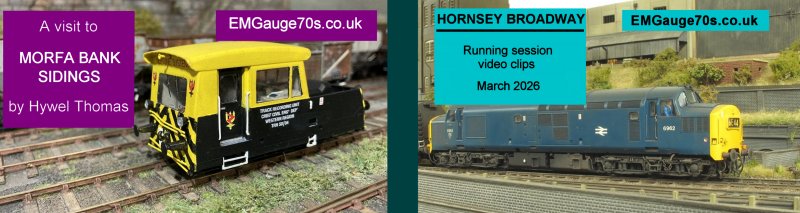
Please click on the above image to view the latest videos - A visit to Morfa Bank Sidings
and clips from running sessions at Hornsey Broadway during March 2026.
With new Ford vehicles heading north on a mix of BR and LMS Carflats (with one borrowed from the
Motorail fleet), an empty car train is seen heading south to Dagenham for loading.
Please click on the above image to view the latest videos - A visit to Morfa Bank Sidings
and clips from running sessions at Hornsey Broadway during March 2026.