
*********************************************************************************************************************************************
FEBRUARY 2026 UPDATE
*********************************************************************************************************************************************
KIER HARDY
*********************************************************************************************************************************************
KARL CROWTHER
*********************************************************************************************************************************************
ALAN DEWEY
*********************************************************************************************************************************************
MIKE WHITCHURCH
*********************************************************************************************************************************************
IAN MANDERSON
*********************************************************************************************************************************************

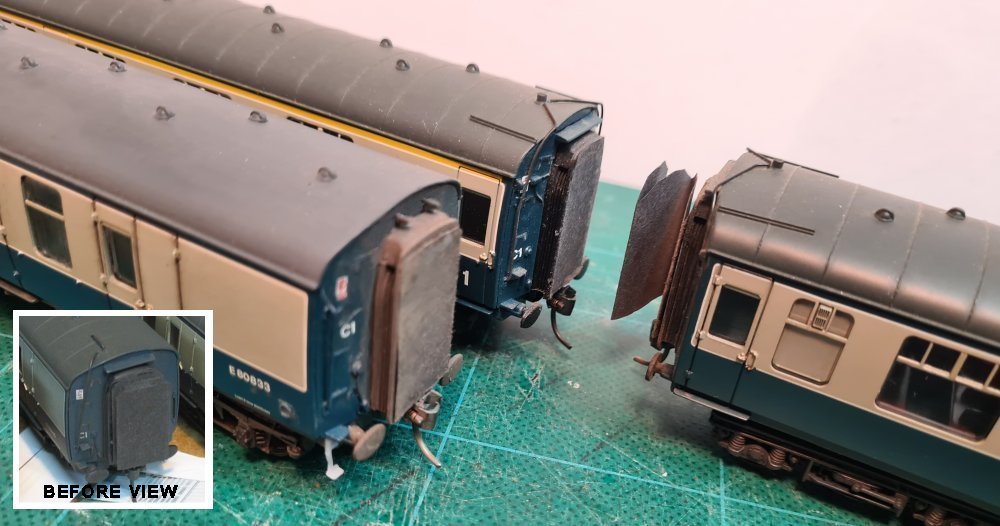 A few more Bachmann mark 1 coaches have been on my workbench during the last month, having
the overscale weld beads (roof ribs) removed, using a sharp blade and finishing off with a
file. E80833 is a full brake, which has also had the ficticious filler pipes and grab handles
removed from the roof and converted to a vertical handrail (filler pipes onto the roof were
only fitted to vehicles with lavatories). Other detail work on these coaches includes removal
of the platform above the corridor connector and replacing with 2 small brackets, and fitting
3D printed corner footsteps to the bufferbeam.
A few more Bachmann mark 1 coaches have been on my workbench during the last month, having
the overscale weld beads (roof ribs) removed, using a sharp blade and finishing off with a
file. E80833 is a full brake, which has also had the ficticious filler pipes and grab handles
removed from the roof and converted to a vertical handrail (filler pipes onto the roof were
only fitted to vehicles with lavatories). Other detail work on these coaches includes removal
of the platform above the corridor connector and replacing with 2 small brackets, and fitting
3D printed corner footsteps to the bufferbeam.
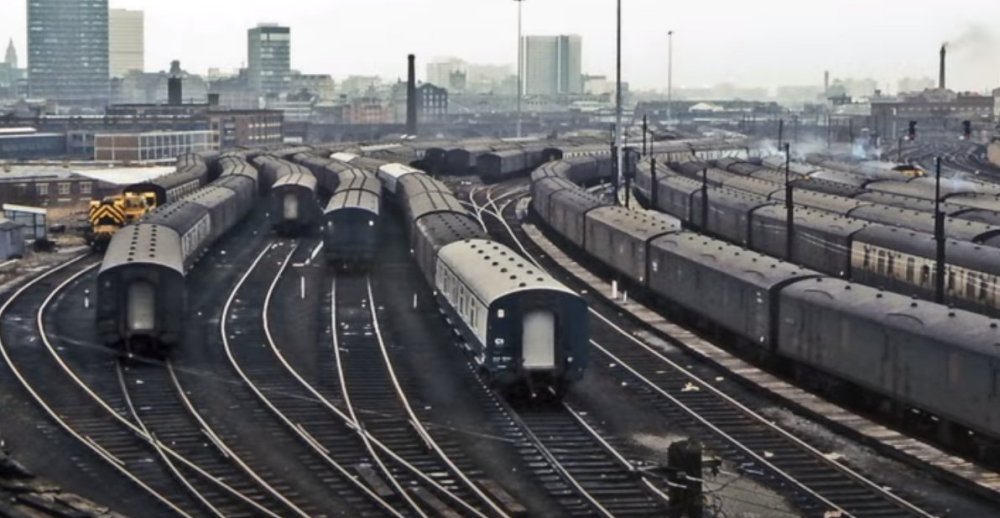 Red Bank carriage sidings, Manchester in the mid-1970s. Of particular interest is the
variety of roof colours, as a result of different works paint specifications and weathering
after periods in traffic.
Red Bank carriage sidings, Manchester in the mid-1970s. Of particular interest is the
variety of roof colours, as a result of different works paint specifications and weathering
after periods in traffic.
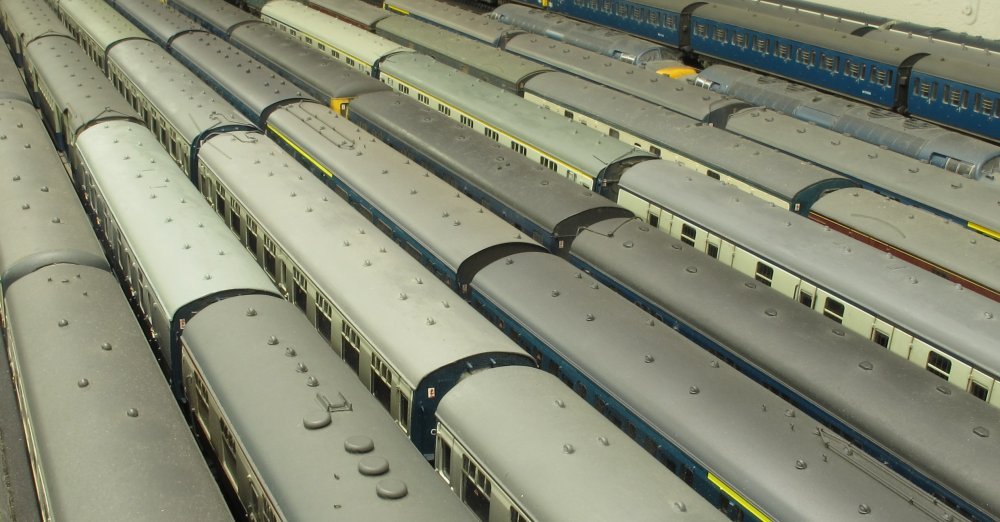 With the detail work complete, each vehicle has a roof repaint in slightly differing shades
of grey to represent the variety found on coaching stock rakes.
With the detail work complete, each vehicle has a roof repaint in slightly differing shades
of grey to represent the variety found on coaching stock rakes.
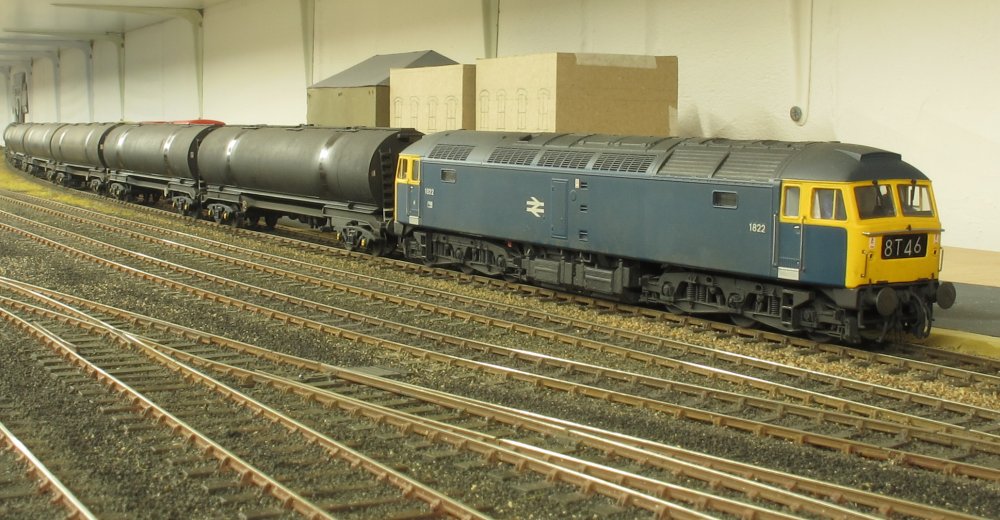 A tanker train behind Brush 4 1822 stands on the branch line. The new layout provides an
easy means to assemble different rakes, before driving them down on to the main layout.
A tanker train behind Brush 4 1822 stands on the branch line. The new layout provides an
easy means to assemble different rakes, before driving them down on to the main layout.
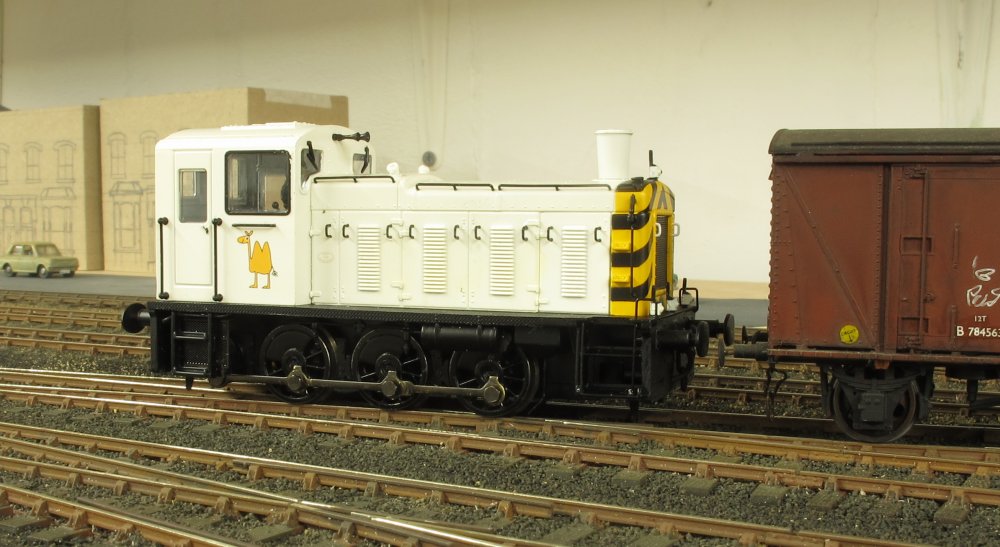 New into the Hornsey fleet is this Bachmann Class 03 sound fitted model acquired at a bargain
price. The conversion to EM gauge is very straightforward utilising the existing wheels, and
it's been fitted with a Staco 3A stay alive for extra reliability. A fitting guide can be found
here on YouChoos. I'm not so sure about the livery, so it will most likely will be repainted.
New into the Hornsey fleet is this Bachmann Class 03 sound fitted model acquired at a bargain
price. The conversion to EM gauge is very straightforward utilising the existing wheels, and
it's been fitted with a Staco 3A stay alive for extra reliability. A fitting guide can be found
here on YouChoos. I'm not so sure about the livery, so it will most likely will be repainted.
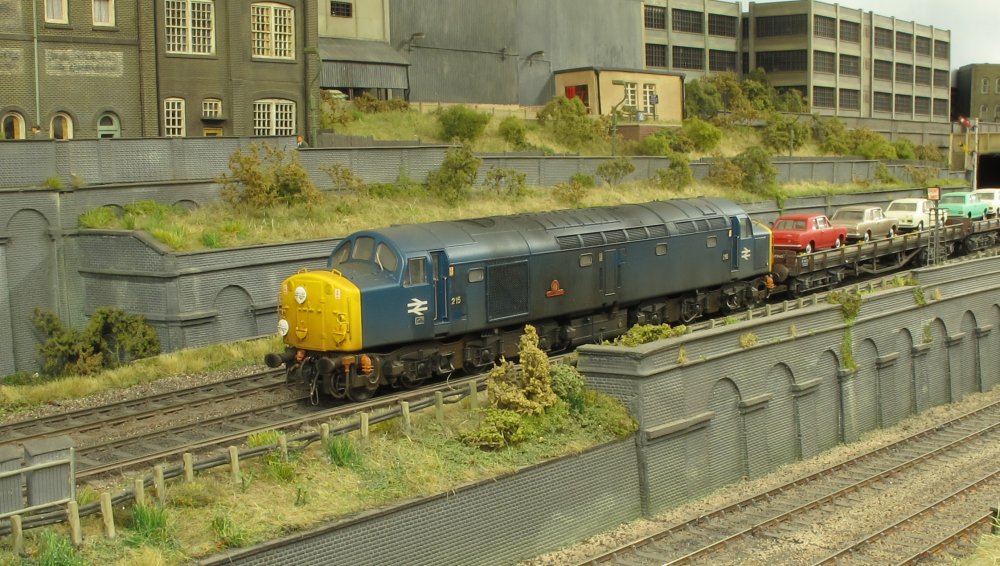 Visiting motive power from the Eastwell fleet - English Electric type 4 215 Aquitania is
captured at the head of a car train....
Visiting motive power from the Eastwell fleet - English Electric type 4 215 Aquitania is
captured at the head of a car train....
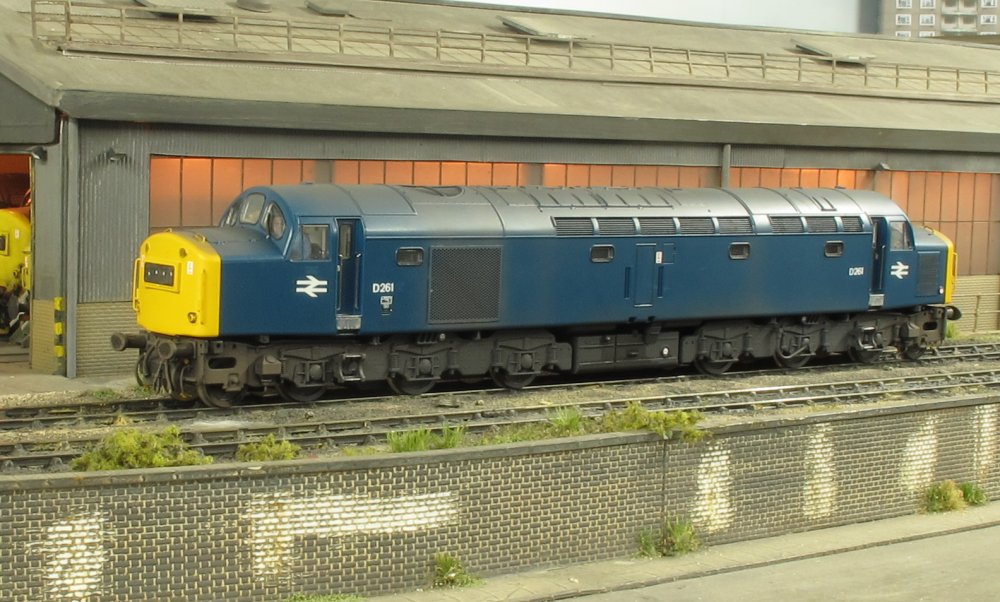 .... and from the Shenston Road fleet is D261, a Scottish allocated type 4 recently into service.

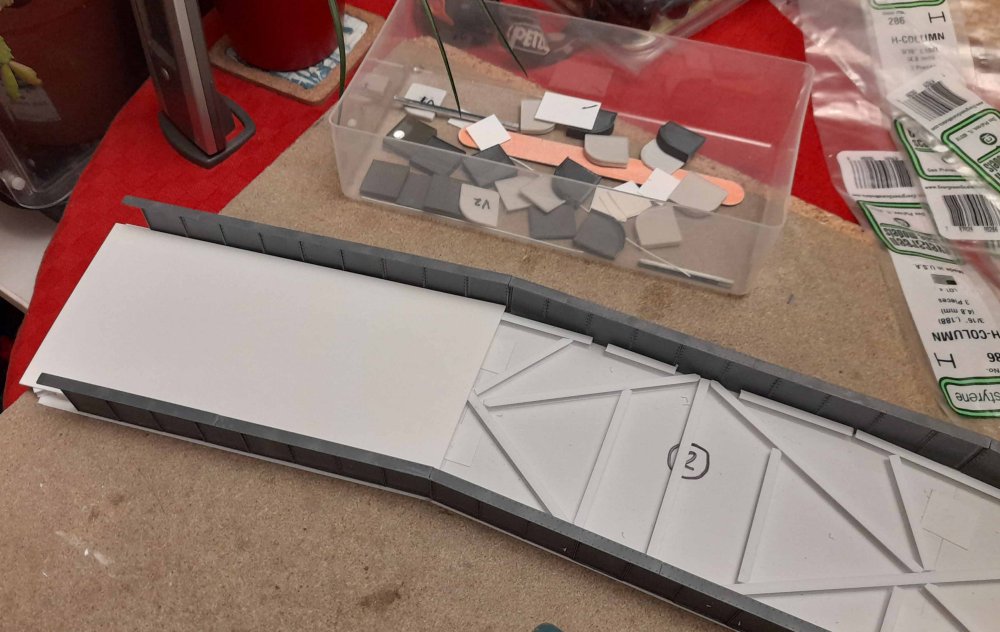 Lots of progress on the viaduct. Here you can see how I’ve made up the deck support by laying
lengths of Evergreen H section plastic onto the base layer, then with the deck itself on top
from 40 thou Plastikard.
Lots of progress on the viaduct. Here you can see how I’ve made up the deck support by laying
lengths of Evergreen H section plastic onto the base layer, then with the deck itself on top
from 40 thou Plastikard.
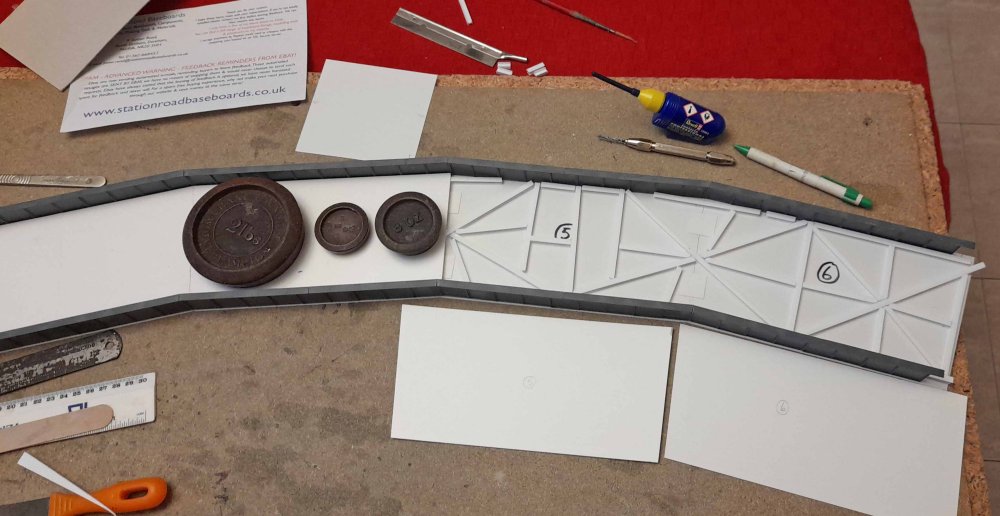 The last two deck sections ready to be glued in place. I managed to commandeer our dining
room table for this, on top of the trusty piece of flooring grade chipboard that I also built
all the track on. Not present as yet, a series of 2mm holes were drilled into the base layer
in strategic locations to allow adhesive vapour to escape.
The last two deck sections ready to be glued in place. I managed to commandeer our dining
room table for this, on top of the trusty piece of flooring grade chipboard that I also built
all the track on. Not present as yet, a series of 2mm holes were drilled into the base layer
in strategic locations to allow adhesive vapour to escape.
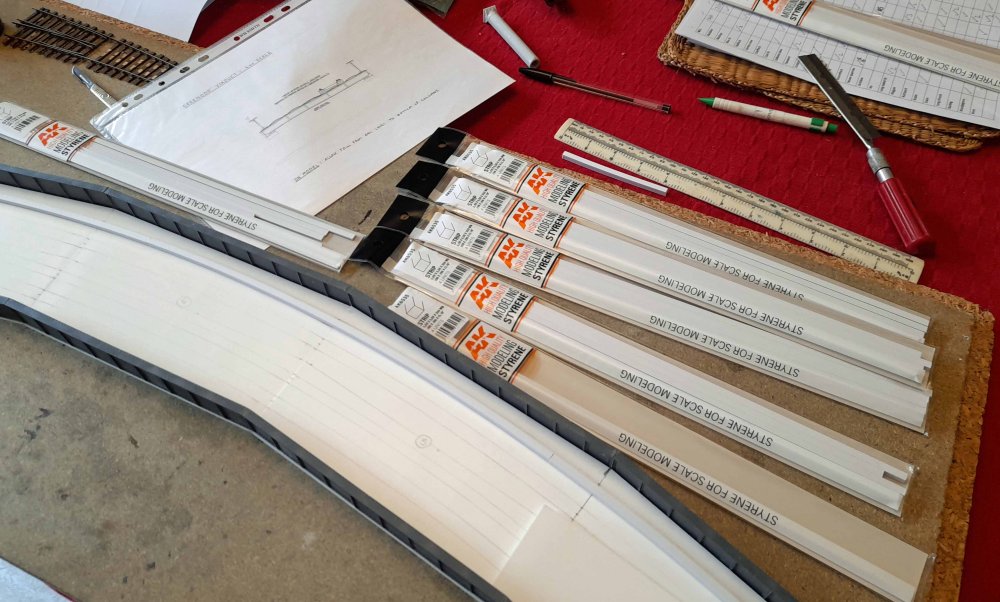 The next stage was to build up the timber baulks that support the rails, which involved rather
a lot of plastic strip and section from AK Interactive. The biggest available was 5mm square,
which was fine for height, but I’ve had to add 1mm and / or 2mm strips either side to get the
required width – something like 9mm for the inside rail with checkrail, and 7mm outside. Here
the deck has been carefully marked out and the first length of ‘timber’ added. I won’t know
if I’ve got the spacing right until I actually lay the track….
The next stage was to build up the timber baulks that support the rails, which involved rather
a lot of plastic strip and section from AK Interactive. The biggest available was 5mm square,
which was fine for height, but I’ve had to add 1mm and / or 2mm strips either side to get the
required width – something like 9mm for the inside rail with checkrail, and 7mm outside. Here
the deck has been carefully marked out and the first length of ‘timber’ added. I won’t know
if I’ve got the spacing right until I actually lay the track….
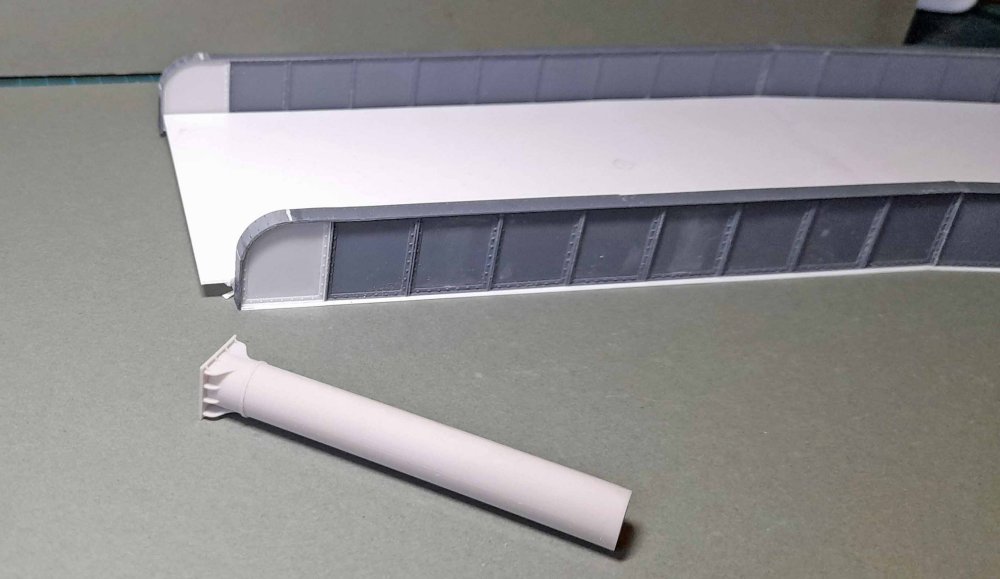 Close up of the decking all now completed, plus one of the 3D printed support columns (a total
of 14 will be needed) and the curved end girders of the viaduct – also 3D printed.
Close up of the decking all now completed, plus one of the 3D printed support columns (a total
of 14 will be needed) and the curved end girders of the viaduct – also 3D printed.
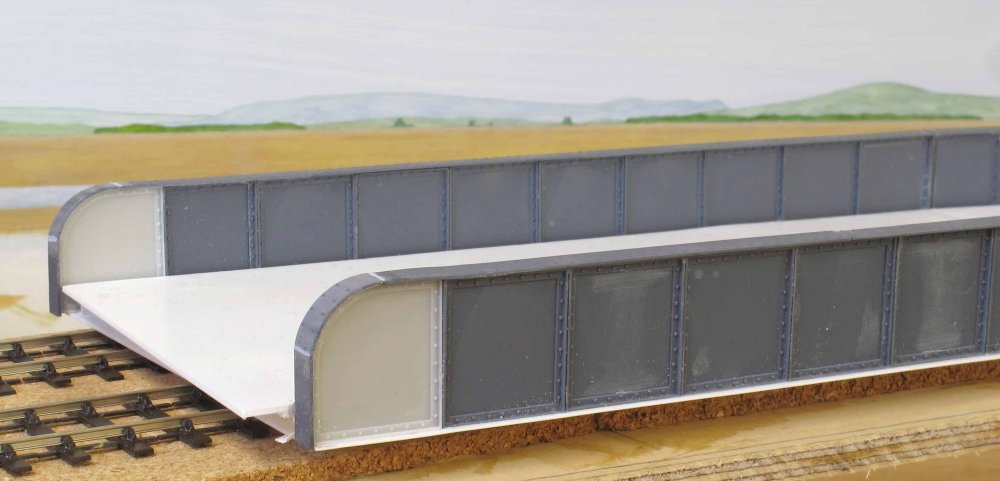 And the viaduct placed in roughly its final position on the layout, again showing the 3D
printed, end girder sections. My main concern is that the track across it will match up with
that on either side…
And the viaduct placed in roughly its final position on the layout, again showing the 3D
printed, end girder sections. My main concern is that the track across it will match up with
that on either side…
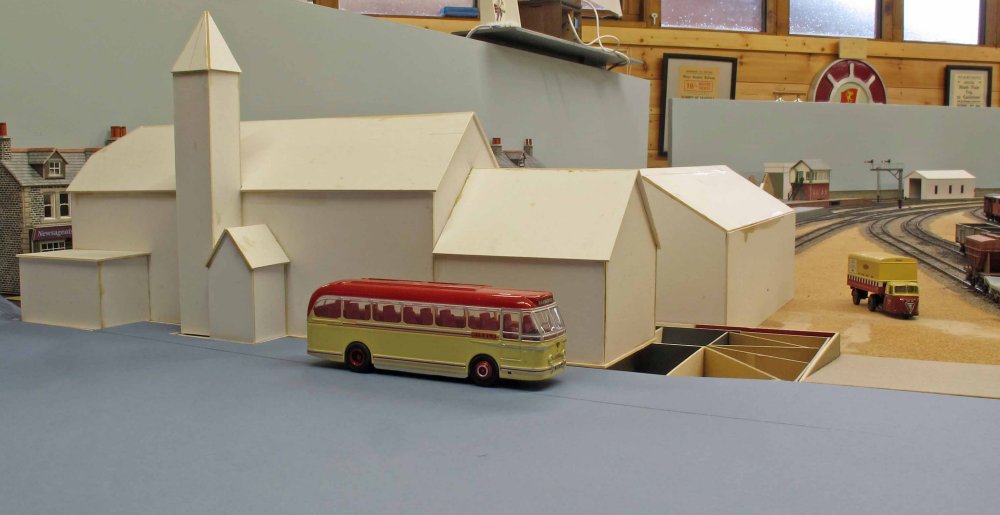 Over at Kendal I’ve made the basic ‘insert’ on which the station forecourt will be modelled
(mounting card). This takes the form of a removable assembly that can be placed on the layout
for scenic effect, and then removed to allow trains to run.
Over at Kendal I’ve made the basic ‘insert’ on which the station forecourt will be modelled
(mounting card). This takes the form of a removable assembly that can be placed on the layout
for scenic effect, and then removed to allow trains to run.
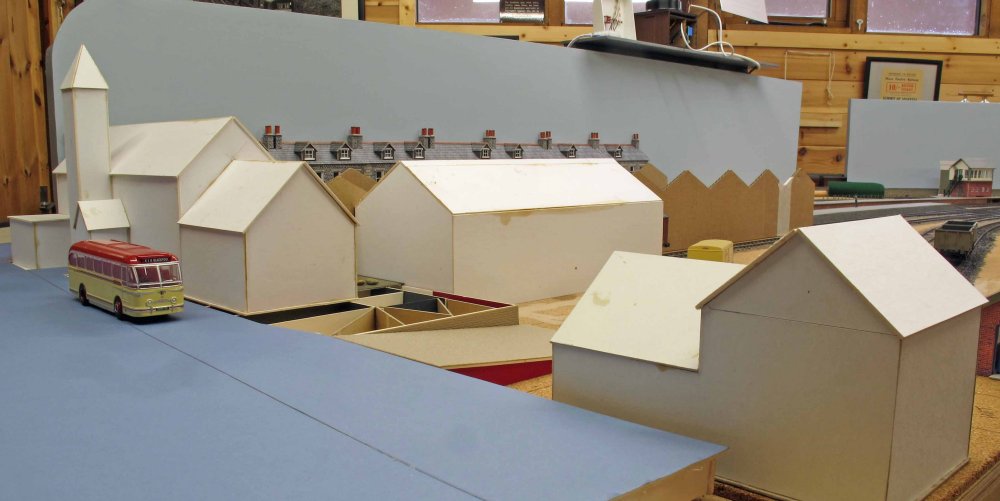 Another view across the Kendal station frontage. The building on the right has been inspired
by a structure in the goods yard at Grange-over-Sands and is what I believe to be a stable block.
Another view across the Kendal station frontage. The building on the right has been inspired
by a structure in the goods yard at Grange-over-Sands and is what I believe to be a stable block.
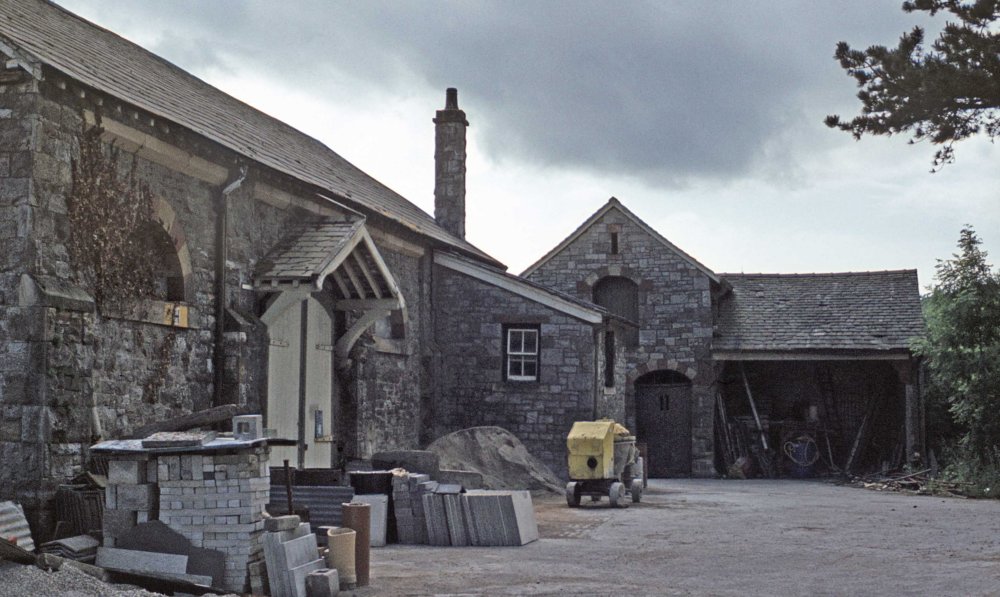 A late1970s view I took in Grange-over-Sands goods yard showing the stable block on which the
model will be based, along with the goods shed which will also inform the structure at Kendal.
All in yellow brick of course, rather than stone as in the original structures.
A late1970s view I took in Grange-over-Sands goods yard showing the stable block on which the
model will be based, along with the goods shed which will also inform the structure at Kendal.
All in yellow brick of course, rather than stone as in the original structures.
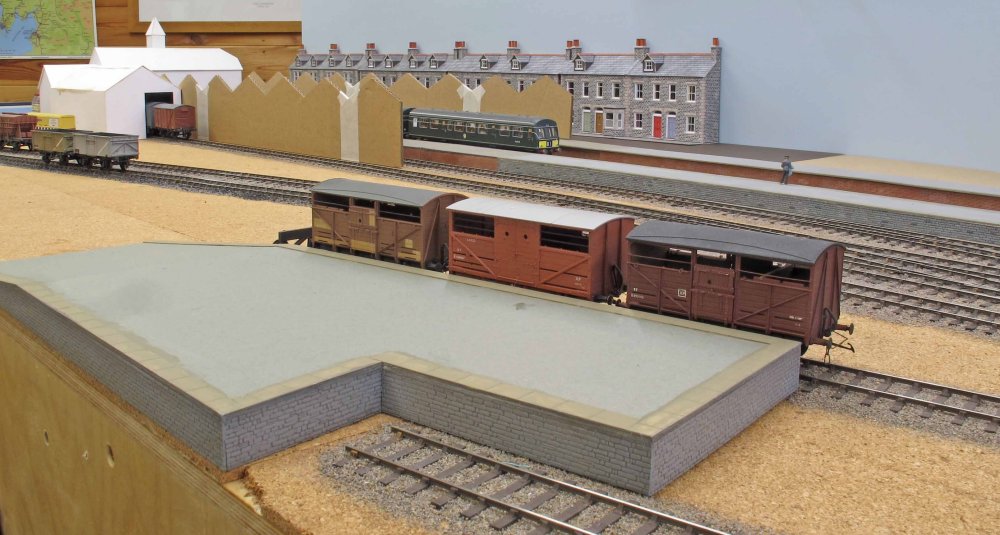 A view across from the cattle dock area, note that the terrace behind the station has doubled
in length courtesy of two more Metcalfe kits. The Class 101 DMU comprises 1N53, the 09.00
departure for Leeds City North.
A view across from the cattle dock area, note that the terrace behind the station has doubled
in length courtesy of two more Metcalfe kits. The Class 101 DMU comprises 1N53, the 09.00
departure for Leeds City North.
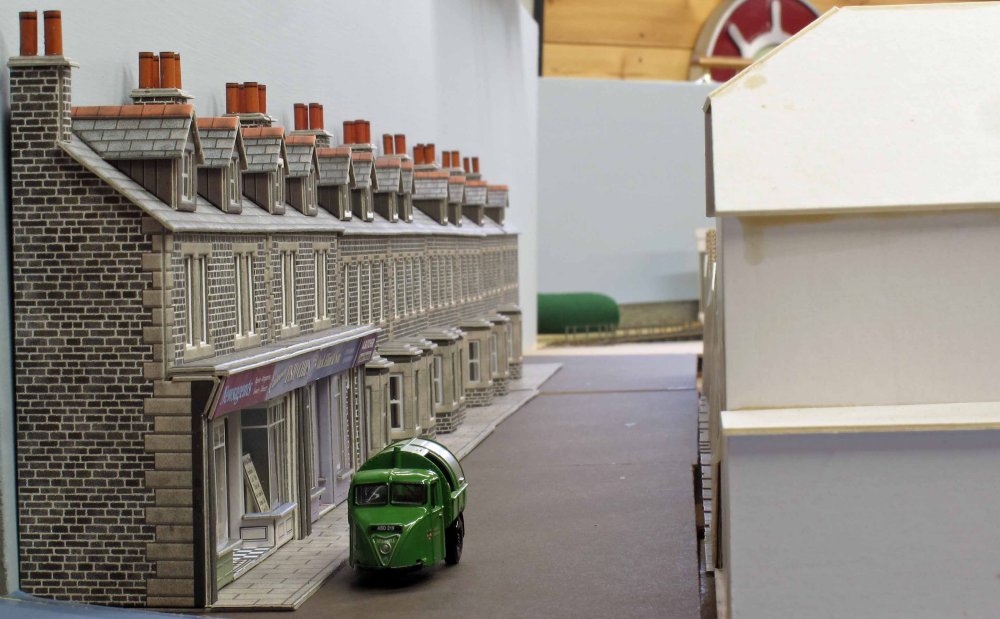 A view along what I am minded to call Castle Terrace running along and behind the station buildings.
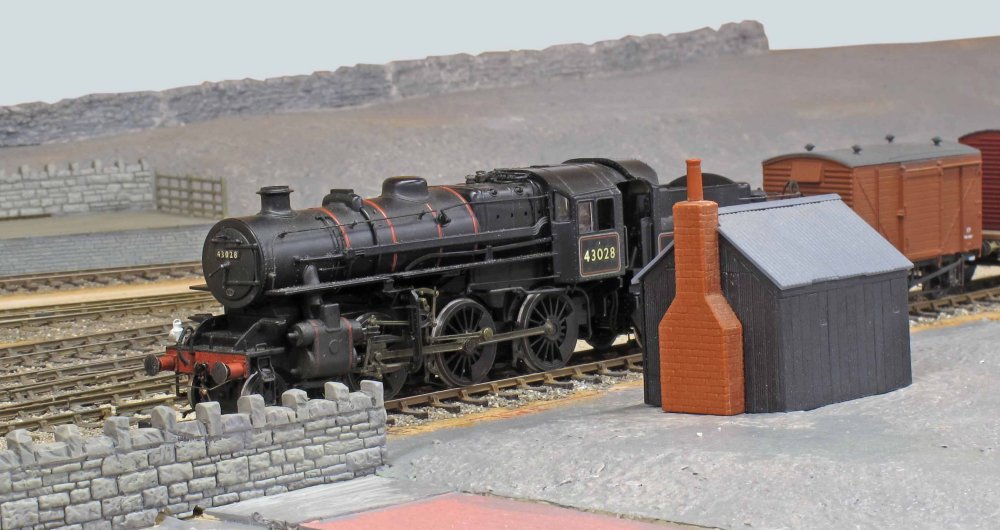 While over at Kentside, the morning pickup goods, 9L38 the 07.50 Carnforth-Dent Head Junction
has completed its shunting of the goods yard and is awaiting in the down lay-by siding to
depart for Kendal at 08.55. This siding was only added as an afterthought, basically because
there was room for it, but has turned out to be most beneficial in enabling the down goods to
stand clear of the running lines. 43028 is a Bachmann loco converted using the Brassmasters kit,
and runs very nicely.
While over at Kentside, the morning pickup goods, 9L38 the 07.50 Carnforth-Dent Head Junction
has completed its shunting of the goods yard and is awaiting in the down lay-by siding to
depart for Kendal at 08.55. This siding was only added as an afterthought, basically because
there was room for it, but has turned out to be most beneficial in enabling the down goods to
stand clear of the running lines. 43028 is a Bachmann loco converted using the Brassmasters kit,
and runs very nicely.
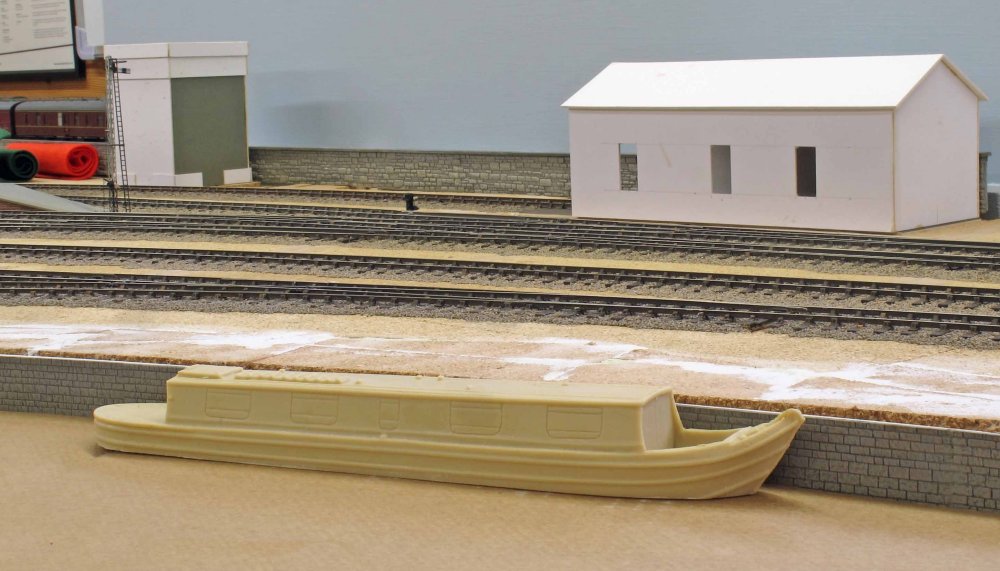 Back to Kendal once again, this time the canal basin being worked on, though the water level
still needs to come up higher, and somebody will probably tell me the narrow boat is too modern….
Back to Kendal once again, this time the canal basin being worked on, though the water level
still needs to come up higher, and somebody will probably tell me the narrow boat is too modern….
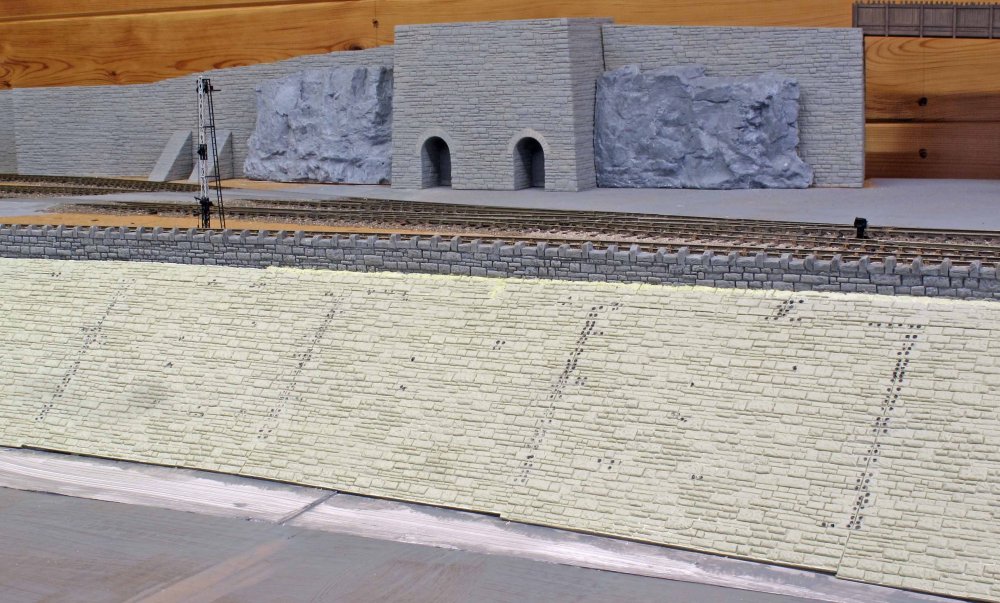 And finally, back to Kentside, where work continues gradually on refining the vast expanse of Wills stonework.
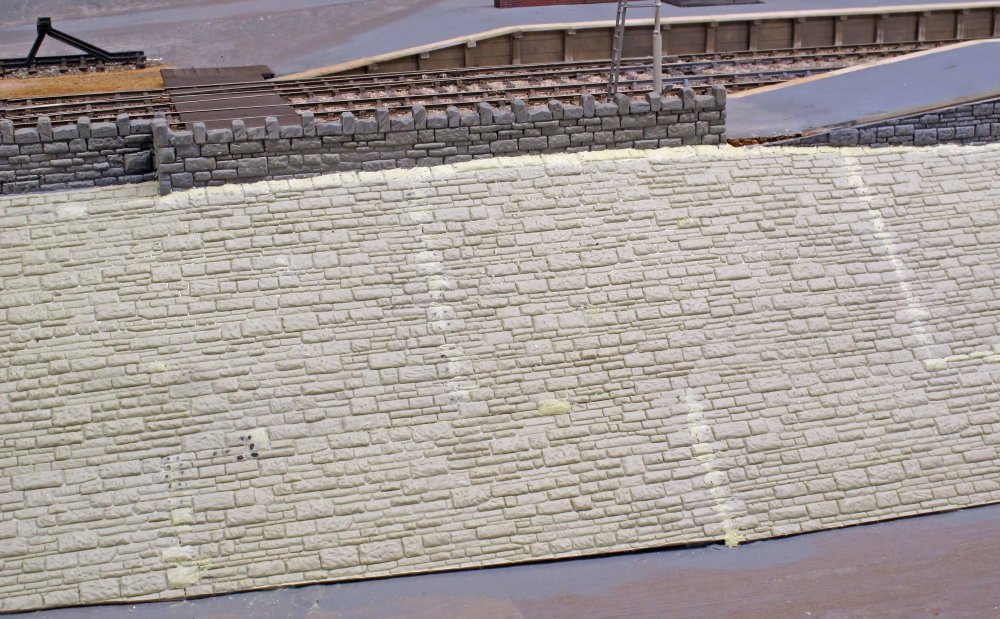 And here after treatment with Milliput. I think I’m around a third of a way through it……

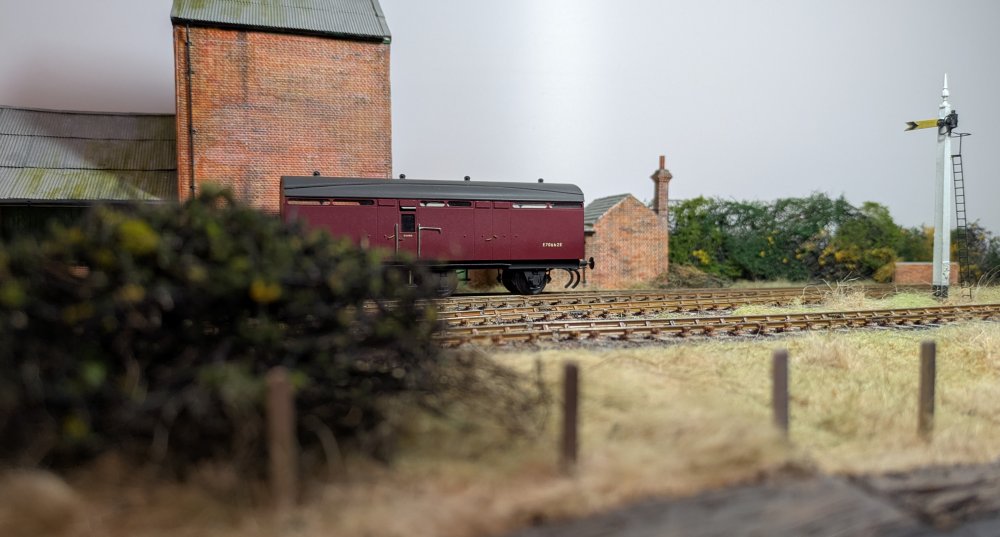 A Thompson LNER 6 Wheeled design passenger brake van stands in the yard, used as storage
for redundant equipment now that through working is finished. A very unusual feature is
the axleguards which are placed outside the springs.
A Thompson LNER 6 Wheeled design passenger brake van stands in the yard, used as storage
for redundant equipment now that through working is finished. A very unusual feature is
the axleguards which are placed outside the springs.
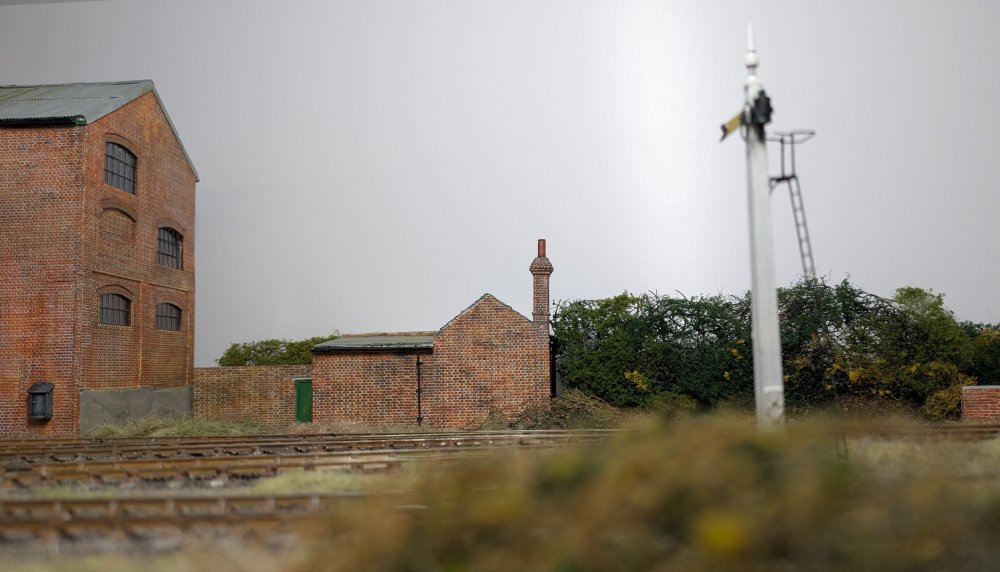 With the withdrawal of through services to Haverhill, freight trains reverse at Whitley. To
protect the road crossing at Great Yeldham a GER fixed distant signal has been placed.
With the withdrawal of through services to Haverhill, freight trains reverse at Whitley. To
protect the road crossing at Great Yeldham a GER fixed distant signal has been placed.
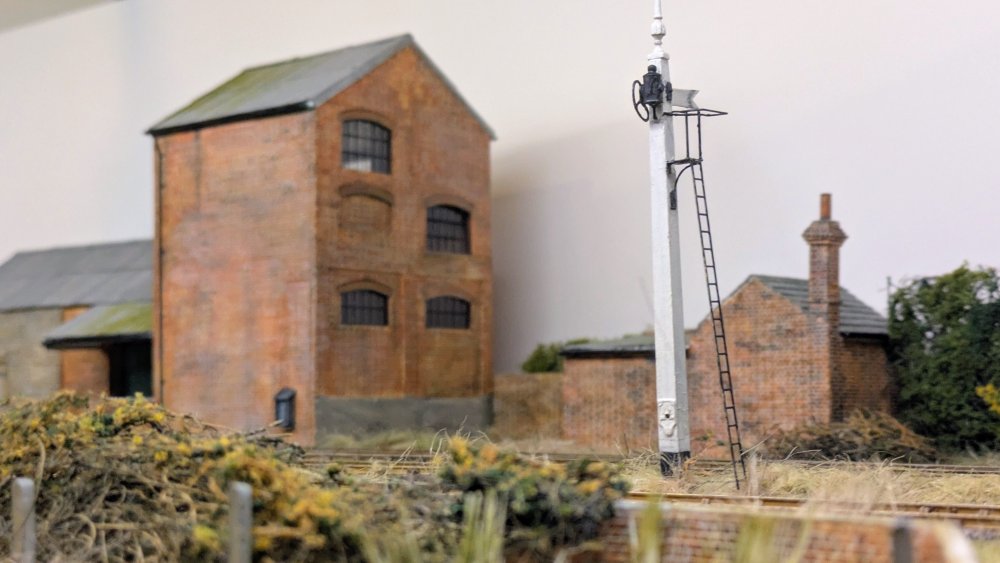 There were a number of these on the Colne Valley Railway and throughout East Anglia. With no
spectacle colour, this finally completes the scenic balance on the Whitley layout.
There were a number of these on the Colne Valley Railway and throughout East Anglia. With no
spectacle colour, this finally completes the scenic balance on the Whitley layout.

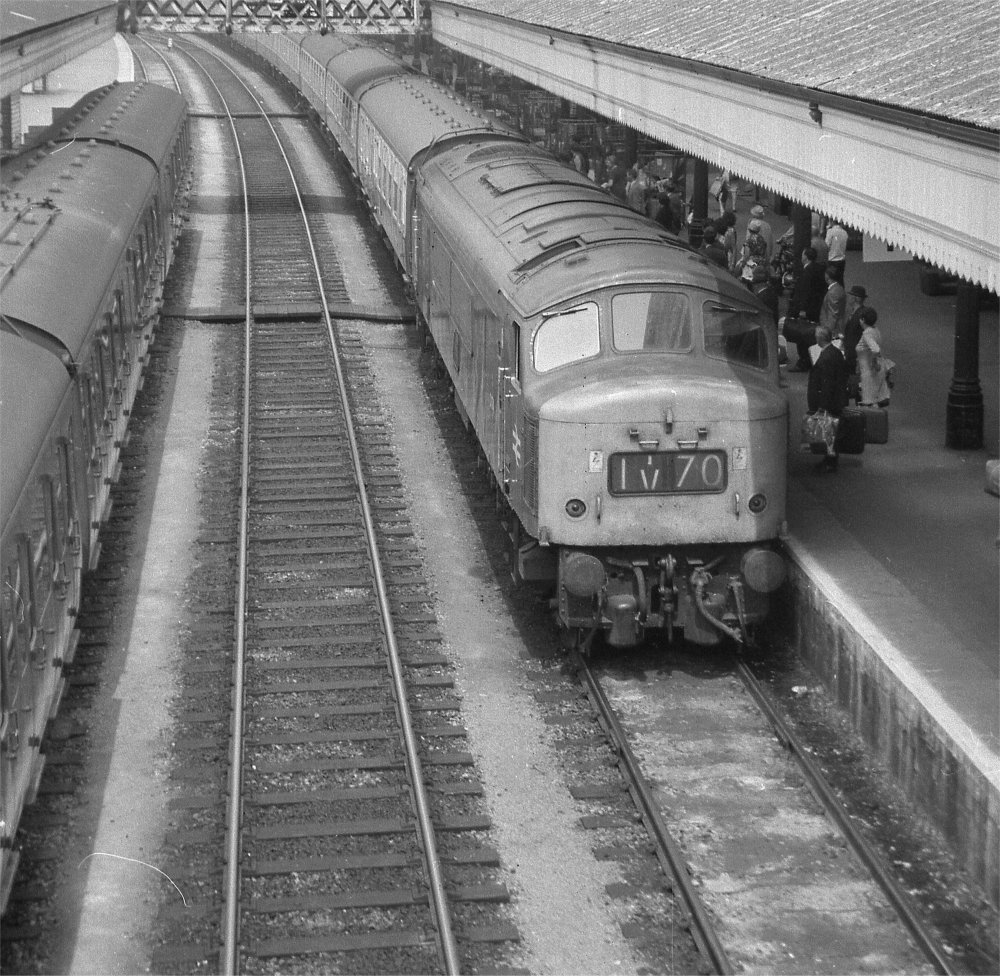 I thought I would share some of my early photographs, taken during a holiday to Devon in
June 1970. Here's D174 at Exeter St Davids on the 10th of June 1970.
I thought I would share some of my early photographs, taken during a holiday to Devon in
June 1970. Here's D174 at Exeter St Davids on the 10th of June 1970.
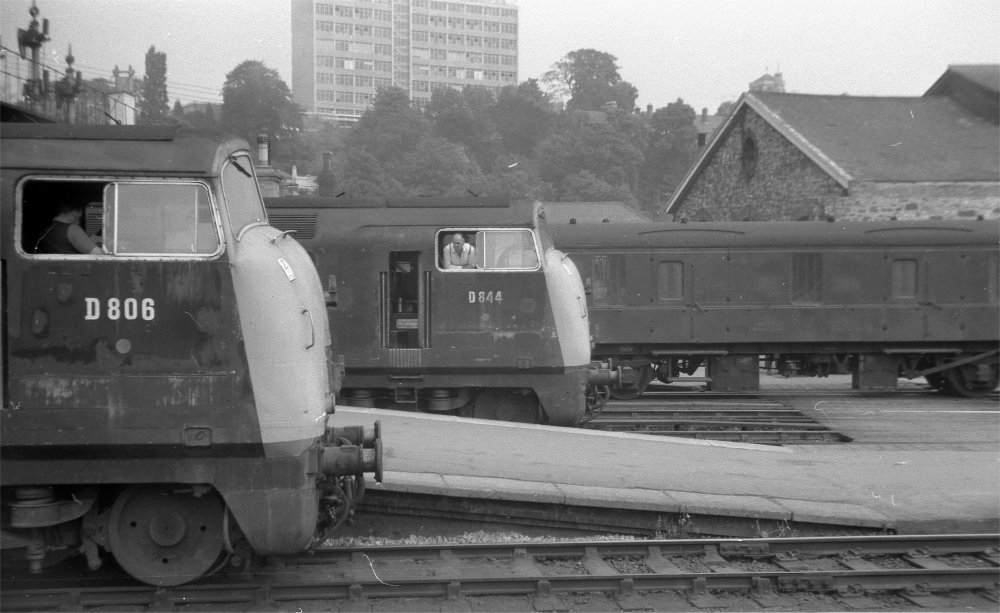 D806 Cambrian and D844 Spartan at Exeter St Davids on the 11th of June 1970.
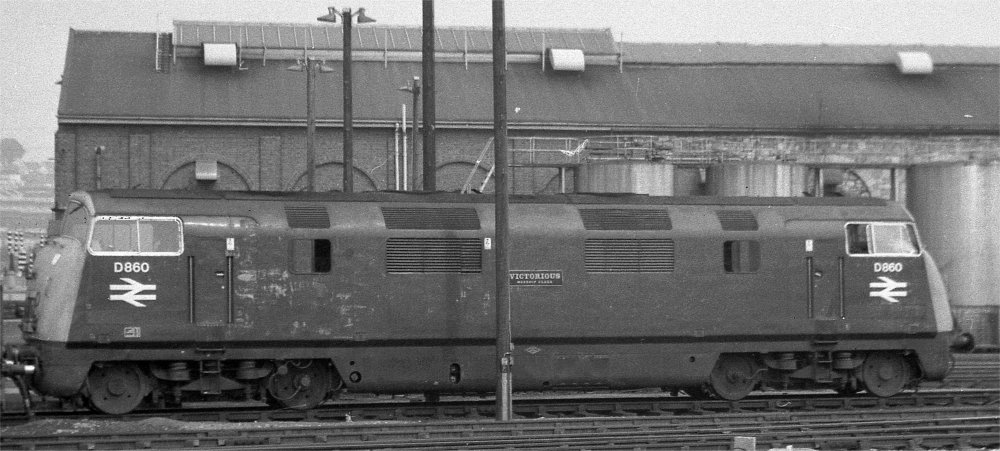 D860 Victorious at Newton Abbot in June 1970.
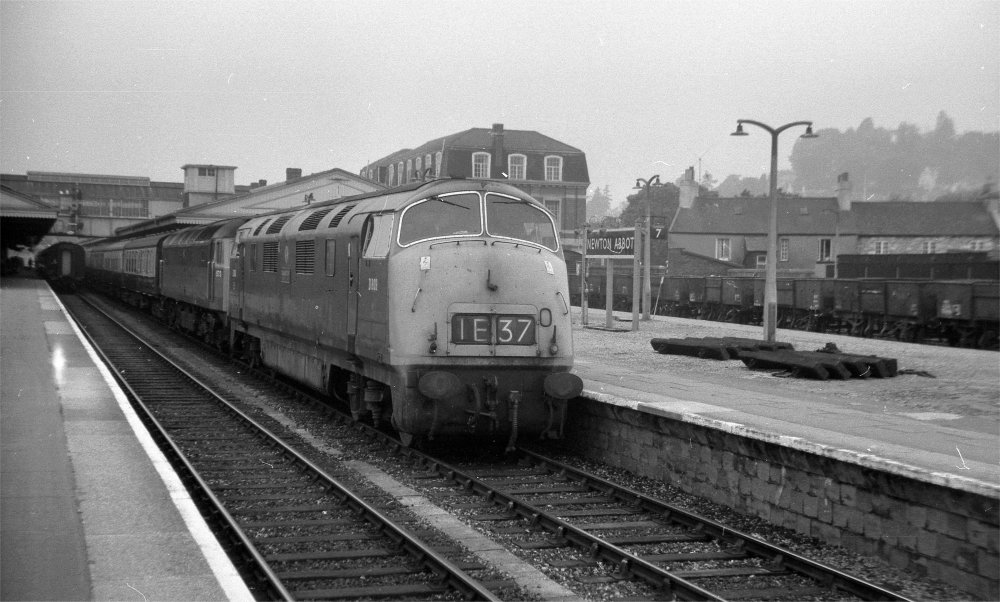 D809 Champion and 1573 on the 1E37 'Devonian' at Newton Abbot on the 12th of June 1970.
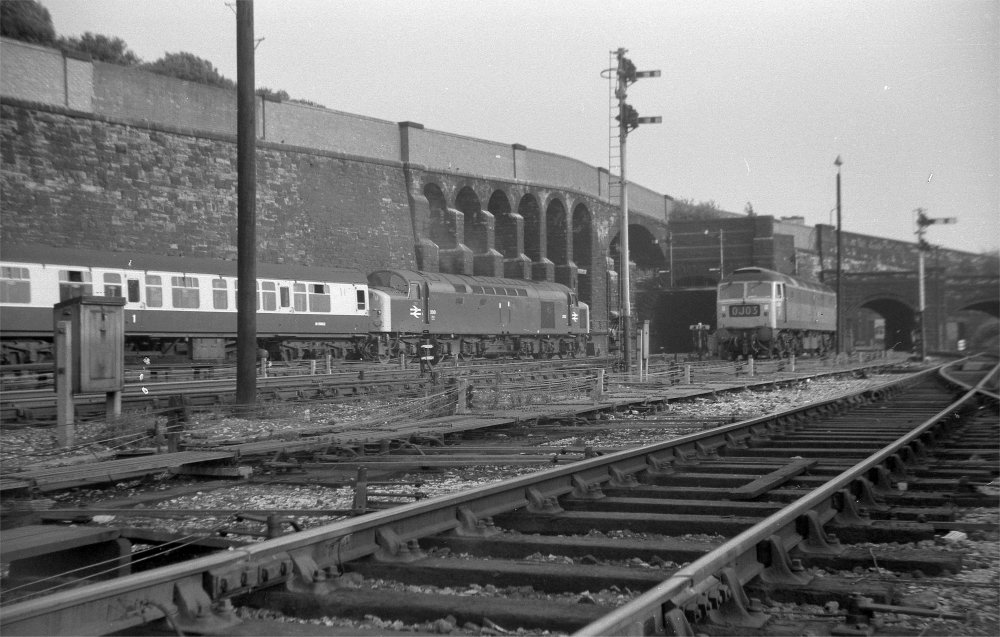 Back on home turf, 200 and 1557 at Sheffield Midland on the 8th of August 1970.
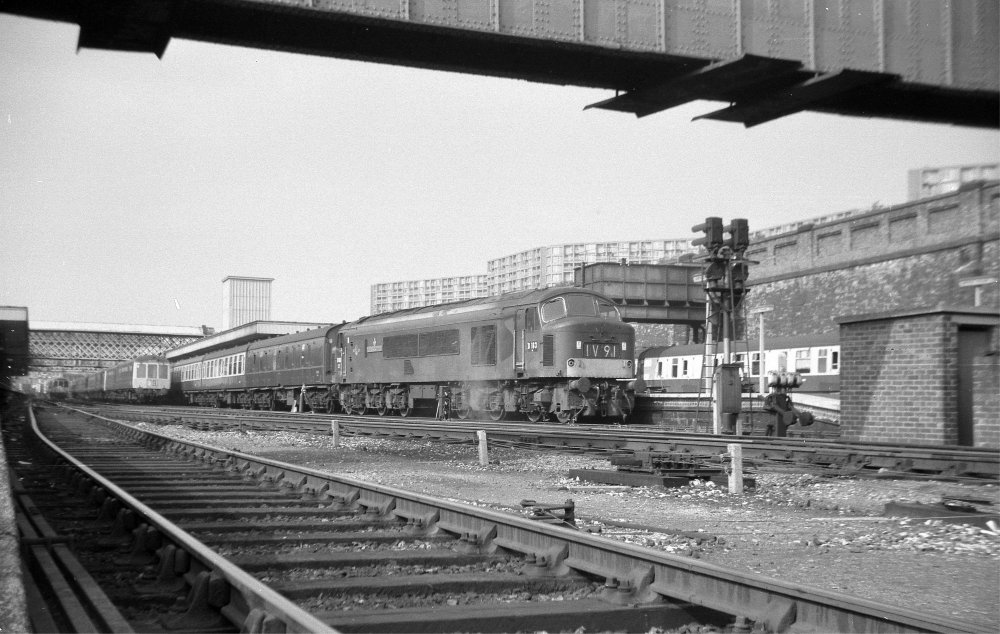 D163 Leicestershire & Derbyshire Yeomanry at Sheffield Midland during the Summer of 1970.
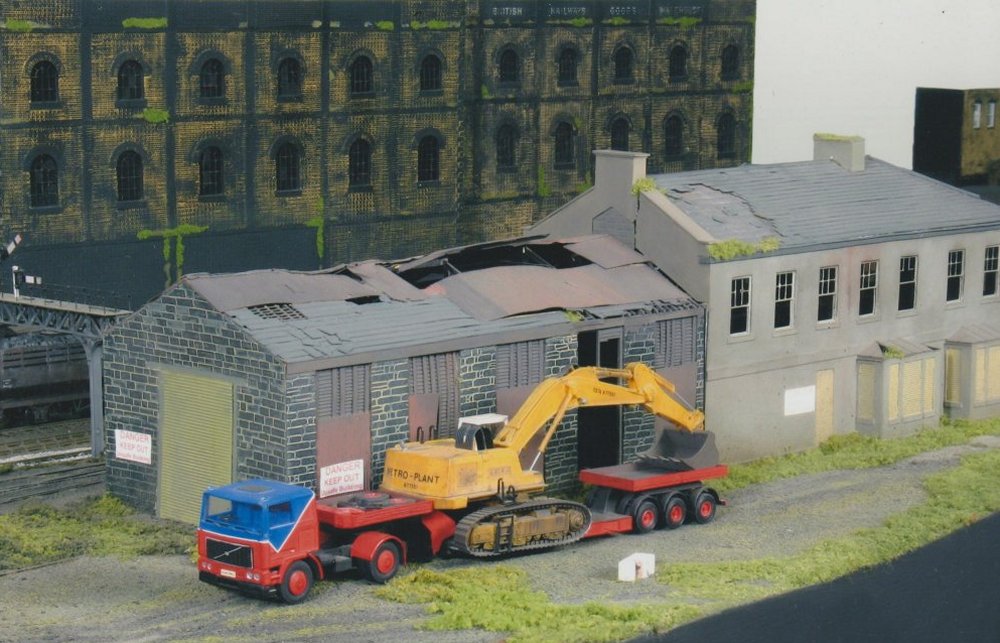 Here's a few snaps of Wibdenshaw taken by Ian Manderson in 2008 for the July issue of
Railway Modeller, with some images having not been published before. Starting off here is
heavy plant being delivered for demolition of the old depot buildings. This structure was built
by Pete Johnson for a proposed Hollyhead Breakwater layout which never came to fruition.
Here's a few snaps of Wibdenshaw taken by Ian Manderson in 2008 for the July issue of
Railway Modeller, with some images having not been published before. Starting off here is
heavy plant being delivered for demolition of the old depot buildings. This structure was built
by Pete Johnson for a proposed Hollyhead Breakwater layout which never came to fruition.
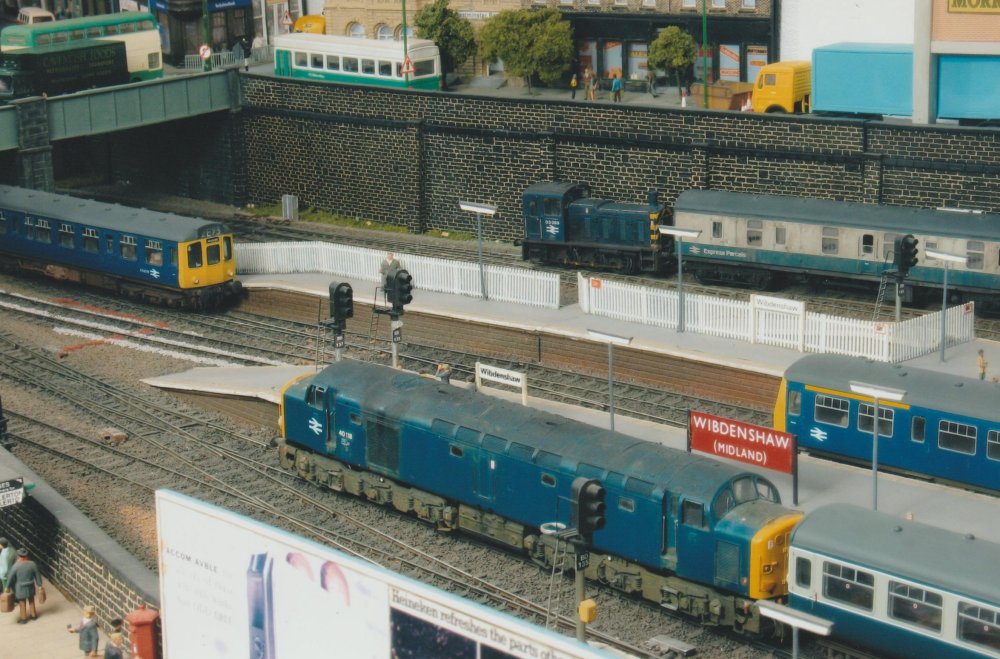 A Class 40 heads north, whilst DMUs serve local services and parcels stock are shunted by a Class 03.
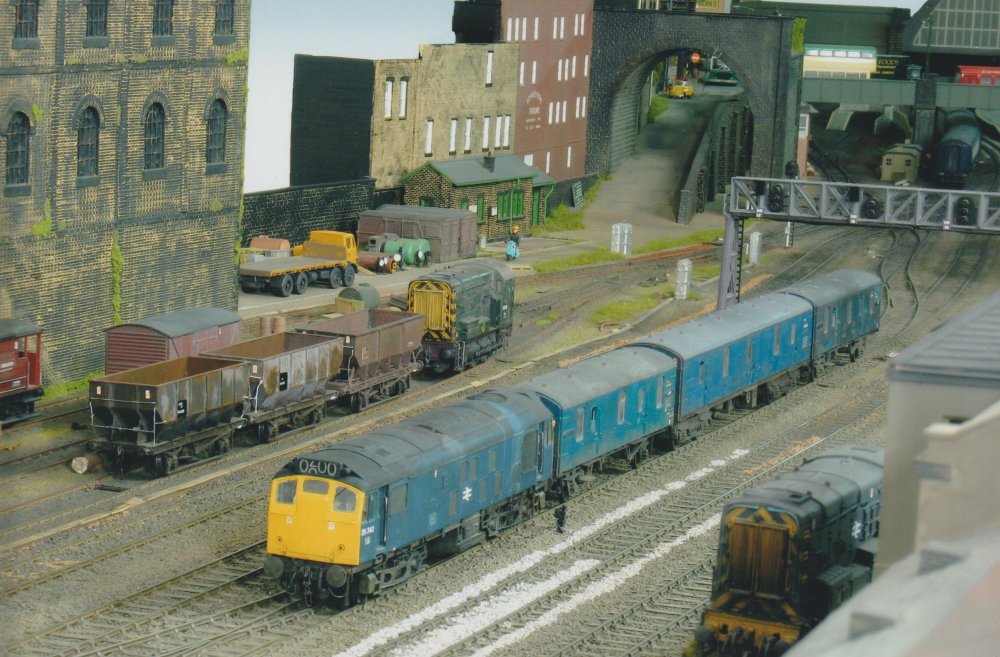 A Class 25 heads north with a short parcels service for one of the catalogue companies based
in Bradford, and a Class 08 shunter keeps itself busy in the goods yard.
A Class 25 heads north with a short parcels service for one of the catalogue companies based
in Bradford, and a Class 08 shunter keeps itself busy in the goods yard.
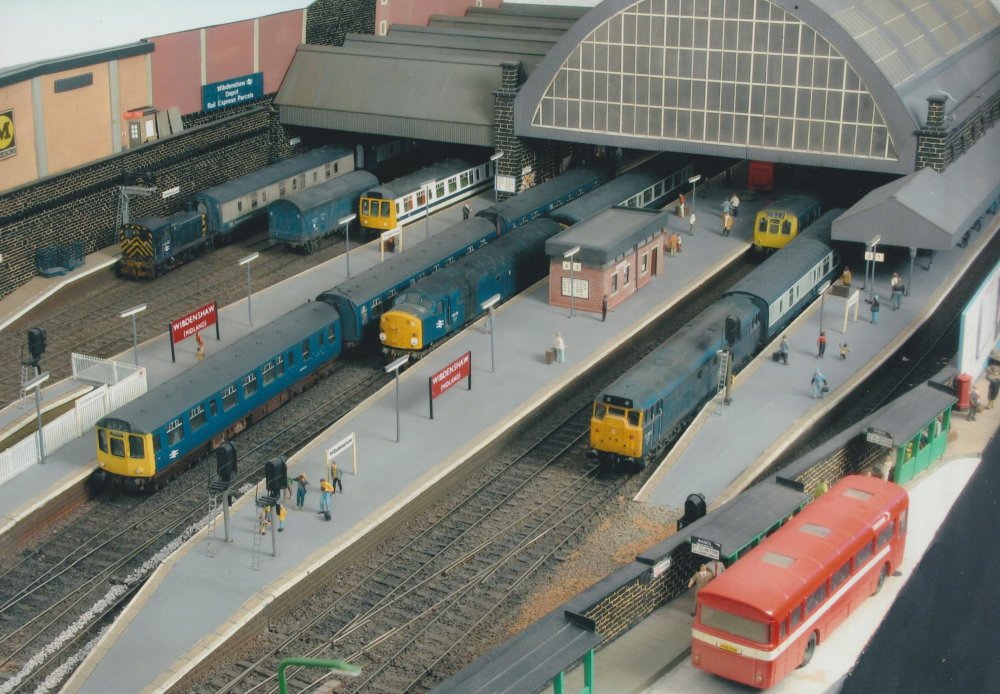 The arched overall roof served as a scenic break at the south end of the layout.
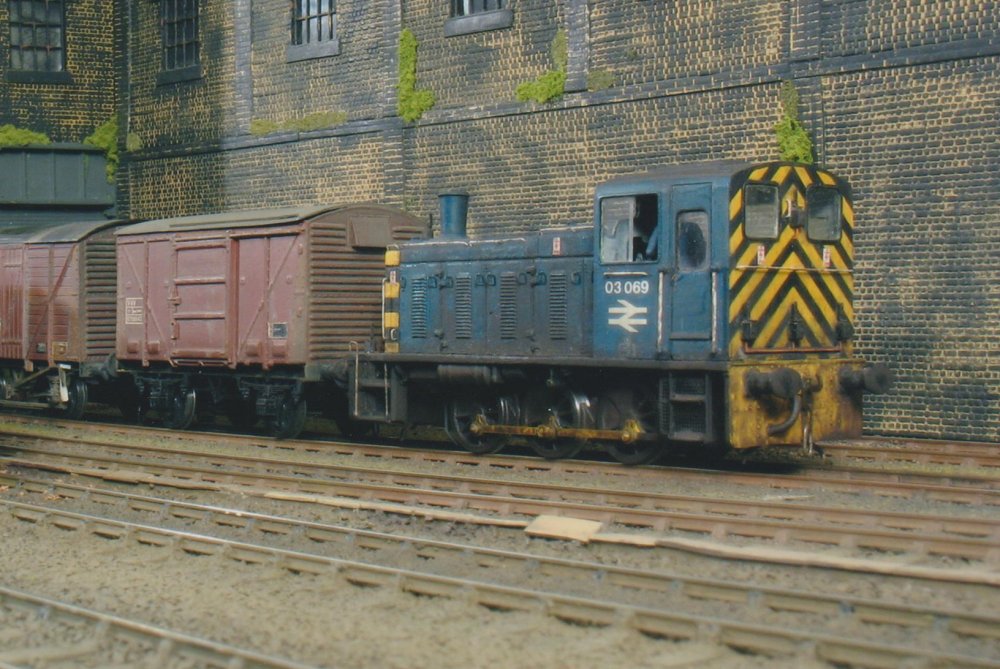 03069 from the Canada Street fleet shunting vans into the goods depot.
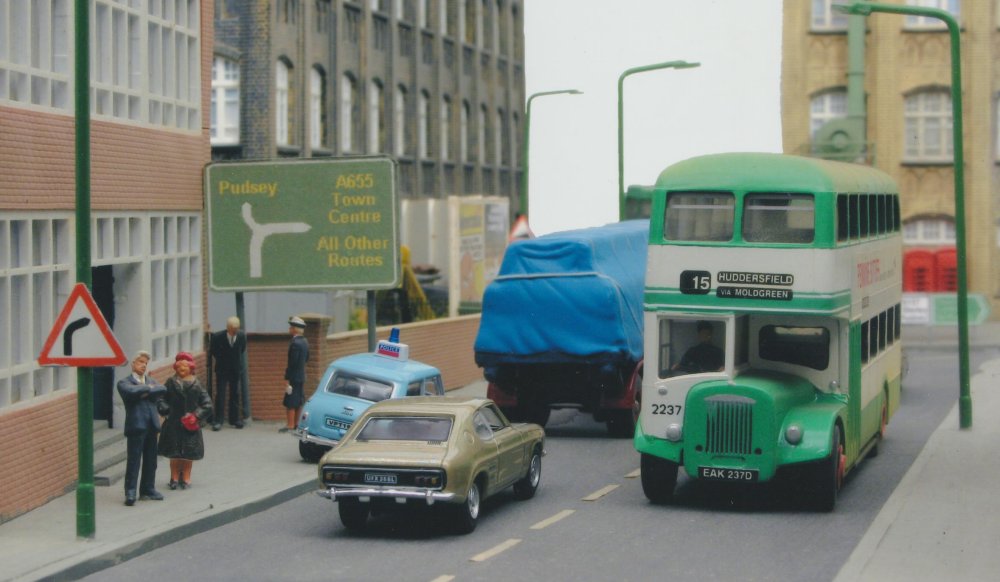 Daimler CVG6 number 2237 is an ex-Bradford bus, built from an MTS plastic kit.
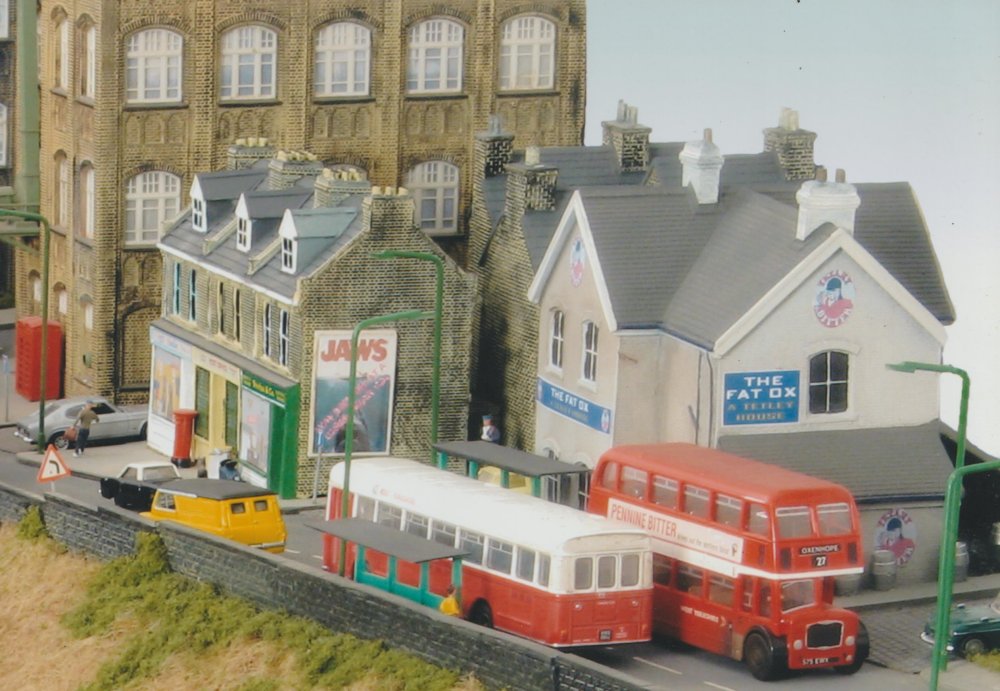 A birds eye view of Bradford Road, as a WYRCC Bristol RE (EFE) passes a Bristol FS (MTS kit)
outside The Fax Ox public house.
A birds eye view of Bradford Road, as a WYRCC Bristol RE (EFE) passes a Bristol FS (MTS kit)
outside The Fax Ox public house.
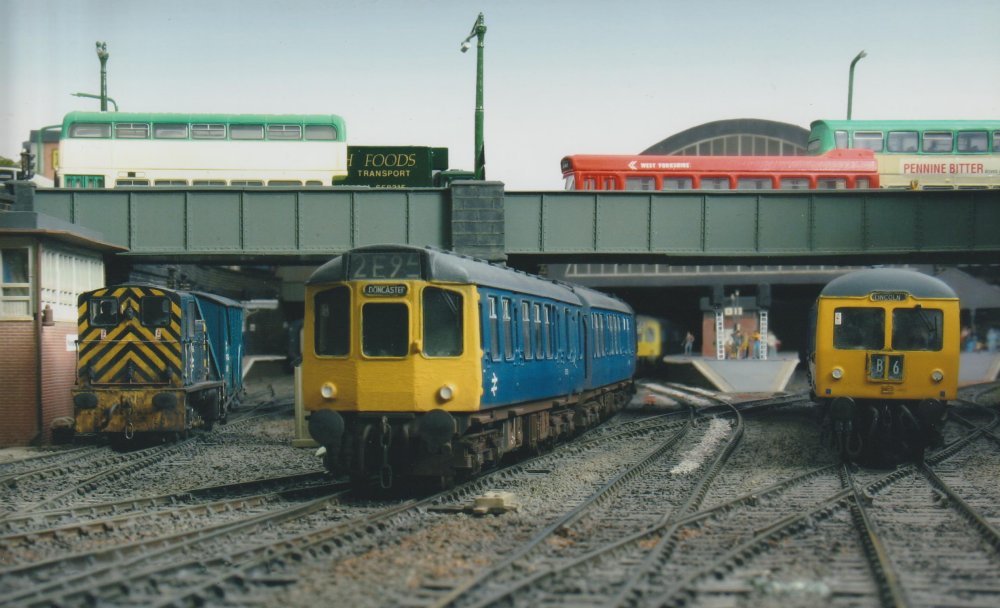 Buses on bridges and DMUs on local services in West Yorkshire.
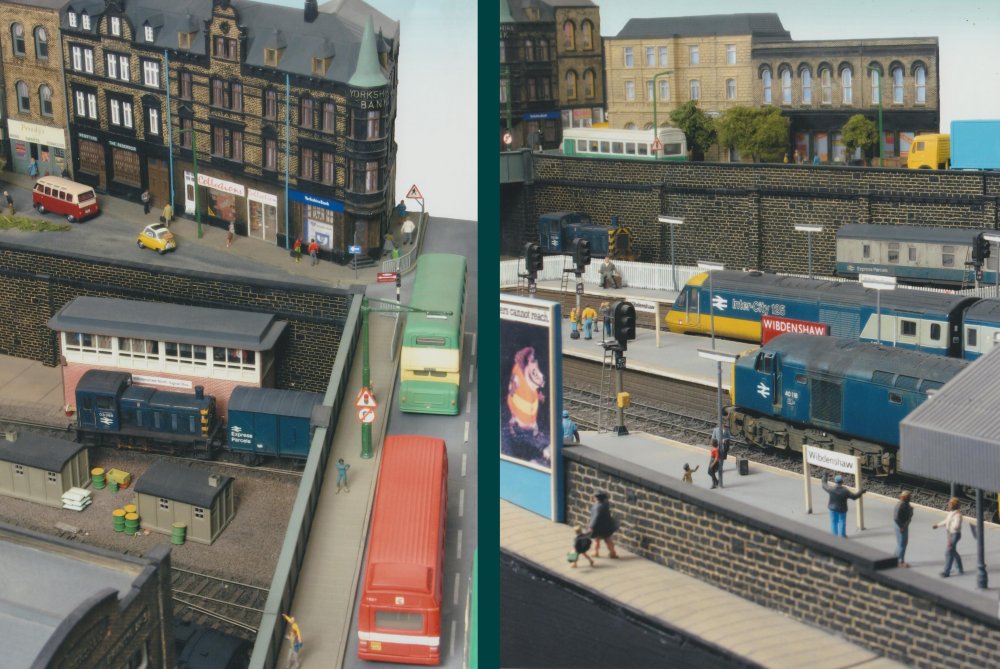 A couple of views looking down on the station throat with parcels stock being shunted by a Class 03.
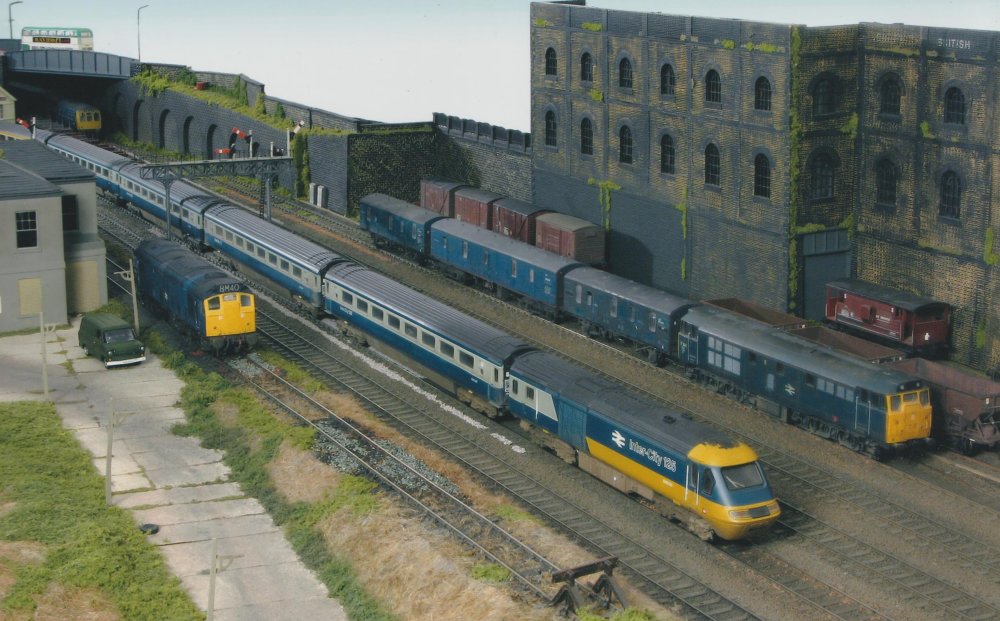 Blue / grey liveried HST on a London bound service.
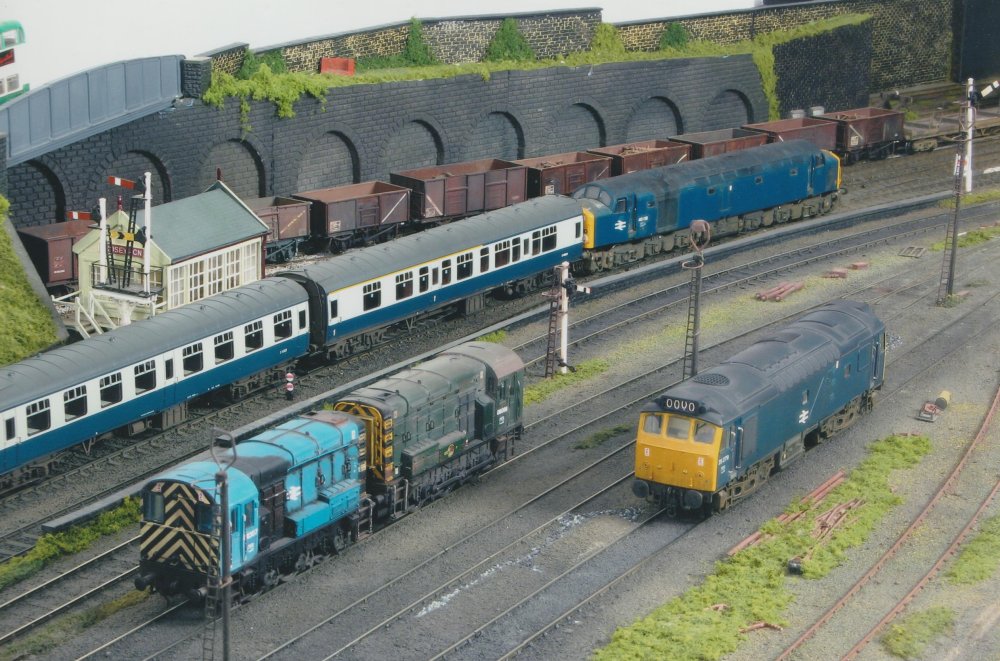 A Class 40 heads south past Pudsey Junction stabling point.
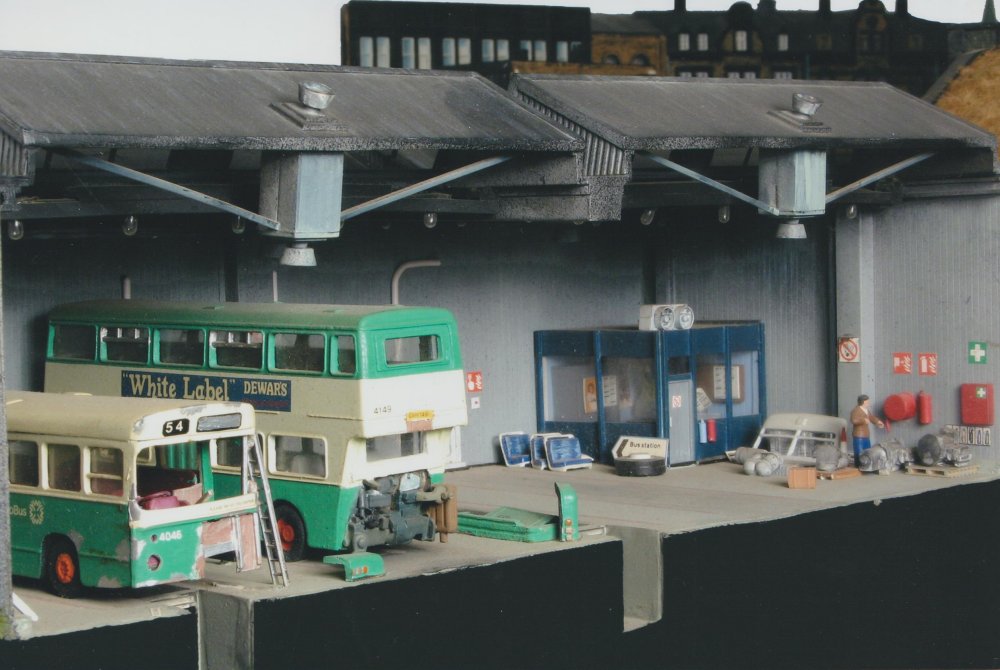 The bus garage was built by Steve Adcock featuring an open front. A Seddon Pennine single decker
undergoes some front end bodywork, whilst a Daimler Fleetline receives attention to it's engine.
The bus garage was built by Steve Adcock featuring an open front. A Seddon Pennine single decker
undergoes some front end bodywork, whilst a Daimler Fleetline receives attention to it's engine.
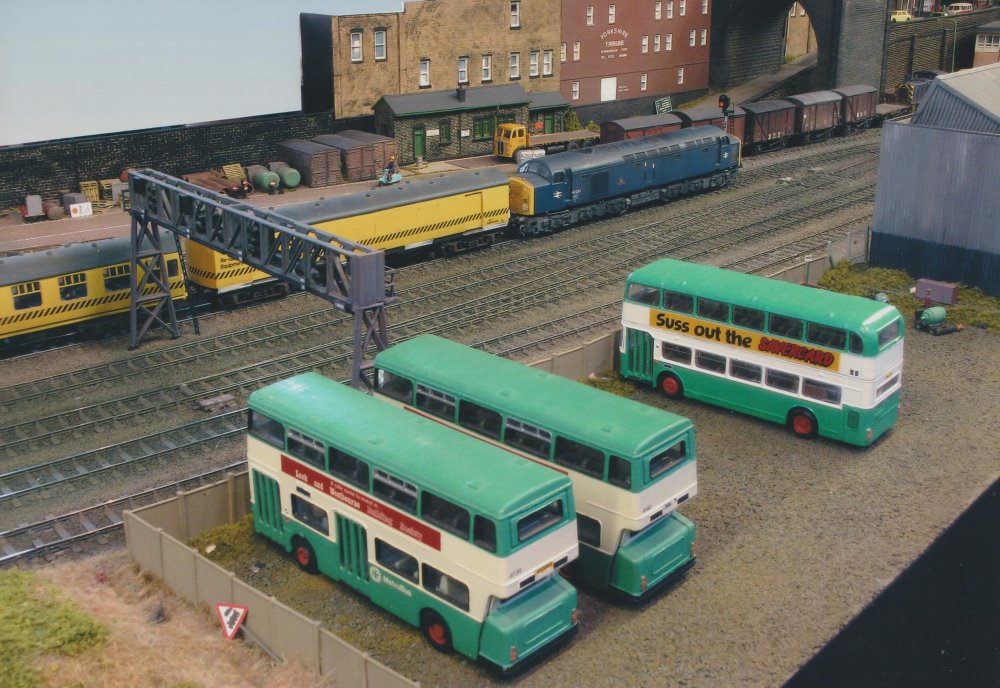 Buses parked up in the depot yard awaiting their next turn of duty.

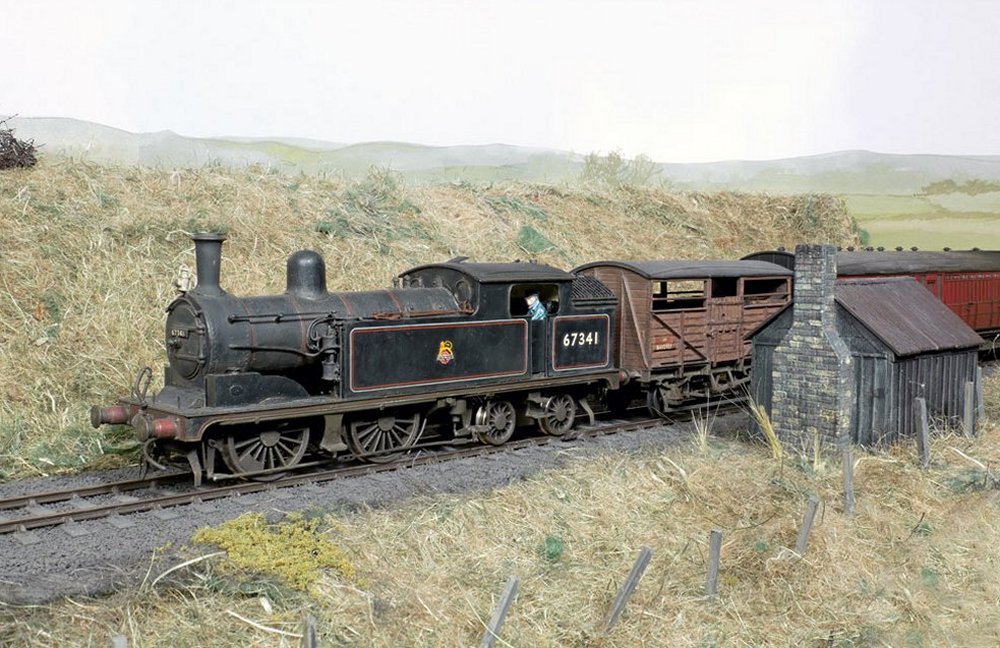 NER Class G5 0-4-4T 67341 is seen passing the lineside hut at Hartburn, which is based
on the structure just north of Keilder village.
NER Class G5 0-4-4T 67341 is seen passing the lineside hut at Hartburn, which is based
on the structure just north of Keilder village.
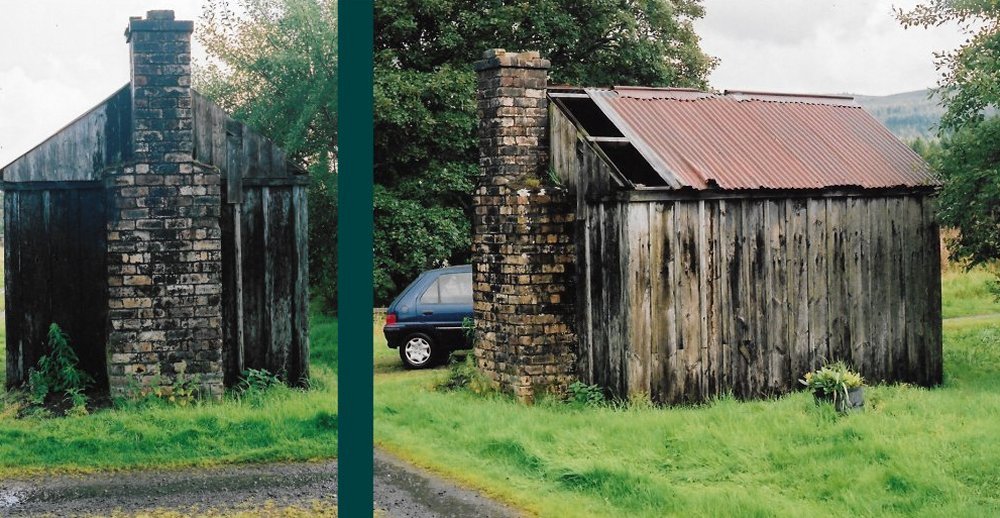 The road through Kielder runs behind the old station building with the track bed on the left.
As the road dog-legs over a burn, there is a track that runs off to the left that takes you up
to the old track bed.
The road through Kielder runs behind the old station building with the track bed on the left.
As the road dog-legs over a burn, there is a track that runs off to the left that takes you up
to the old track bed.
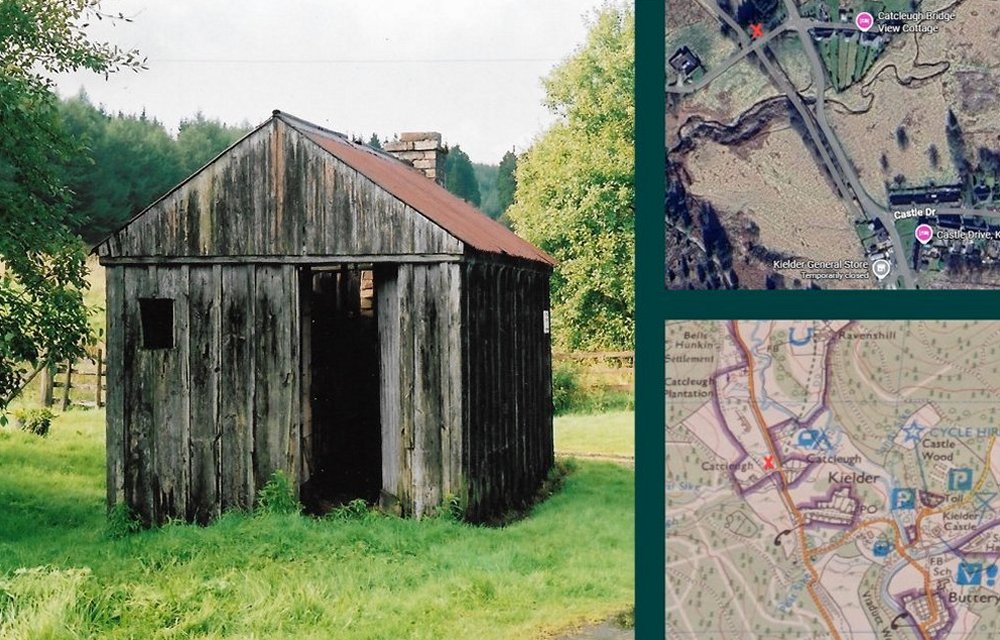 The red 'X' on the map and satelite view marks the position of the hut, the model having been
constructed from a modified Wills kit.
The red 'X' on the map and satelite view marks the position of the hut, the model having been
constructed from a modified Wills kit.
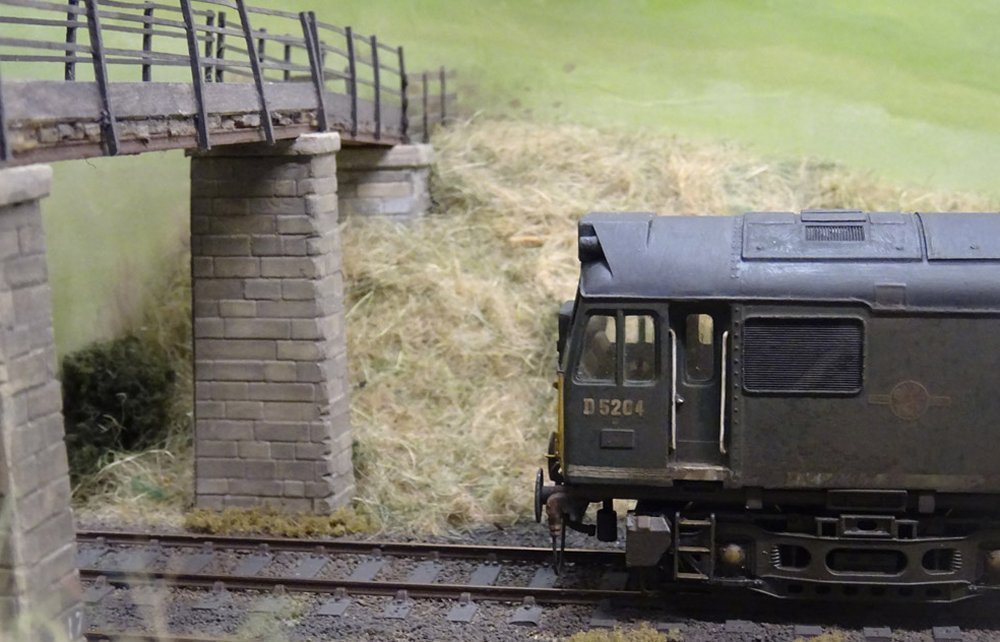 Another structure on the layout is a sheep crossing bridge. The inspiration came from the one
just north of Bellingham, near Riding Wood on the road to Charlton.
Another structure on the layout is a sheep crossing bridge. The inspiration came from the one
just north of Bellingham, near Riding Wood on the road to Charlton.
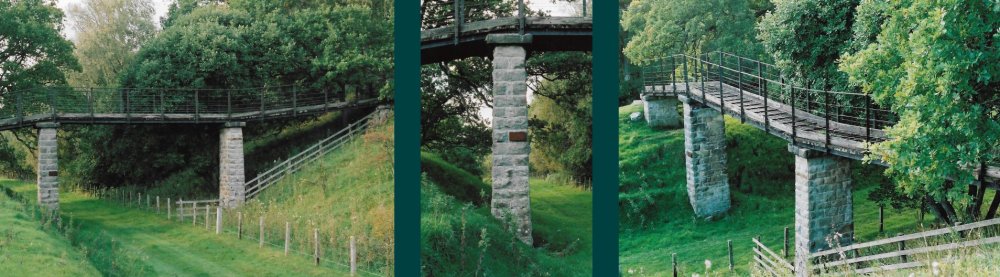 There is a lay-by on the left and then it's a short walk to the bridge. At the time of researching
structures for the layout, the path over the bridge was a designated foot-path and shown on the
relevant Ordnance Survey map (OL42). This would explain its good condition compared to another
example further north which was unsafe.
There is a lay-by on the left and then it's a short walk to the bridge. At the time of researching
structures for the layout, the path over the bridge was a designated foot-path and shown on the
relevant Ordnance Survey map (OL42). This would explain its good condition compared to another
example further north which was unsafe.
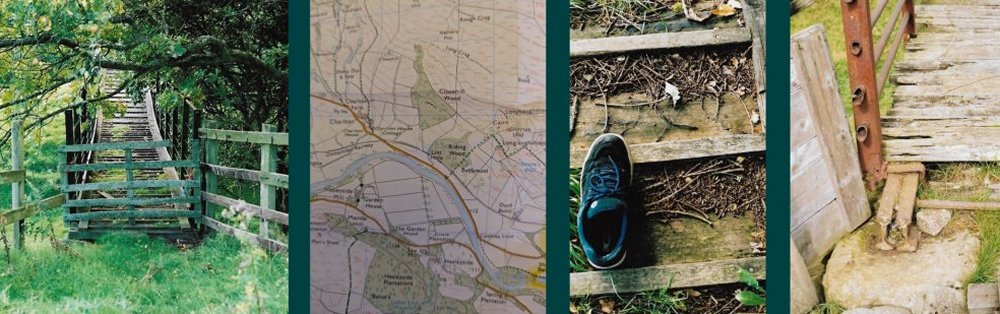 Riding Wood location map, with a shoe for scale showing the deck arrangement on the featured
bridge. The other unsafe bridge shows the deck and the rail support underneath the timbers.
Riding Wood location map, with a shoe for scale showing the deck arrangement on the featured
bridge. The other unsafe bridge shows the deck and the rail support underneath the timbers.