
*********************************************************************************************************************************************
DECEMBER 2025 UPDATE
*********************************************************************************************************************************************
GREG BROOKES
*********************************************************************************************************************************************
IAN MANDERSON
*********************************************************************************************************************************************
ANDY LEE
Bogies were washed with RailMatch frame dirt, and sleeper grime, and once that was all
dry, I applied red, brown and tan patches onto the bogies using Technic Gothica eye
shadow pallette it has lots of earth tones and is cheap.
*********************************************************************************************************************************************
MIKE WHITCHURCH
*********************************************************************************************************************************************
KARL CROWTHER
*********************************************************************************************************************************************
ALAN DEWEY
*********************************************************************************************************************************************
KIER HARDY
*********************************************************************************************************************************************

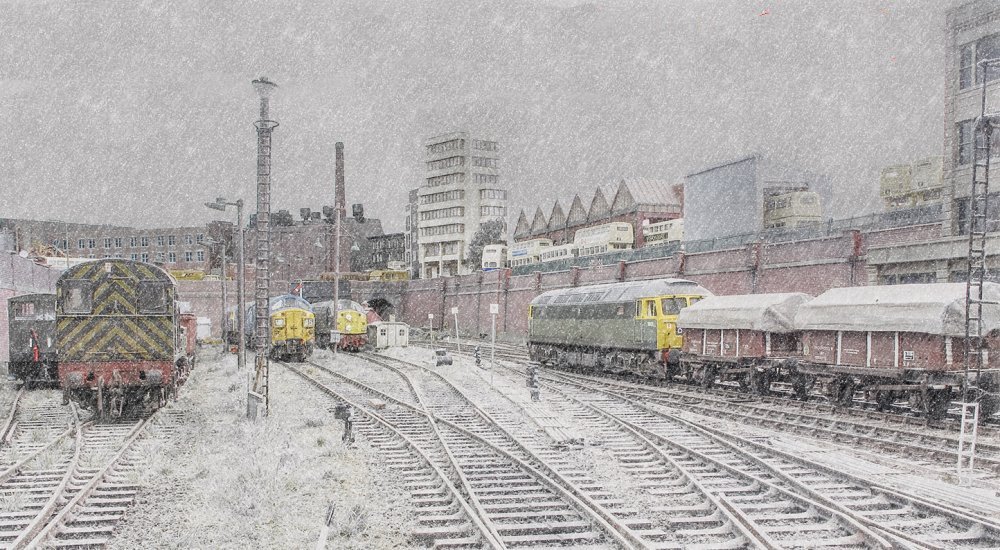 A seasonal digitally enhanced scene at Shenston Road, produced by the late Andy York.
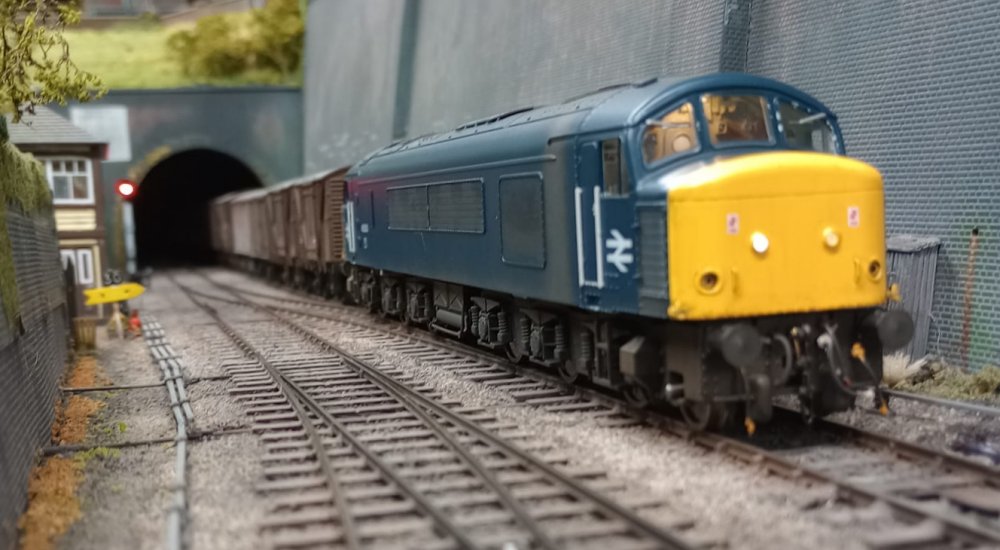 An unidentified Peak at the head of a van train.
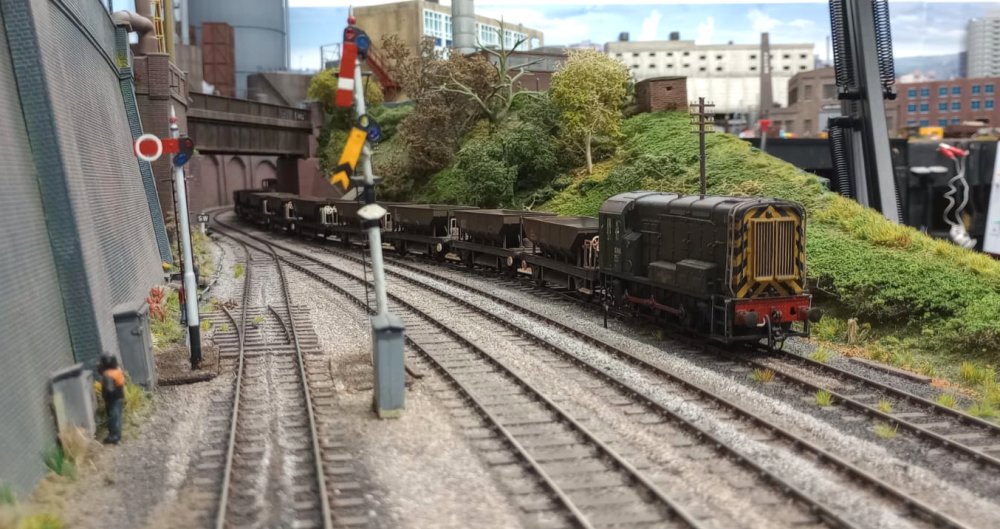 A Class 08 trudles a rake of ballast hoppers into the Down Goods Loop.
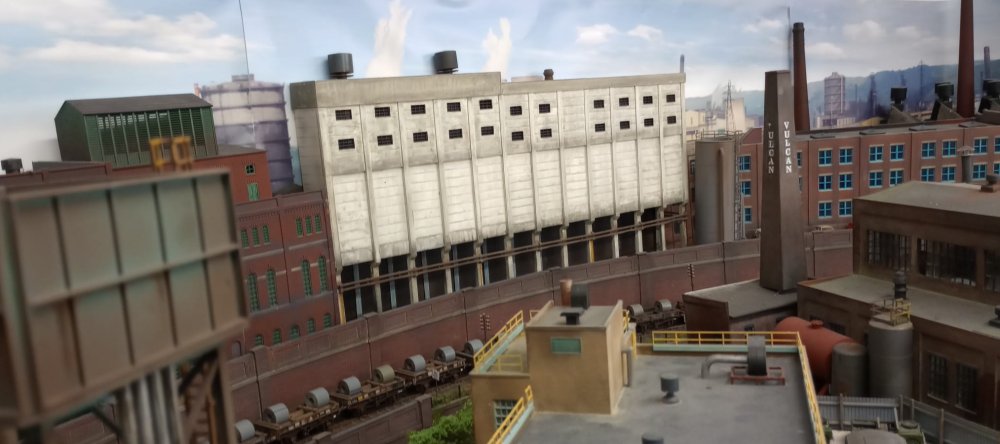 A view of the gasworks from the top of the BSC Shenston office block.
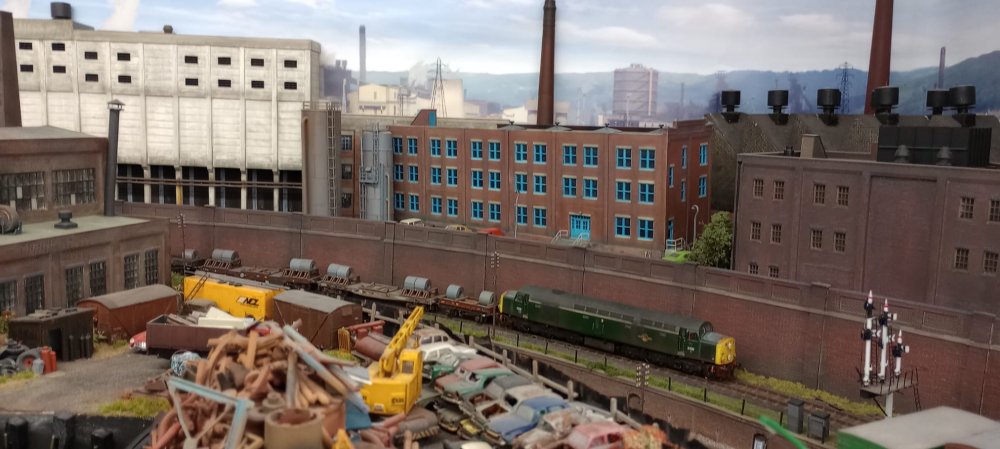 Another view with the scrapyard in the foreground.

 Prompted by a request from Julian on Western Thunder, I realised there hadn't been a Hartburn
update for quite some time. With Hartburn being, dare I say it, considered mature, apart from
maintenance there isn't much to do on it. There have been numerous discussions with the operating
team over the years about pushing the traverser fiddle yard by the sheep crossing bridge back and
properly scenicing (if that's a word) the first 6 inches of the off-scene board to better disguise
the transition. If you're stood at the right hand end of the layout and look towards the station
you can clearly see the stock in the fiddle yard. However, as my many friends will testify, I'm
good at talking... So, in the absence of any actual work on the layout I thought I would put some
words down around its inspiration and the real-life location of some of the structures that were
used as inspiration for the layout.
Prompted by a request from Julian on Western Thunder, I realised there hadn't been a Hartburn
update for quite some time. With Hartburn being, dare I say it, considered mature, apart from
maintenance there isn't much to do on it. There have been numerous discussions with the operating
team over the years about pushing the traverser fiddle yard by the sheep crossing bridge back and
properly scenicing (if that's a word) the first 6 inches of the off-scene board to better disguise
the transition. If you're stood at the right hand end of the layout and look towards the station
you can clearly see the stock in the fiddle yard. However, as my many friends will testify, I'm
good at talking... So, in the absence of any actual work on the layout I thought I would put some
words down around its inspiration and the real-life location of some of the structures that were
used as inspiration for the layout.
 From a young age I have had an interest in the railways of Northumberland. Weekend trips out with
a friend, being driven around by his father to look at the remains of the various lines that once
existed, along with the permanent loan of 'Border Country Branchlines' from the local library
planted a seed that has never gone away, reinforced by those wonderful Ian Futer's layouts. When
the time came to replace my previous exhibition layout, Easington Lane, I was dangerously close to
modelling some US outline (Richmond Frederiksburg and Potomac). I'd even acquired some stock. Before
I got started I had an outing with Easington up in Newcastle and to break the journey up we detoured
via the remote parts of the North Tyne valley, taking in the the remains at Reedsmouth Junction, the
station buildings at Angerton and Woodburn, at which point Tony Wood, seeing the passion in my eyes,
turned to me and said "You know what you want to model next".
From a young age I have had an interest in the railways of Northumberland. Weekend trips out with
a friend, being driven around by his father to look at the remains of the various lines that once
existed, along with the permanent loan of 'Border Country Branchlines' from the local library
planted a seed that has never gone away, reinforced by those wonderful Ian Futer's layouts. When
the time came to replace my previous exhibition layout, Easington Lane, I was dangerously close to
modelling some US outline (Richmond Frederiksburg and Potomac). I'd even acquired some stock. Before
I got started I had an outing with Easington up in Newcastle and to break the journey up we detoured
via the remote parts of the North Tyne valley, taking in the the remains at Reedsmouth Junction, the
station buildings at Angerton and Woodburn, at which point Tony Wood, seeing the passion in my eyes,
turned to me and said "You know what you want to model next".
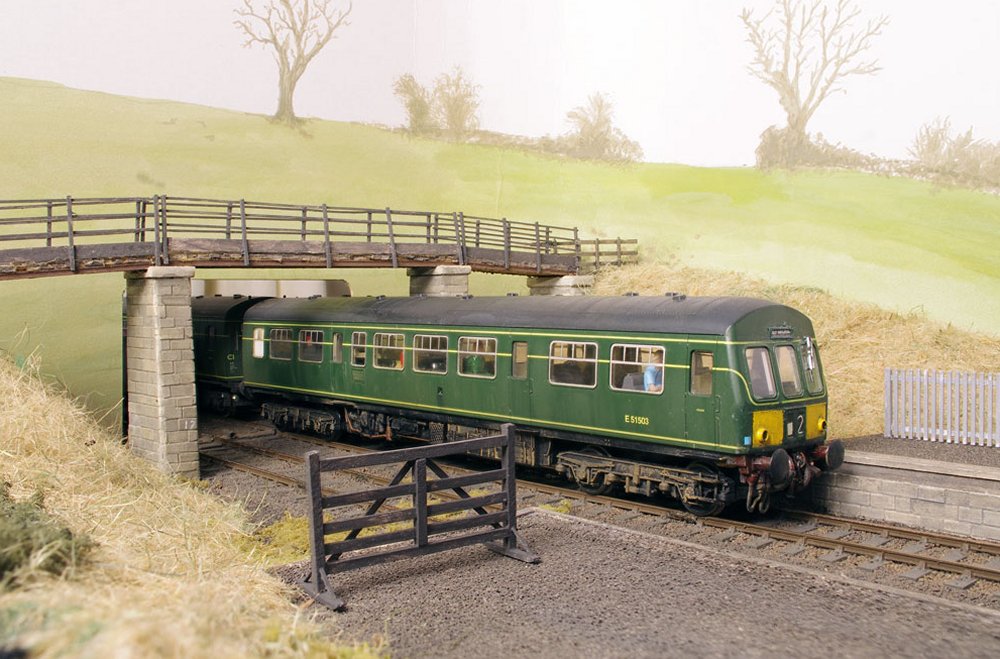
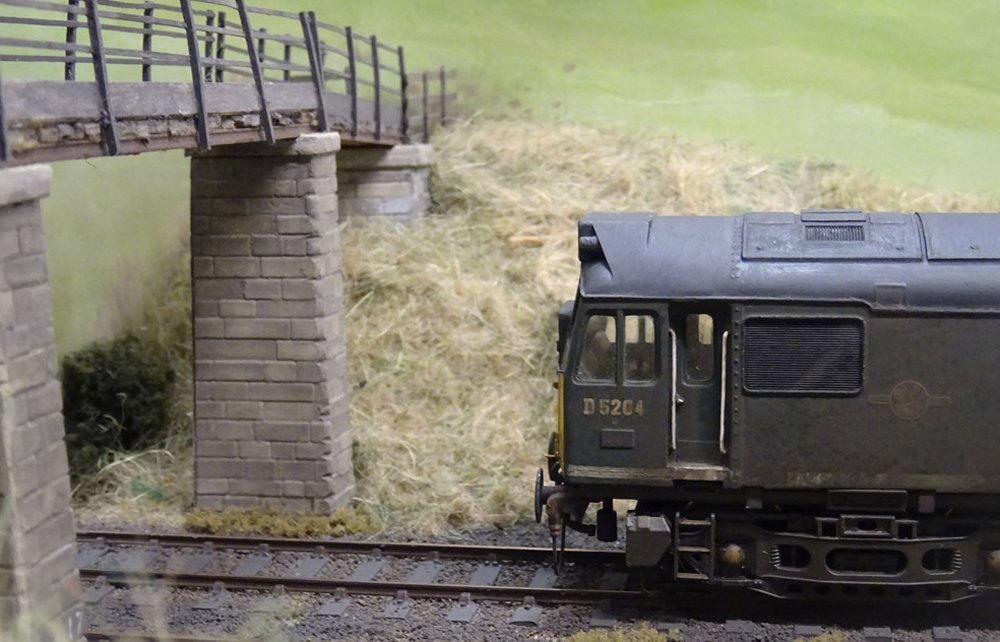 Starting from the left hand side of the layout as you look at it from the viewing side. The sheep
crossing bridge was based on dimensions and photographs I took of the example on the Border Counties
line just north of Bellingham. At the time of building the layout the deck of the bridge was in
really good condition as it formed part of a footpath.
Starting from the left hand side of the layout as you look at it from the viewing side. The sheep
crossing bridge was based on dimensions and photographs I took of the example on the Border Counties
line just north of Bellingham. At the time of building the layout the deck of the bridge was in
really good condition as it formed part of a footpath.
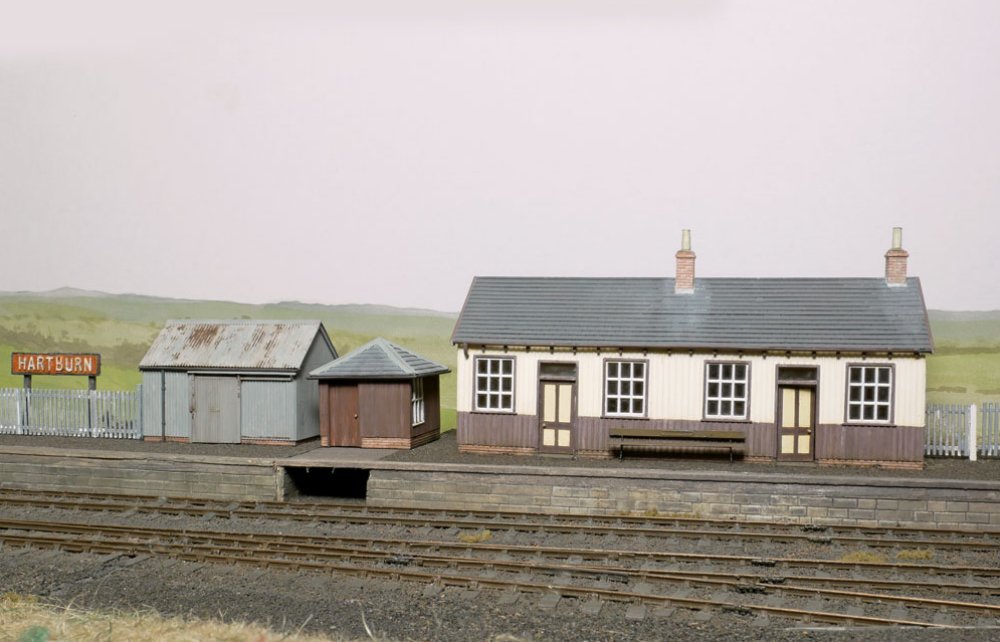
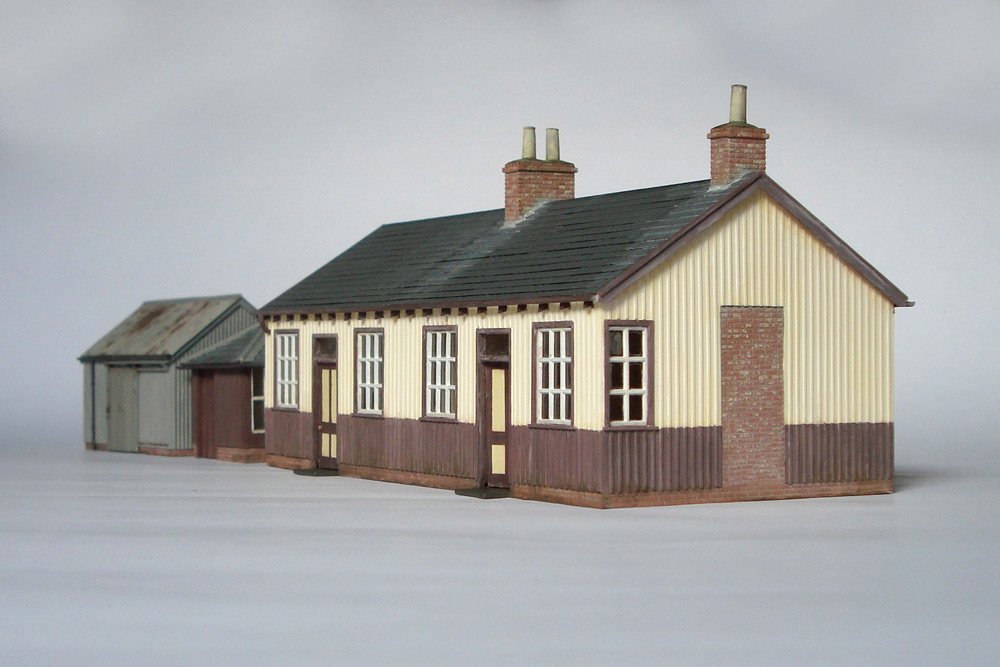 The station buildings are those from Brinkburn on the Rothbury branch and were built by Pete
Johnson. We had some discussion on the colour as the black and white picture in Caplan's book
showed quite a contrast between the dark and light parts so in the absence of a colour picture
went for brown and cream. A later video taken from the last railtour didn't help much due to
odd colour rendition and it was only a conversation with David Dunn at North Shields that
uncovered a cracking colour shot of the building, in green and cream. Pete offered to repaint
it but we decided to leave it as it looked the part.
The station buildings are those from Brinkburn on the Rothbury branch and were built by Pete
Johnson. We had some discussion on the colour as the black and white picture in Caplan's book
showed quite a contrast between the dark and light parts so in the absence of a colour picture
went for brown and cream. A later video taken from the last railtour didn't help much due to
odd colour rendition and it was only a conversation with David Dunn at North Shields that
uncovered a cracking colour shot of the building, in green and cream. Pete offered to repaint
it but we decided to leave it as it looked the part.
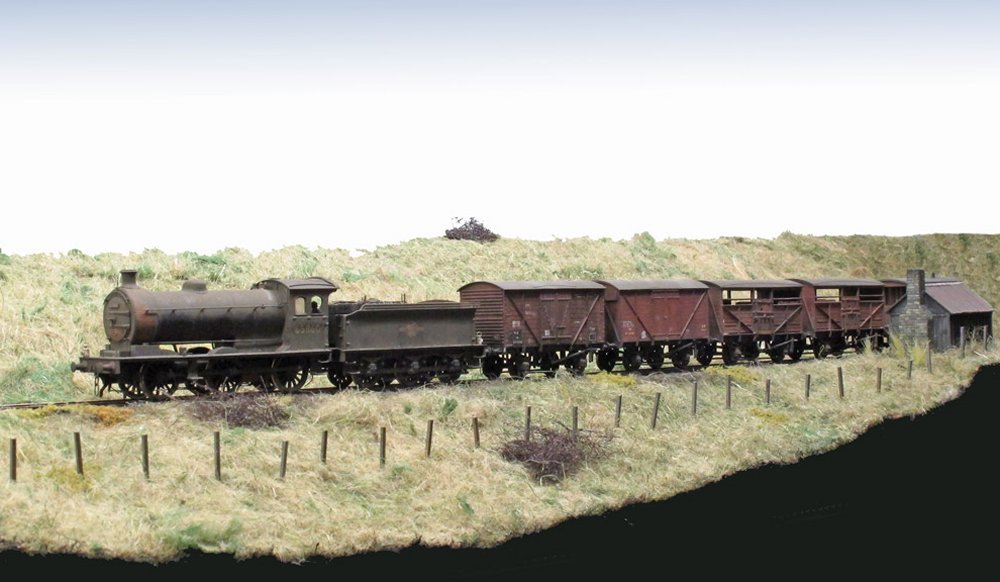 The loading dock is based on that at Angerton on the Wansbeck line that ran from Morpeth to
Reedsmouth Jn. The p-way hut at the right hand end is based on one that exists just north of the
site of Kielder Forest station on the Border Counties line and is easily accessible from the main road.
The loading dock is based on that at Angerton on the Wansbeck line that ran from Morpeth to
Reedsmouth Jn. The p-way hut at the right hand end is based on one that exists just north of the
site of Kielder Forest station on the Border Counties line and is easily accessible from the main road.
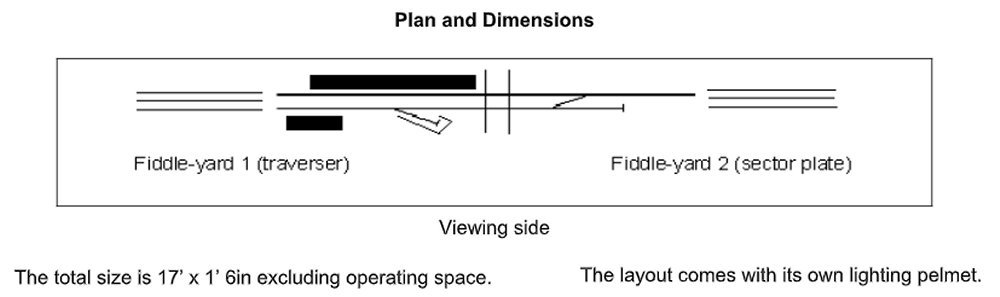 The track plan is in fact a mirror of that at Angerton and was taken from the George Sewell book,
the North British in Northumberland. As for Hartburn as a location for the layout, the original
proposal put forward by John Willett to link Morpeth with Rothbury was to go through or close to
the village of Hartburn. However, events overtook this proposal. In the meantime, the North
British had built the Border Counties line linking the Newcastle-Hexham line with the Waverly
Route at Riccarton Junction, and the Wansbeck Valley line linking Reedsmouth Jn with Morpeth.
Consequently it was easier then to reach Rothbury by a branch from Scots Gap Jn running up
through Longwitton, Ewesley, Fontburn Halt and Brinkburn. I chose to model the 'what if...'.
The track plan is in fact a mirror of that at Angerton and was taken from the George Sewell book,
the North British in Northumberland. As for Hartburn as a location for the layout, the original
proposal put forward by John Willett to link Morpeth with Rothbury was to go through or close to
the village of Hartburn. However, events overtook this proposal. In the meantime, the North
British had built the Border Counties line linking the Newcastle-Hexham line with the Waverly
Route at Riccarton Junction, and the Wansbeck Valley line linking Reedsmouth Jn with Morpeth.
Consequently it was easier then to reach Rothbury by a branch from Scots Gap Jn running up
through Longwitton, Ewesley, Fontburn Halt and Brinkburn. I chose to model the 'what if...'.
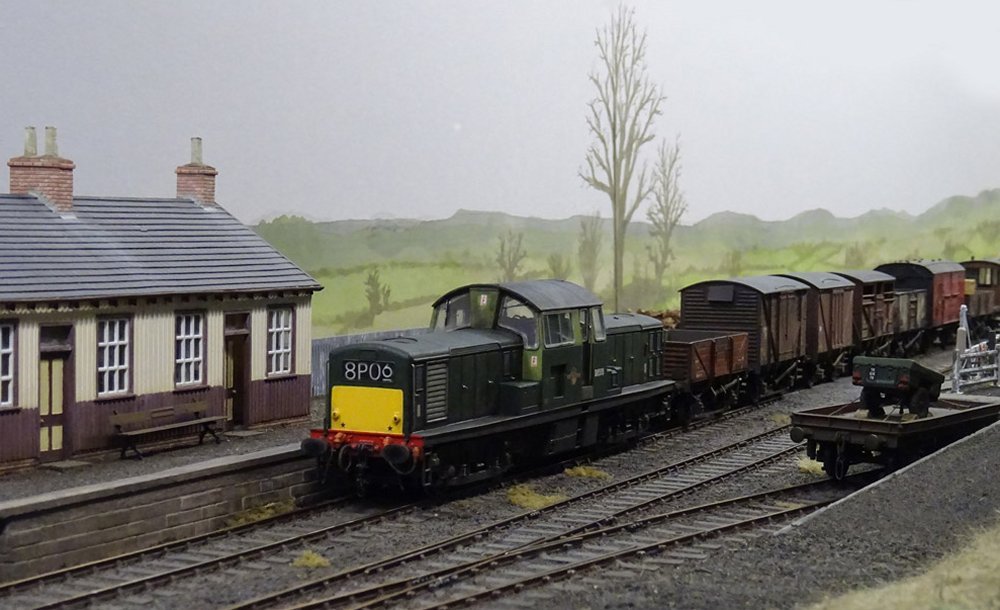 Operating Hartburn is a tranquil pastime, watching the trains meander gently along the
hillside. It is somewhat niche and those that get it, really get it. I have had some wonderful
conversations with the public over the years, varying from people who were involved with the
Newcastle Railway Society in organising the last railtour to Rothbury in 63, to those riding
the last freights to Woodburn in 66 and it has been an absolute pleasure to listen to these
stories. In another update I will share some photos of the real-life structures referenced above.
Operating Hartburn is a tranquil pastime, watching the trains meander gently along the
hillside. It is somewhat niche and those that get it, really get it. I have had some wonderful
conversations with the public over the years, varying from people who were involved with the
Newcastle Railway Society in organising the last railtour to Rothbury in 63, to those riding
the last freights to Woodburn in 66 and it has been an absolute pleasure to listen to these
stories. In another update I will share some photos of the real-life structures referenced above.

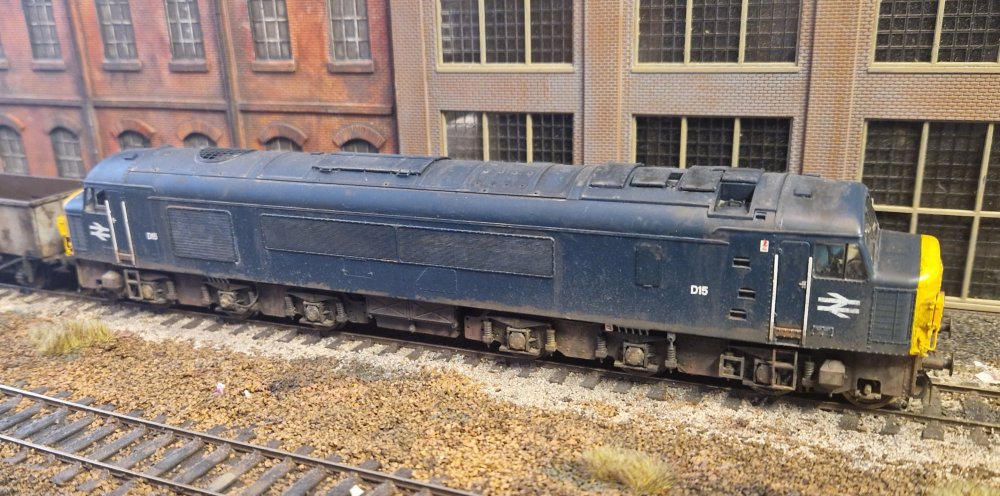 A Heljan Peak has now joined the fleet - an early Class 45 with the long cab hand rails.
These early noses got rebuilt by Derby a few years later. I did a simple wheel pull to
convert to EM gauge, and it just about works with the wheels clear inside of the bogie
frame. The floating front pony wheel set is a bit tricky to get out, as you have to
bend the bogie frame. Wheels all painted with Revell no 84 Leather Brown.
A Heljan Peak has now joined the fleet - an early Class 45 with the long cab hand rails.
These early noses got rebuilt by Derby a few years later. I did a simple wheel pull to
convert to EM gauge, and it just about works with the wheels clear inside of the bogie
frame. The floating front pony wheel set is a bit tricky to get out, as you have to
bend the bogie frame. Wheels all painted with Revell no 84 Leather Brown.
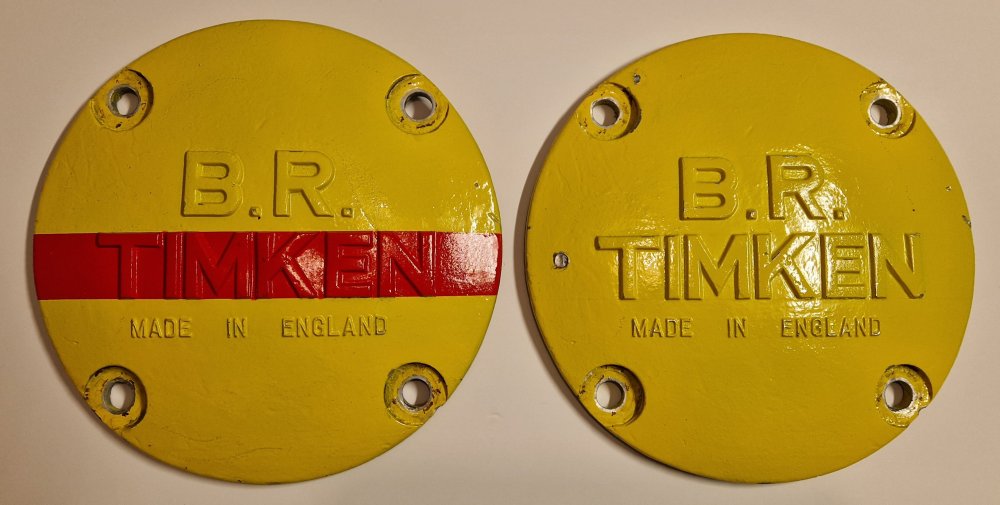 Here's some more 1:1 scale modelling. I made a silicone mould from my original BR
Timken axle box cover from a Class 37 (which was once under 55003 Meld). Cast out of
resin, they look great displayed on the wall next to my replica flame-cut panels.
Here's some more 1:1 scale modelling. I made a silicone mould from my original BR
Timken axle box cover from a Class 37 (which was once under 55003 Meld). Cast out of
resin, they look great displayed on the wall next to my replica flame-cut panels.

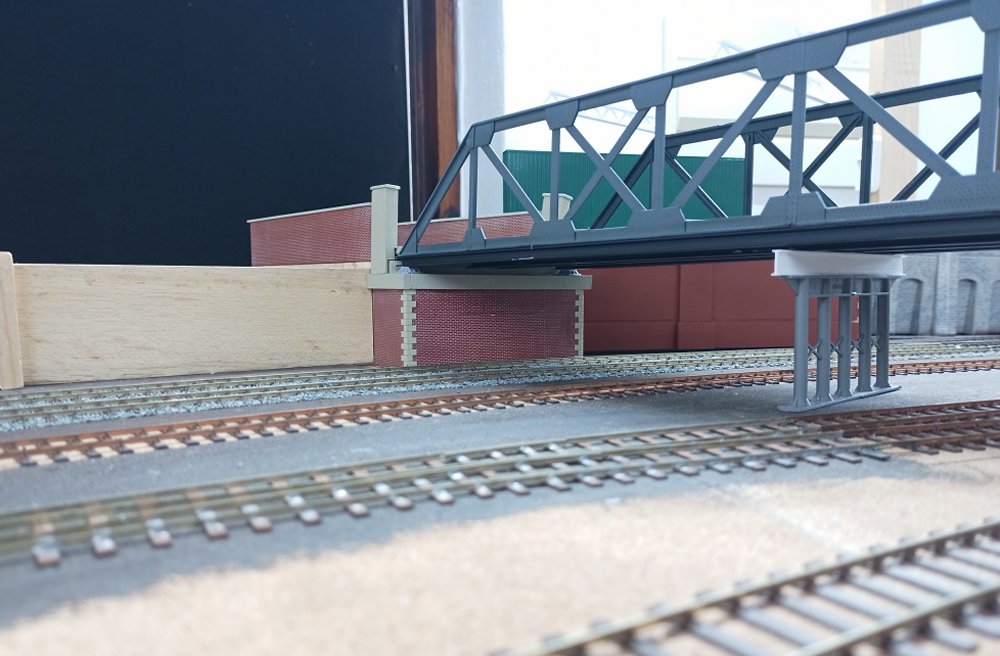 Progress has been held up slightly by a missing delivery, seems to have gone AWOL between
Madrid and me, so it has delayed final glueing and fixing of the girder bridge, parcel
companies are as bad out here as in the UK!
Progress has been held up slightly by a missing delivery, seems to have gone AWOL between
Madrid and me, so it has delayed final glueing and fixing of the girder bridge, parcel
companies are as bad out here as in the UK!
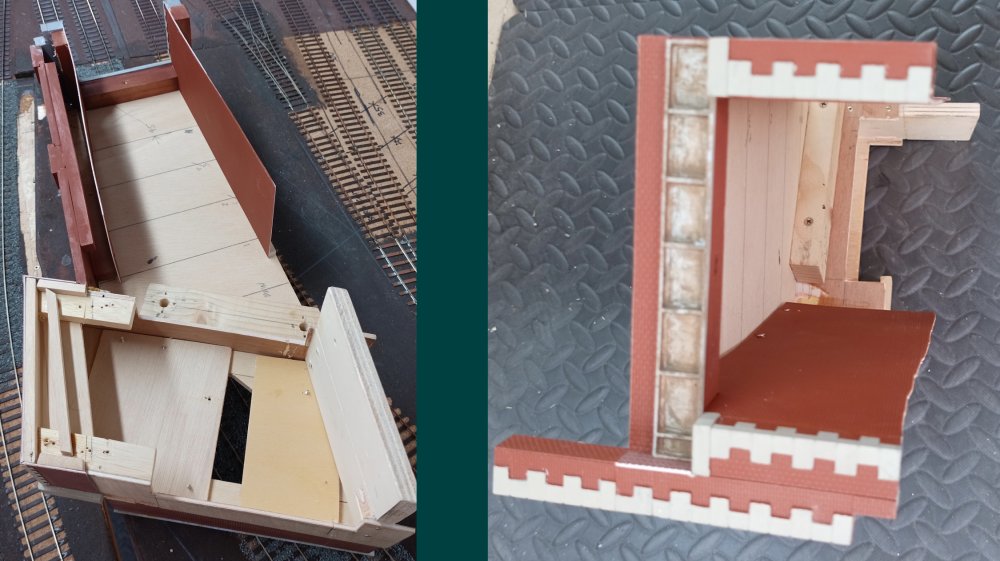 Progress has been concentrated on the girder bridge board, with a tunnel mouth on the
incline to the storage yard. The bridge abutment is a removable section if access to a
disaster is required! The tunnel mouth and associated abutments and retaining walls have
made use of Skytrex mouldings, which, shall we say, aren't the most dimensionally
consistent items I've ever worked with, but when persevered with, do give a reasonable
representation.
Progress has been concentrated on the girder bridge board, with a tunnel mouth on the
incline to the storage yard. The bridge abutment is a removable section if access to a
disaster is required! The tunnel mouth and associated abutments and retaining walls have
made use of Skytrex mouldings, which, shall we say, aren't the most dimensionally
consistent items I've ever worked with, but when persevered with, do give a reasonable
representation.
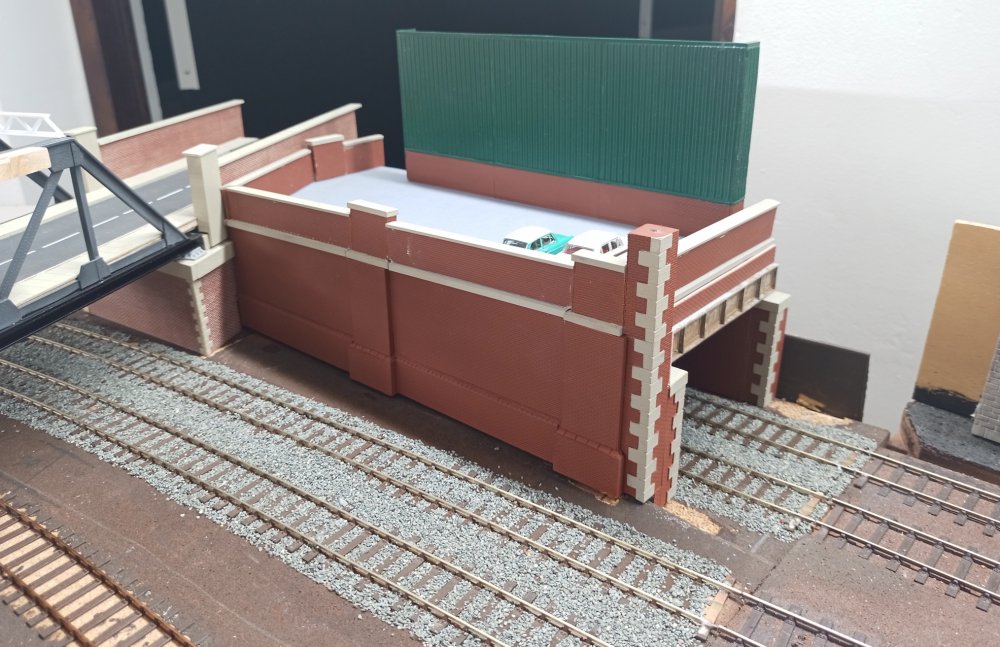 The area above the tunnel is going to be a back yard of an retailers / engineers building
which is in place already. The white lines on the road are courtesy of Scale Model Scenery
pvc stick on ones, although how long they will stay attached to the emery paper tarmac
remains to be seen, hand painting via stencils might prove to be the better option in the long term.
The area above the tunnel is going to be a back yard of an retailers / engineers building
which is in place already. The white lines on the road are courtesy of Scale Model Scenery
pvc stick on ones, although how long they will stay attached to the emery paper tarmac
remains to be seen, hand painting via stencils might prove to be the better option in the long term.
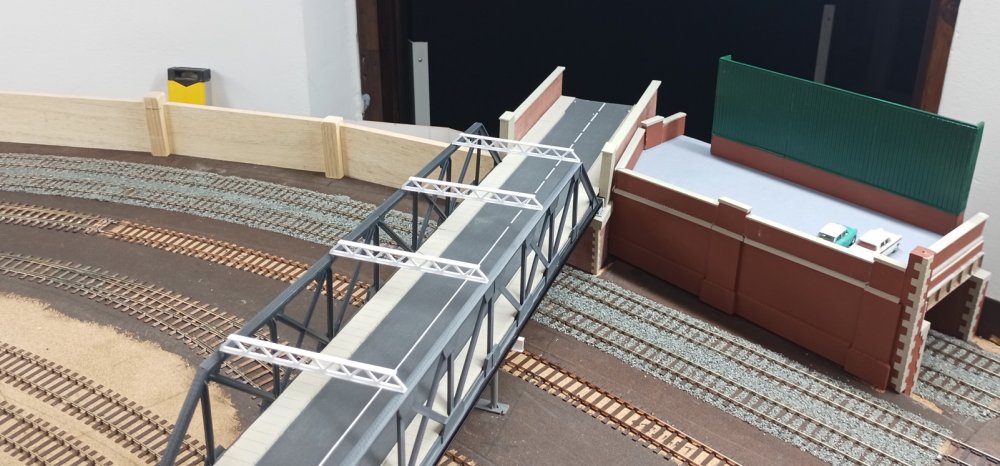 To the left of the abutment a start has been made on a retaining wall to hide the fiddle
yard tracks, this will probably have a raised area like above the tunnel to incorporate more
scenic distractions. Other non layout work includes lathe turning and re-wheeling of some 40
items of rolling stock..... and giving thoughts as to where I can fit in another fiddle yard,
as there are 2 bedrooms not started on yet!
To the left of the abutment a start has been made on a retaining wall to hide the fiddle
yard tracks, this will probably have a raised area like above the tunnel to incorporate more
scenic distractions. Other non layout work includes lathe turning and re-wheeling of some 40
items of rolling stock..... and giving thoughts as to where I can fit in another fiddle yard,
as there are 2 bedrooms not started on yet!

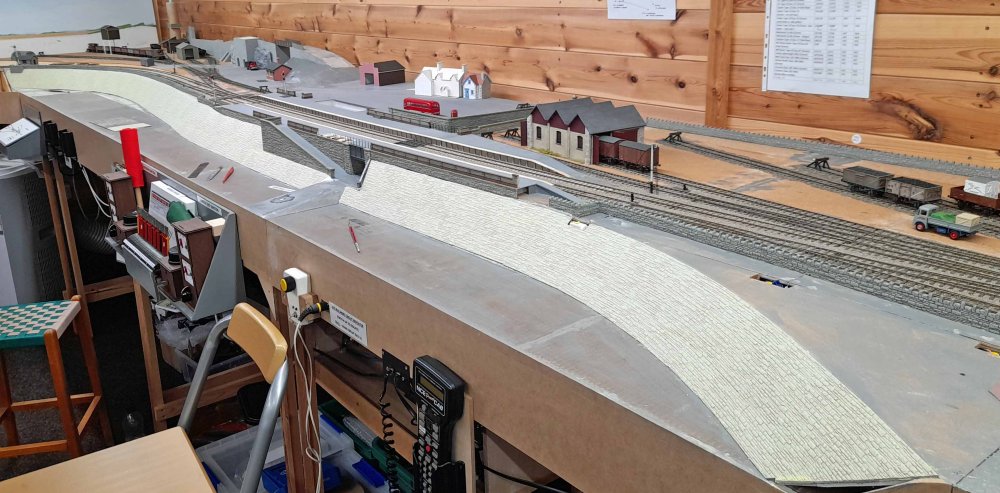 Something like 10-12 packs of Wills Coarse Stone Sheets later (40 plus individual sections),
the embankment is now clad - something like 16 feet of it. This in itself didn’t take that
long, though tidying up the joins will – Hebble Vale seems like a very small extent by comparison!
Something like 10-12 packs of Wills Coarse Stone Sheets later (40 plus individual sections),
the embankment is now clad - something like 16 feet of it. This in itself didn’t take that
long, though tidying up the joins will – Hebble Vale seems like a very small extent by comparison!
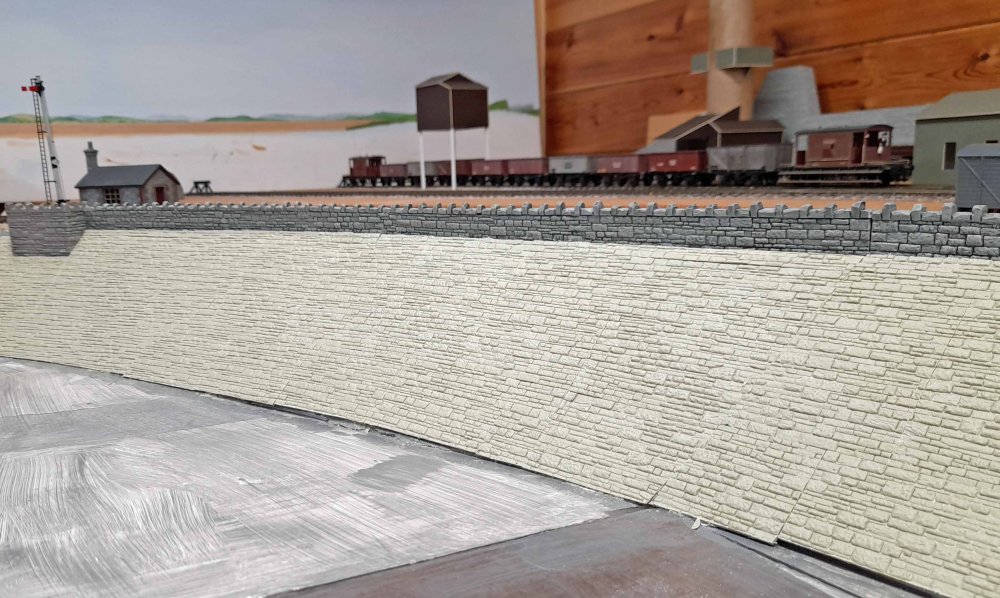 I was concerned how the sections could be made to progress around the curved portions. What I
did was to split each sheet into two vertically down the centre and then make each a very shallow
wedge shape. Joining them in their original orientation preserves the coursing between each piece.
Seems to have worked OK, but the full test will be once all the scribing and re-making stones at
the joins has been completed.
I was concerned how the sections could be made to progress around the curved portions. What I
did was to split each sheet into two vertically down the centre and then make each a very shallow
wedge shape. Joining them in their original orientation preserves the coursing between each piece.
Seems to have worked OK, but the full test will be once all the scribing and re-making stones at
the joins has been completed.
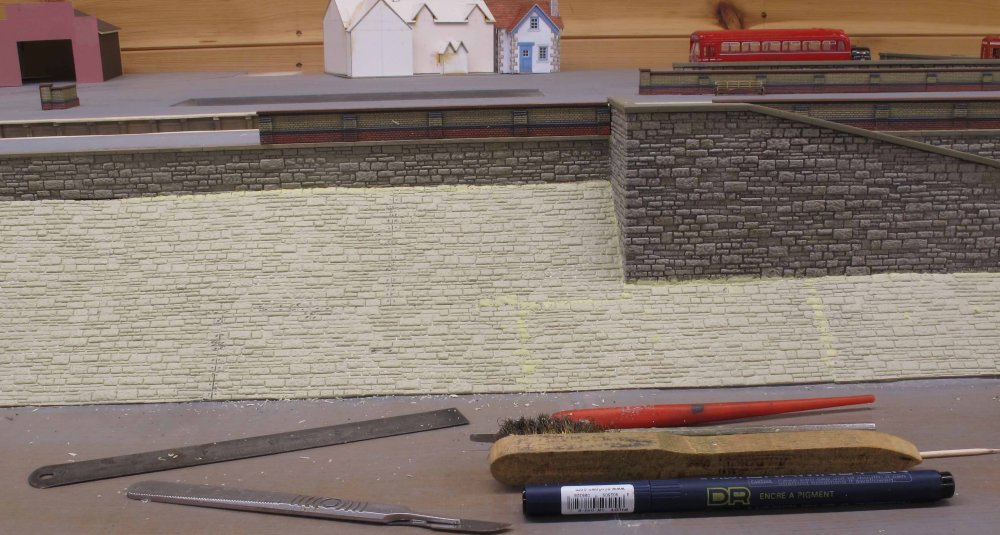 A start has been made on the join refinement process. It will take a while, but can be worked on
for the odd hour when available. There’s no timetable to all this, quite therapeutic actually.
A start has been made on the join refinement process. It will take a while, but can be worked on
for the odd hour when available. There’s no timetable to all this, quite therapeutic actually.
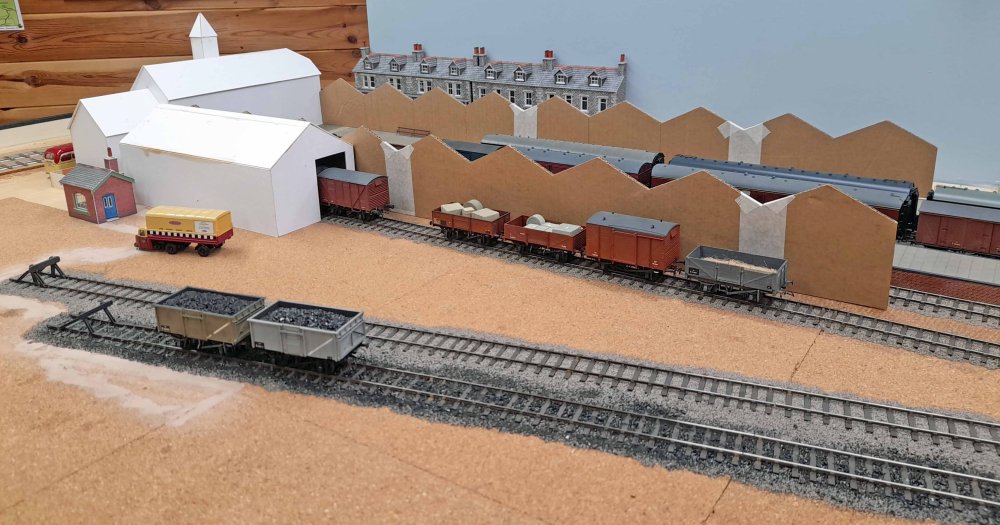 For some relief from this activity, attention has been given to how the Kendal train shed
and goods shed might look. I’ve never found any photos of the side of Lakeside goods shed
(only the very plain end wall where it abutted the attached loco shed which was later
removed), so the one here will be influenced by Haverthwaite etc.
For some relief from this activity, attention has been given to how the Kendal train shed
and goods shed might look. I’ve never found any photos of the side of Lakeside goods shed
(only the very plain end wall where it abutted the attached loco shed which was later
removed), so the one here will be influenced by Haverthwaite etc.
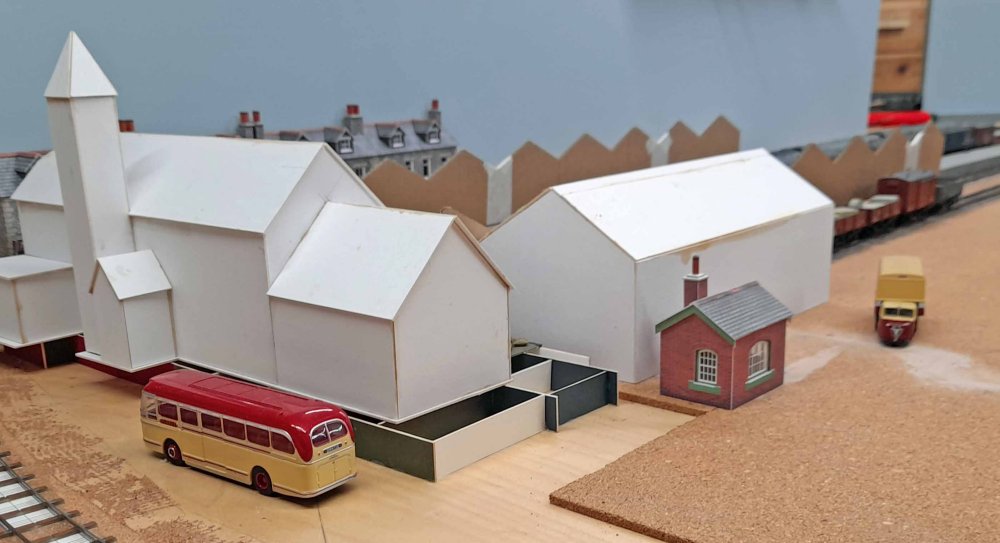 Kendal station frontage. I think I’ve said before that the forecourt will be a scenic insert
to sit over the tracks in the foreground for viewing and photo purposes, to be removed for
operating sessions. The low relief houses behind are lower than they should be at present as
the ground here also needs building up to the correct level.
Kendal station frontage. I think I’ve said before that the forecourt will be a scenic insert
to sit over the tracks in the foreground for viewing and photo purposes, to be removed for
operating sessions. The low relief houses behind are lower than they should be at present as
the ground here also needs building up to the correct level.
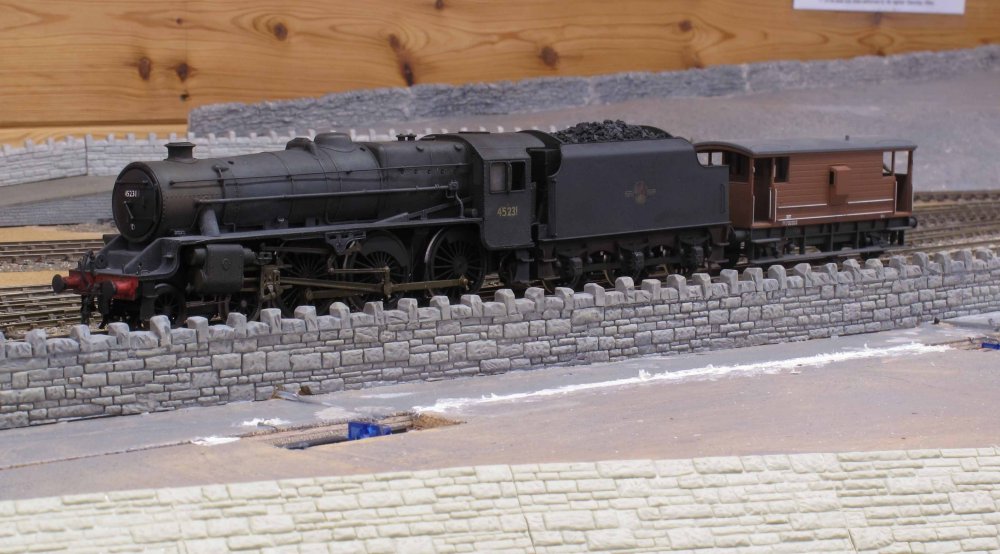 And finally, the Black 5 previously mentioned. Now up and being test run in advance of fitting
the DCC bits & bobs. The origin is a Hornby model with Gibson wheels and Brassmasters detailing
parts. The tender has had the frames extensively re-worked and a Lanarkshire Models chassis
(and loco coupling rods) added – both soon to be part of the High Level range. 45231 was sent
to Carnforth at the end (eventually preserved, but not my reason for modelling it). There are
several published photos of this loco at work on the Furness section around this time, including
an atmospheric shot by Derek Cross in the Bradford Barton volume 'LM Steam in the Northern Fells',
where it’s seen approaching Sandside with quarry empties, so just had to be modelled, and in the
condition depicted in the photo – filthy but with a cleaned smokebox front.
And finally, the Black 5 previously mentioned. Now up and being test run in advance of fitting
the DCC bits & bobs. The origin is a Hornby model with Gibson wheels and Brassmasters detailing
parts. The tender has had the frames extensively re-worked and a Lanarkshire Models chassis
(and loco coupling rods) added – both soon to be part of the High Level range. 45231 was sent
to Carnforth at the end (eventually preserved, but not my reason for modelling it). There are
several published photos of this loco at work on the Furness section around this time, including
an atmospheric shot by Derek Cross in the Bradford Barton volume 'LM Steam in the Northern Fells',
where it’s seen approaching Sandside with quarry empties, so just had to be modelled, and in the
condition depicted in the photo – filthy but with a cleaned smokebox front.

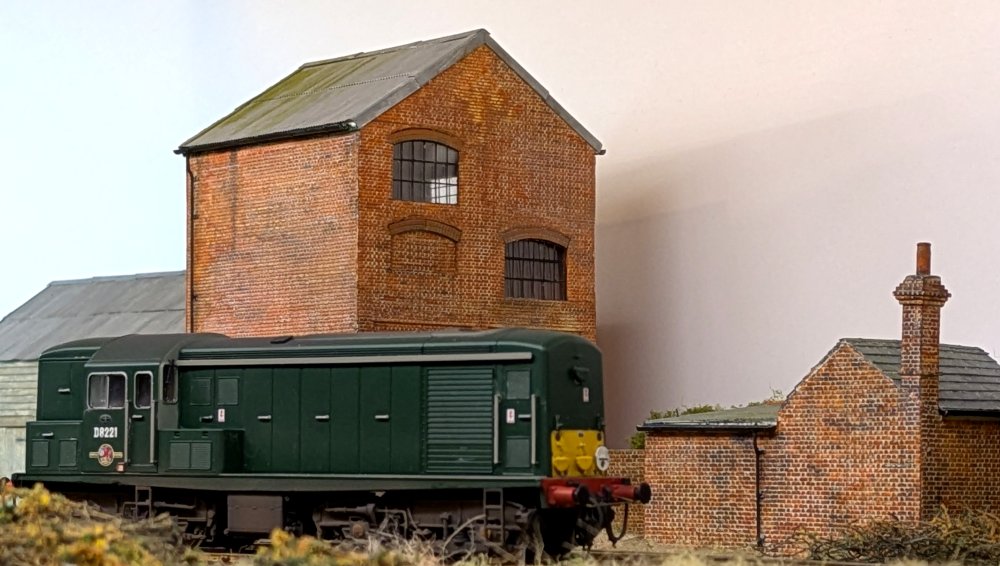 D8221 has joined the fleet with SYP and is seen here entering the yard. The sound level has
been turned up as discussed recently and fitted with Ultrascale wheels. Another Class 15 has
entered the shops and is waiting for 14mm Black Beetle wheels. Appearances at exhibitions are
now being confirmed and placed on the exhibitions page for next year.
D8221 has joined the fleet with SYP and is seen here entering the yard. The sound level has
been turned up as discussed recently and fitted with Ultrascale wheels. Another Class 15 has
entered the shops and is waiting for 14mm Black Beetle wheels. Appearances at exhibitions are
now being confirmed and placed on the exhibitions page for next year.

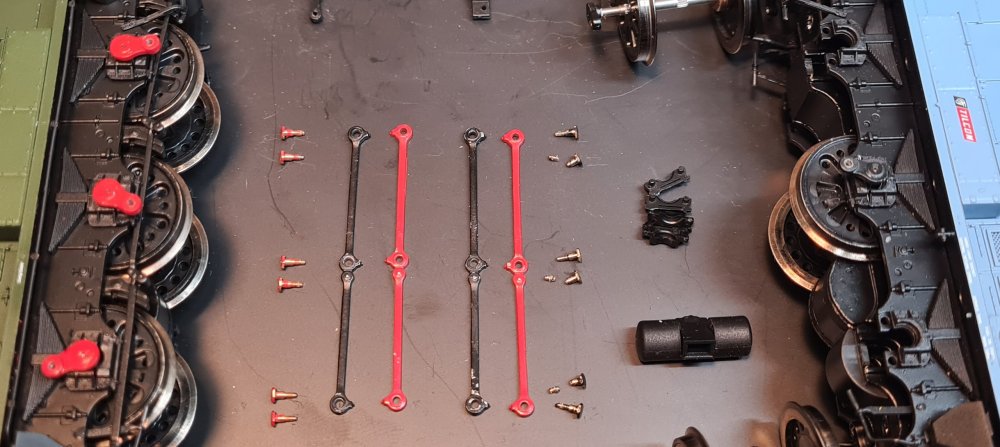 It would appear that some variants of the ModelRail / Heljan Class 12 are produced
differently, with some having the crank pins applied with a thread-lock
compound. The green 15221 models with red rods are easy to dismantle, whilst the Tilcon blue
examples with black rods have tight (and easily broken) crank pins, with evidence of
thread-lock compound after removal. The rods have been factory fitted with little regard to
their orientation, the knuckle needing to be at the cab end. One silver lining in the case
of these 2 models is that one has 2 left hand rods, whilst the other has 2 right hand rods.
Alan Gibson crank pins have been used to replace the broken set, although this did involve
broaching the holes on the rods to accomodate the crank pin bushes.
It would appear that some variants of the ModelRail / Heljan Class 12 are produced
differently, with some having the crank pins applied with a thread-lock
compound. The green 15221 models with red rods are easy to dismantle, whilst the Tilcon blue
examples with black rods have tight (and easily broken) crank pins, with evidence of
thread-lock compound after removal. The rods have been factory fitted with little regard to
their orientation, the knuckle needing to be at the cab end. One silver lining in the case
of these 2 models is that one has 2 left hand rods, whilst the other has 2 right hand rods.
Alan Gibson crank pins have been used to replace the broken set, although this did involve
broaching the holes on the rods to accomodate the crank pin bushes.
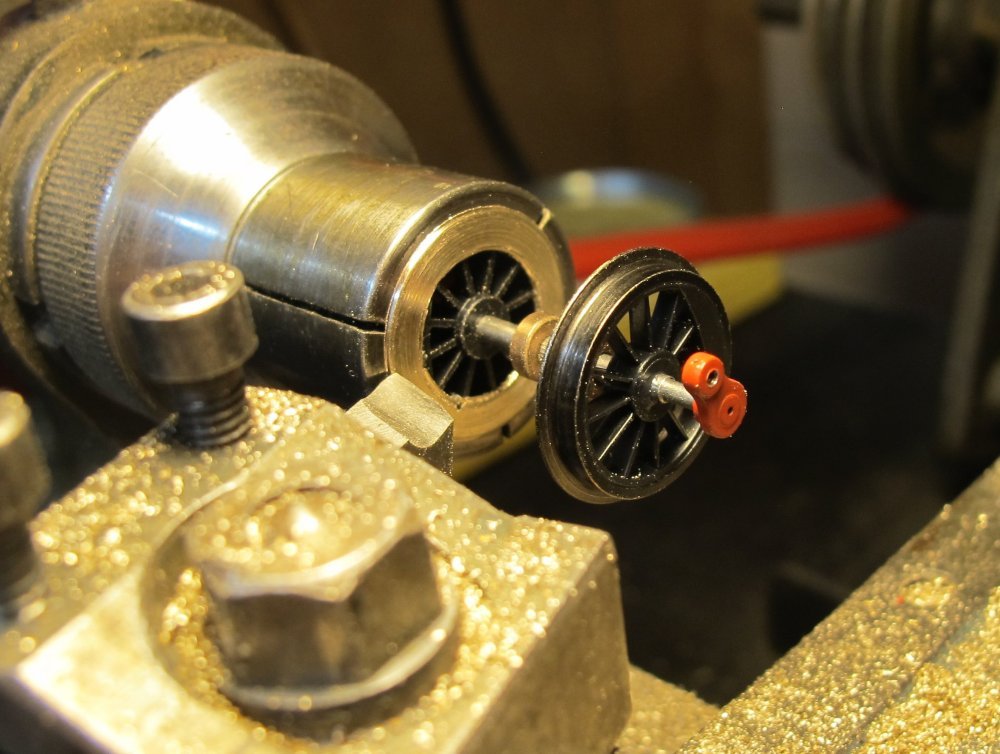 As with the Class 11 wheelsets shown here in the lathe, the Class 12 conversion to EM gauge
benefits from having 0.5mm faced off the back of the wheel, resulting in each wheel only having
to be moved 0.5mm on the axle to EM gauge so that the completed wheelsets fit nicely back into
the frames. This method of using the existing wheels doesn't require removal of the cranks,
keeping the quartering intact.
As with the Class 11 wheelsets shown here in the lathe, the Class 12 conversion to EM gauge
benefits from having 0.5mm faced off the back of the wheel, resulting in each wheel only having
to be moved 0.5mm on the axle to EM gauge so that the completed wheelsets fit nicely back into
the frames. This method of using the existing wheels doesn't require removal of the cranks,
keeping the quartering intact.
 The sand pipe bracket which is secured inside the frames, fouls on the rear wheelset due to
the 18mm diameter wheels (not a problem with the 16mm wheels on the Class 11), so the bracket
needs to be cut short and glued onto the underside of the frames for clearance. This view also
shows a tie bar secured to the cab footsteps on the Class 11, as they are unsuported and too
easily broken off (several times being clumsy).
The sand pipe bracket which is secured inside the frames, fouls on the rear wheelset due to
the 18mm diameter wheels (not a problem with the 16mm wheels on the Class 11), so the bracket
needs to be cut short and glued onto the underside of the frames for clearance. This view also
shows a tie bar secured to the cab footsteps on the Class 11, as they are unsuported and too
easily broken off (several times being clumsy).
 Correct height comparison between a Hornby 08 and the ModelRail 11 & 12. The Class 11 has 4'
driving wheels and is 3" lower than the outer two that have 4'6" driving wheels.
Correct height comparison between a Hornby 08 and the ModelRail 11 & 12. The Class 11 has 4'
driving wheels and is 3" lower than the outer two that have 4'6" driving wheels.
 The two new converts ready for detailing, painting the rods and weathering, and destined
for the Eastwell fleet.
The two new converts ready for detailing, painting the rods and weathering, and destined
for the Eastwell fleet.
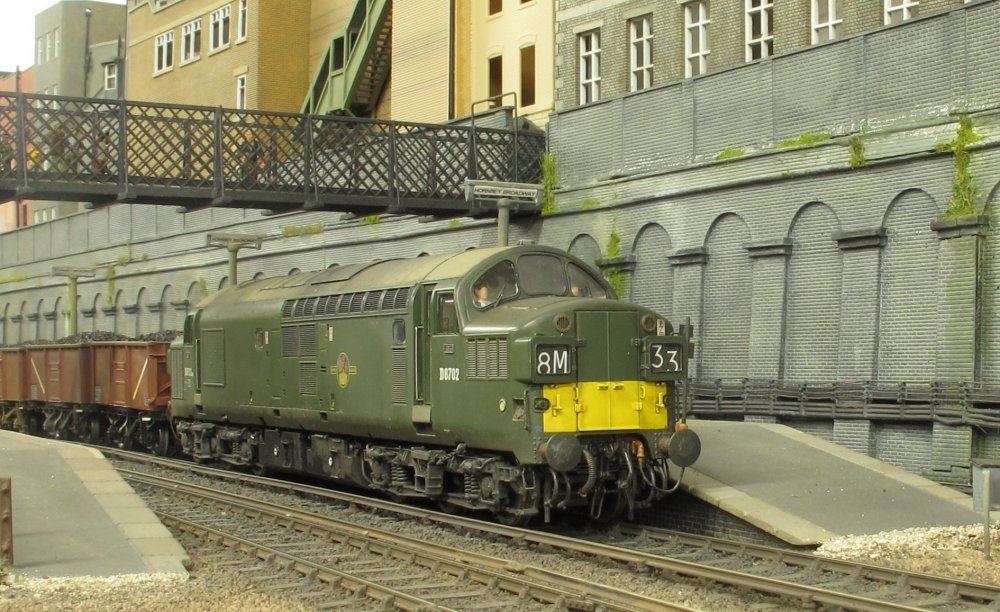 Here are a few snaps taken from the lineside, starting with D6702 held at the signal in platform 2.
 JB E6018 and JA E6002 heading north with a rake of mark 2 coaching stock.
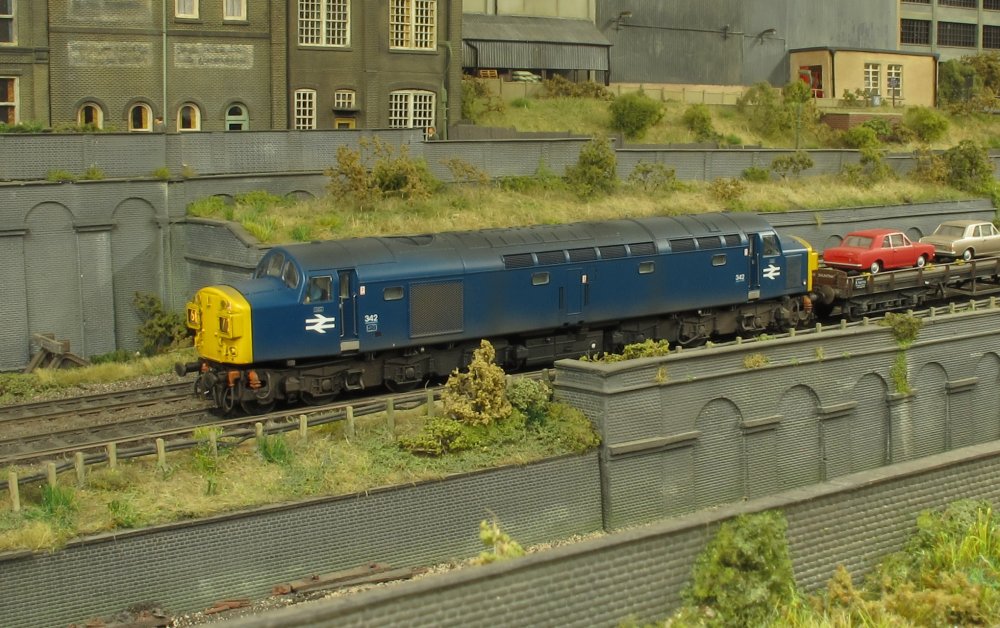 From Shenston Road comes English Electric type 4 number 342 - a Bachmann model recently
weathered and fitted with a Legoman Biffo sound chip.
From Shenston Road comes English Electric type 4 number 342 - a Bachmann model recently
weathered and fitted with a Legoman Biffo sound chip.
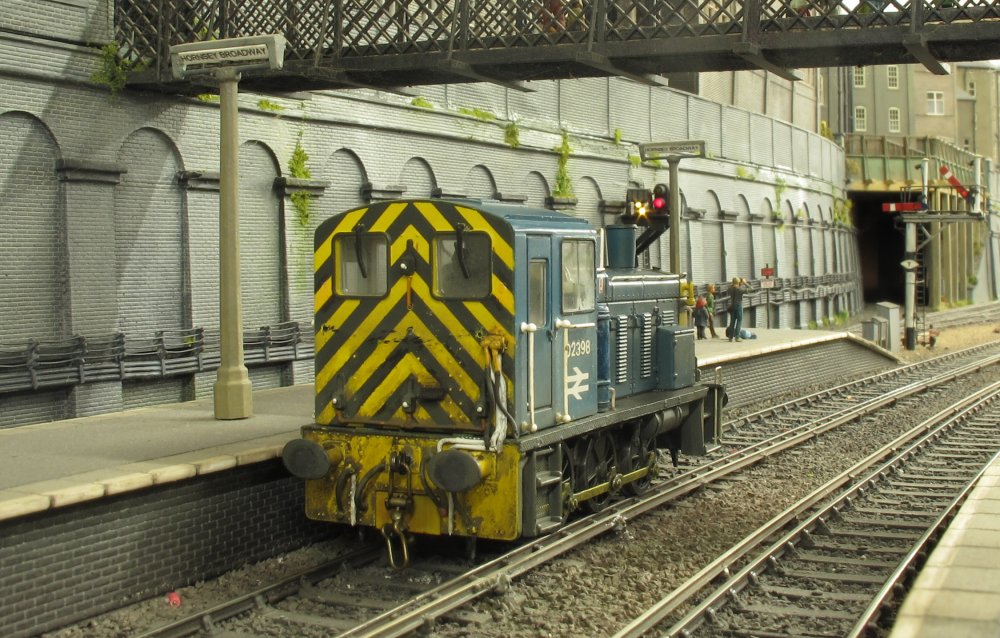 A dual braked D2398 passing through the station, a visitor from Sheepcroft by Stu Davies,
and brought along to a running session by Tim Cobb.
A dual braked D2398 passing through the station, a visitor from Sheepcroft by Stu Davies,
and brought along to a running session by Tim Cobb.
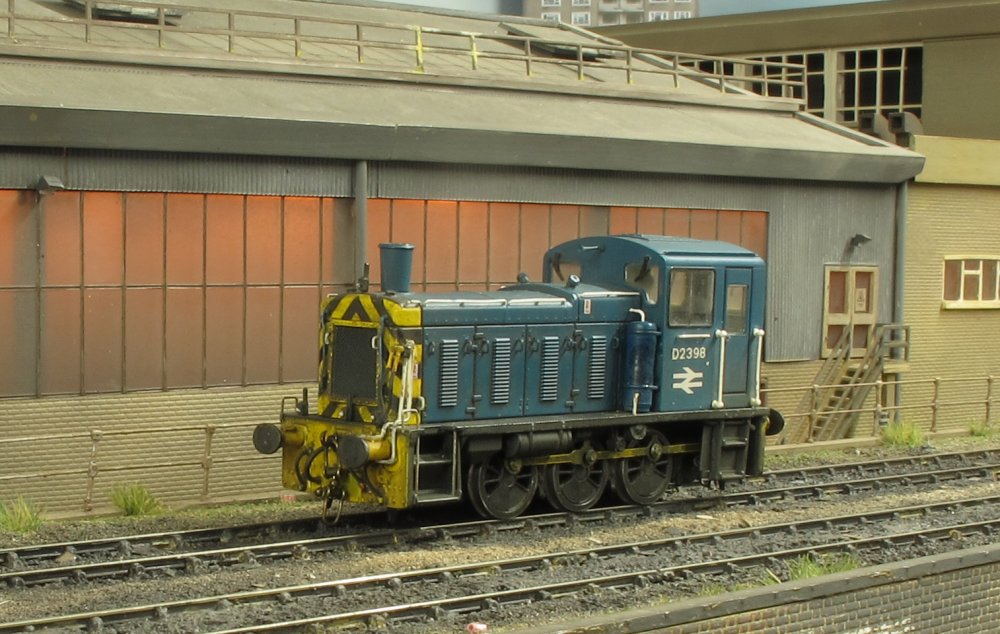 D2398 with high level air pipes was an early withdrawal, being cut up at Pounds Shipbreakers
at Fratton, Hants in 1972.
D2398 with high level air pipes was an early withdrawal, being cut up at Pounds Shipbreakers
at Fratton, Hants in 1972.
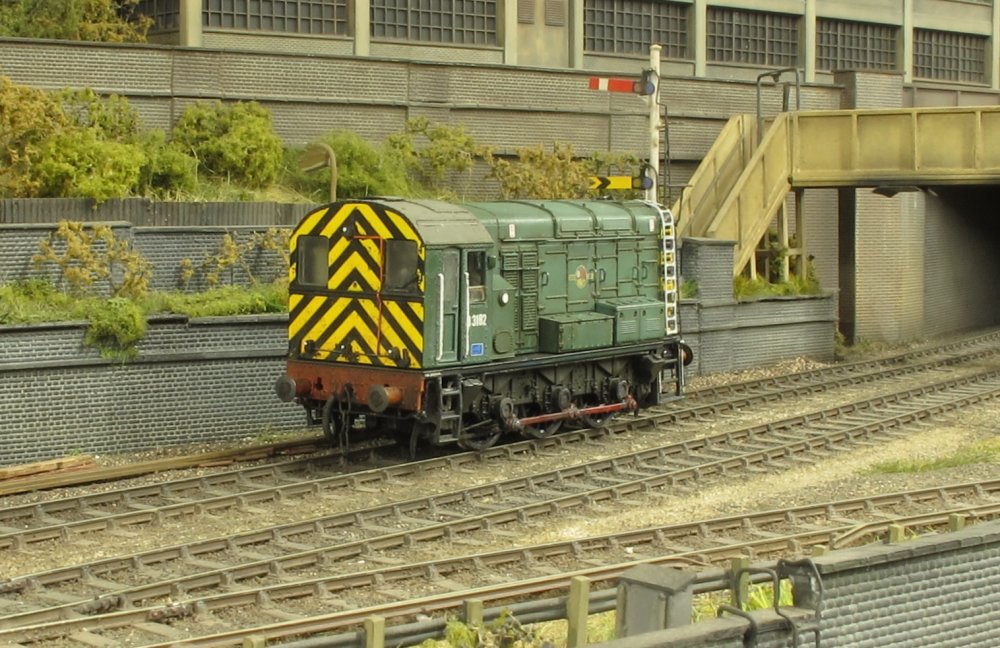 Another visitor from Sheepcroft - Class 08 D3182 stretching it's legs for the afternoon.
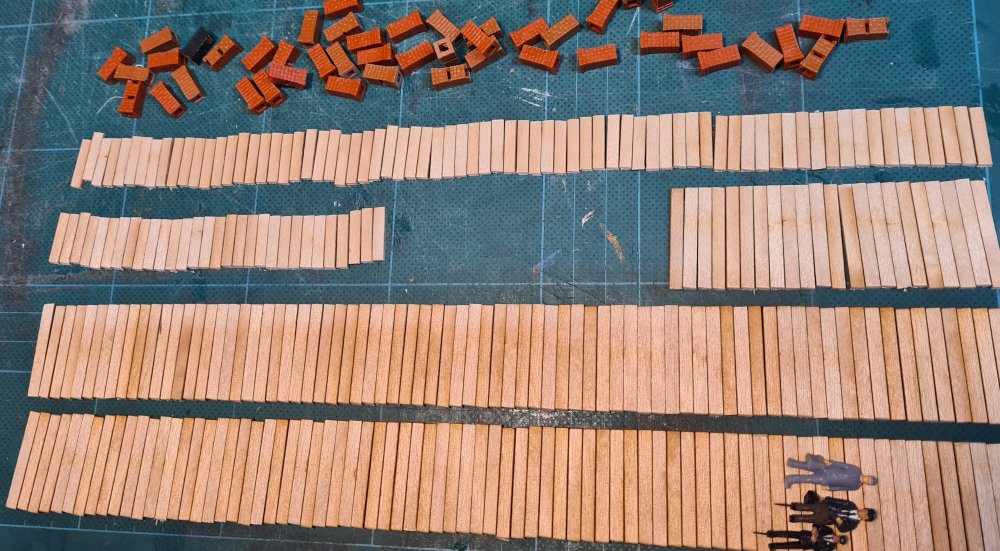 Meanwhile over on the new East London layout project, the timbers for the platform have been
cut and are shown here ready for sticking together.
Meanwhile over on the new East London layout project, the timbers for the platform have been
cut and are shown here ready for sticking together.
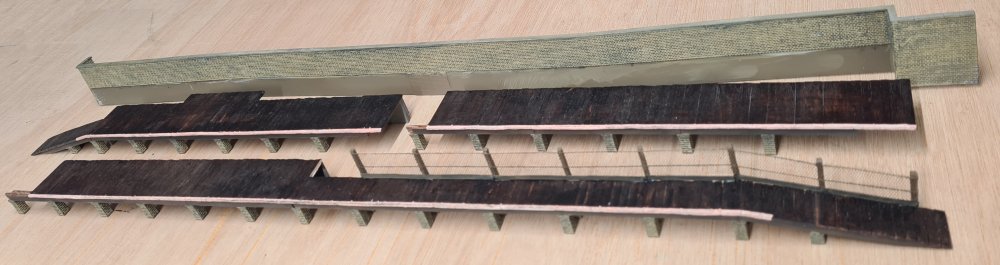 The framework and decking are all made from the same sleeper? section I had found in a drawer,
and supported on Kibri brick pillars.
The framework and decking are all made from the same sleeper? section I had found in a drawer,
and supported on Kibri brick pillars.
 A brick wall retains the platform for most of its length, with a wire mesh fence along the
extension - if ever a 4-car were to arrive.
A brick wall retains the platform for most of its length, with a wire mesh fence along the
extension - if ever a 4-car were to arrive.
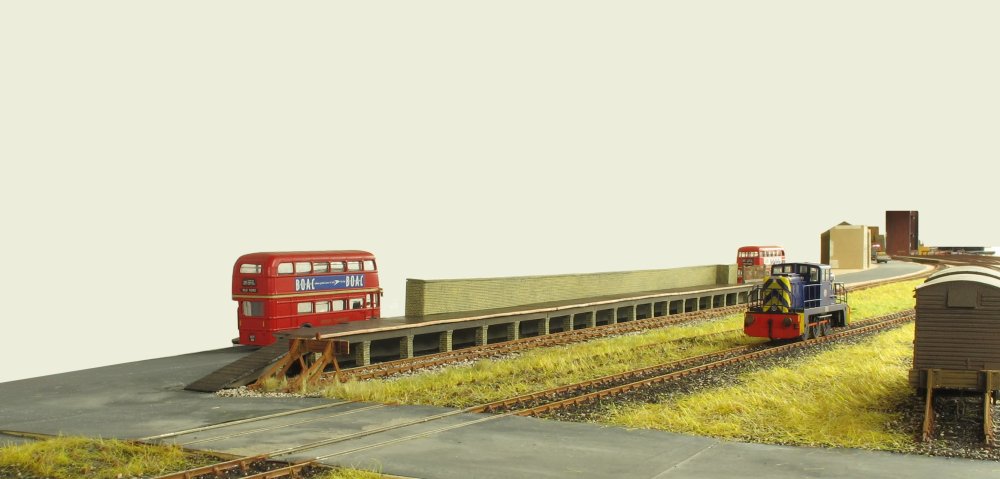 The ballasting has been finished, and now awaits weathering, especially the areas
where DMUs have been standing and dripping oil. The static grass fibres were applied
whilst the diluted glue for the ballast was still wet, and if it looks a bit heavy in
places, it's no problem getting the strimmer out.
The ballasting has been finished, and now awaits weathering, especially the areas
where DMUs have been standing and dripping oil. The static grass fibres were applied
whilst the diluted glue for the ballast was still wet, and if it looks a bit heavy in
places, it's no problem getting the strimmer out.