
*********************************************************************************************************************************************
JULY 2026 UPDATE
*********************************************************************************************************************************************
KIER HARDY
*********************************************************************************************************************************************
MIKE WHITCHURCH
*********************************************************************************************************************************************
ANDY LEE
*********************************************************************************************************************************************
KARL CROWTHER
*********************************************************************************************************************************************
TIM SHACKLETON
*********************************************************************************************************************************************
STU DAVIES
*********************************************************************************************************************************************

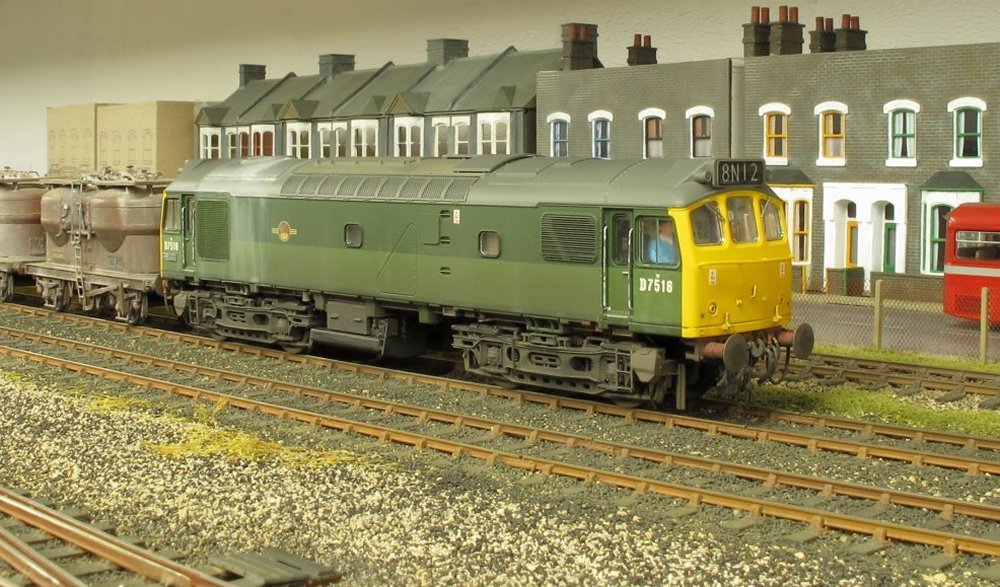 Toton allocated BR Sulzer type 2 D7516 gets ready to depart East London with a rake of
Prestwins. This Bachmann SFX Class 25 is the latest locomotive into the Hornsey fleet.
Meanwhile in the background, a row of terraced houses are under construction, hopefully
with further progress (and chimney pots) to show next month.
Toton allocated BR Sulzer type 2 D7516 gets ready to depart East London with a rake of
Prestwins. This Bachmann SFX Class 25 is the latest locomotive into the Hornsey fleet.
Meanwhile in the background, a row of terraced houses are under construction, hopefully
with further progress (and chimney pots) to show next month.
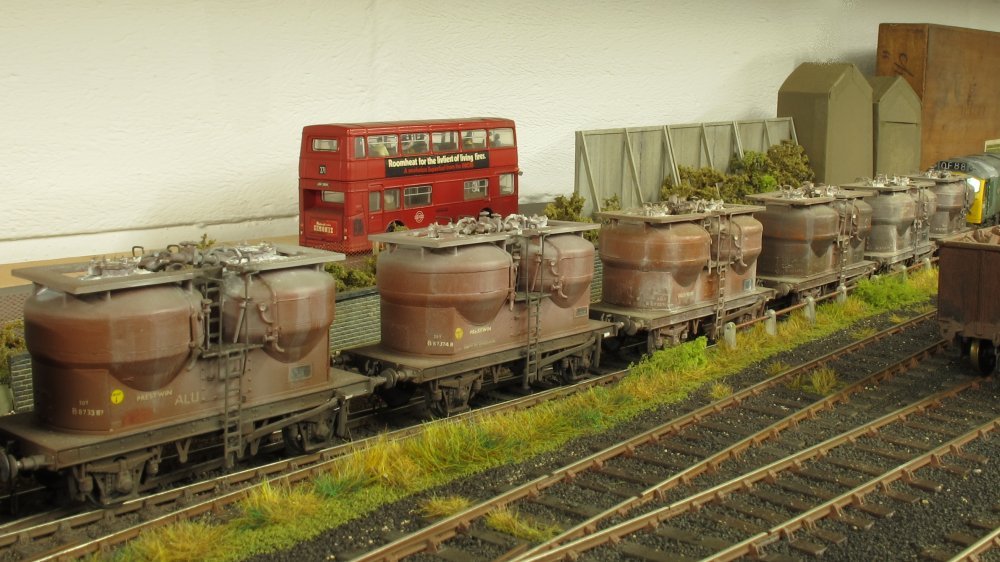 The nearest two Prestwins were in the Shenston Road scrap line, having been replaced by
the Ellis Clark R-T-R versions. Now transferred to my fleet (to join the existing four),
these two wagons have been through the workshops and additional detail added to include
etched ladders, handrails, grab handles and powder spillages around the filler hatches.
The nearest two Prestwins were in the Shenston Road scrap line, having been replaced by
the Ellis Clark R-T-R versions. Now transferred to my fleet (to join the existing four),
these two wagons have been through the workshops and additional detail added to include
etched ladders, handrails, grab handles and powder spillages around the filler hatches.
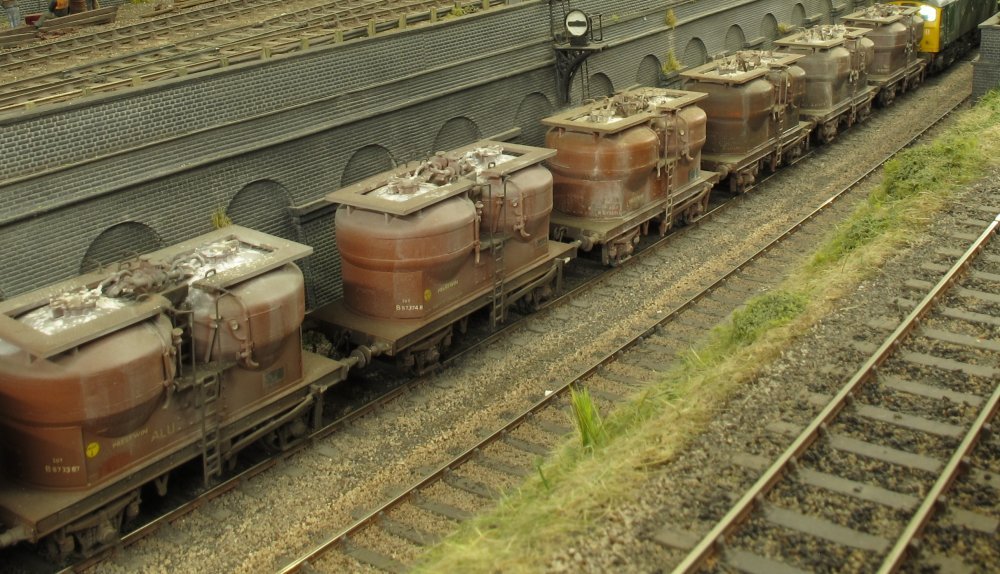 For a sixty year old Airfix kit, they scrub up quite well and it's good to see them saved
from the bin. The plastic is a bit brittle on some examples, but with care and avoiding
rough shunting, they should last a little bit longer.
For a sixty year old Airfix kit, they scrub up quite well and it's good to see them saved
from the bin. The plastic is a bit brittle on some examples, but with care and avoiding
rough shunting, they should last a little bit longer.
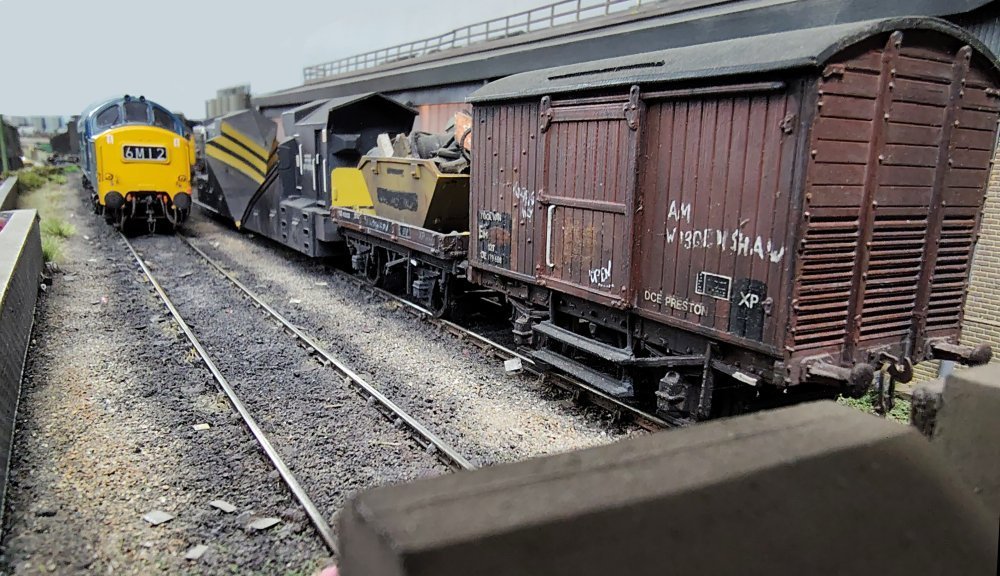 The recent heatwave has slowed down modelling activity, but at least the regular running
sesions have helped to keep the track clean. Here's a couple of snaps taken during a quiet
moment at the loco depot. A couple of internal user wagons keep the snowploughs company.
The recent heatwave has slowed down modelling activity, but at least the regular running
sesions have helped to keep the track clean. Here's a couple of snaps taken during a quiet
moment at the loco depot. A couple of internal user wagons keep the snowploughs company.
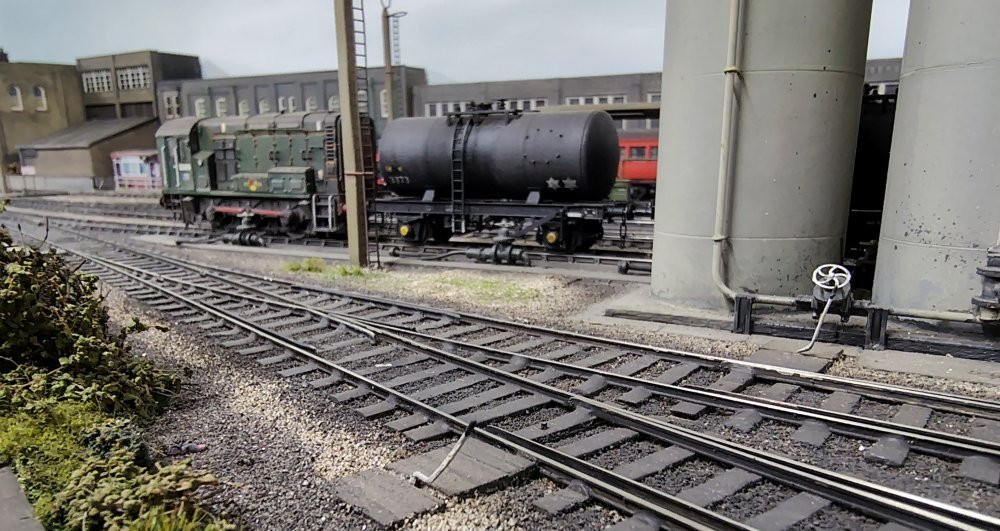 Another tank wagon emptied and ready for return.
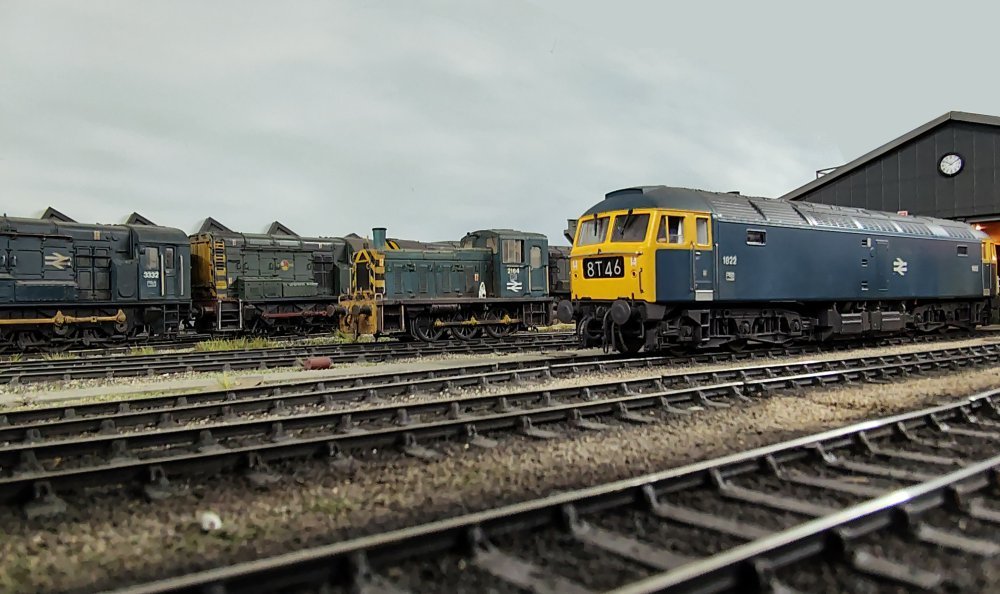 This must have been taken on a Sunday, if the amount of shunters on shed is anything to go by.

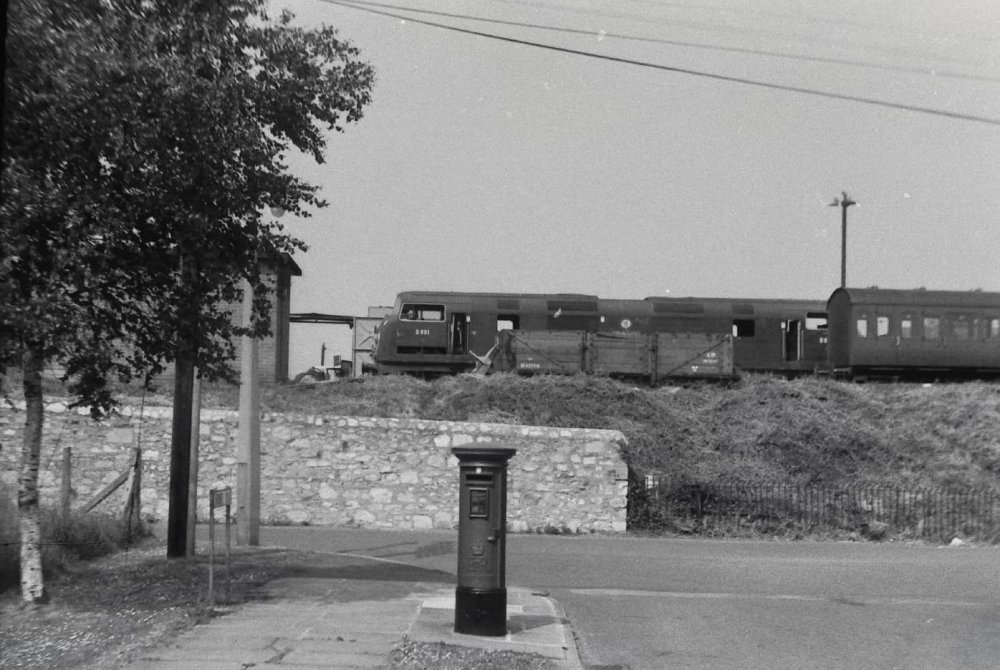 Continuing with some more holiday snaps taken in 1970, here's D801 (Vanguard) at the back
of 83A Newton Abbot works on the 7th of June 1970.
It had been dumped here after suffering
problems whilst on the way from Laira to Swindon works for scrapping, along with D802 I
believe which made the journey satisfactorily.
Continuing with some more holiday snaps taken in 1970, here's D801 (Vanguard) at the back
of 83A Newton Abbot works on the 7th of June 1970.
It had been dumped here after suffering
problems whilst on the way from Laira to Swindon works for scrapping, along with D802 I
believe which made the journey satisfactorily.
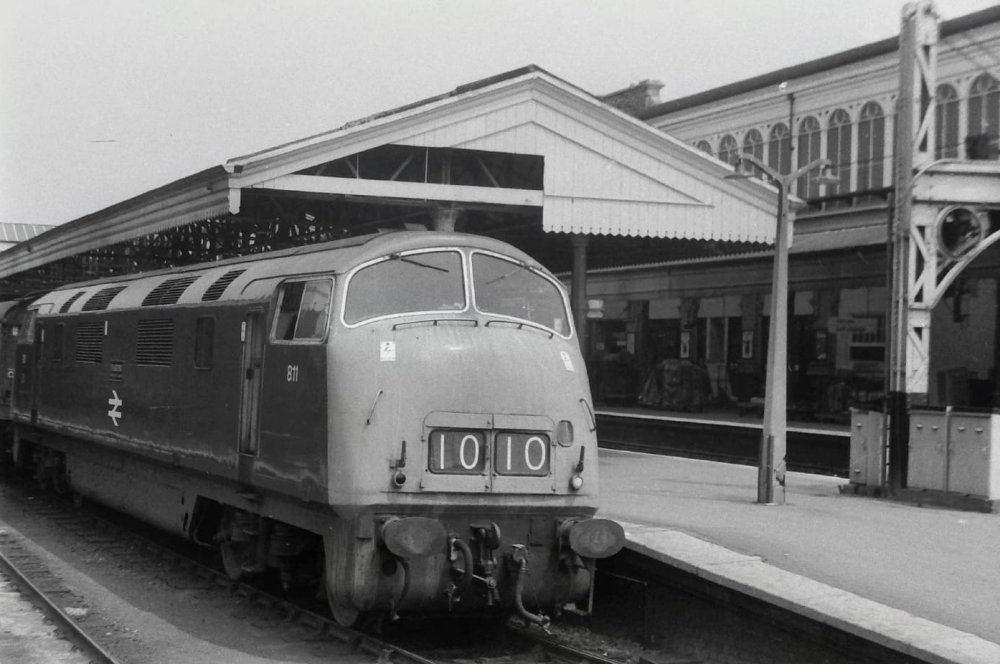 Warship 811 Daring reporting 1O10 Exeter St Davids to Waterloo in June 1970.
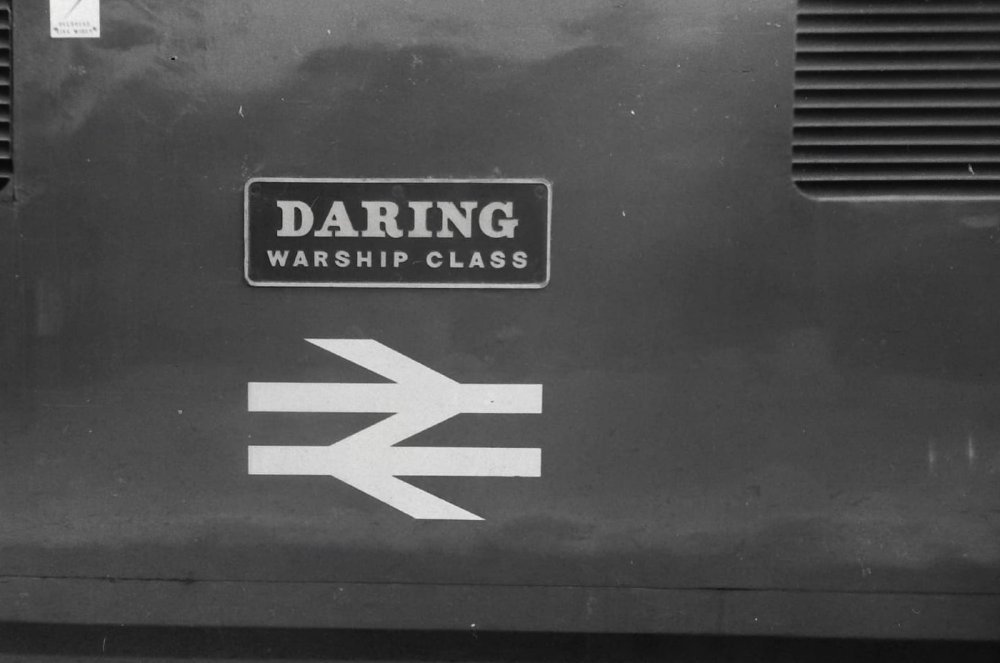 Close up of 811 Daring nameplate at Exeter St Davids in June 1970.
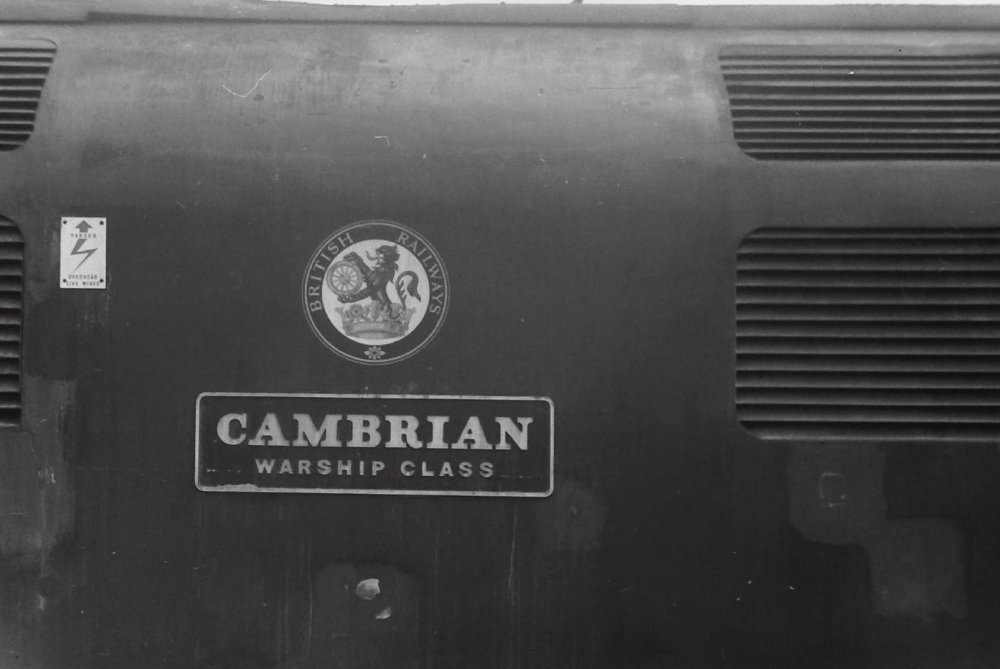 Close up of Maroon liveried D806 Cambrian nameplate in June 1970.
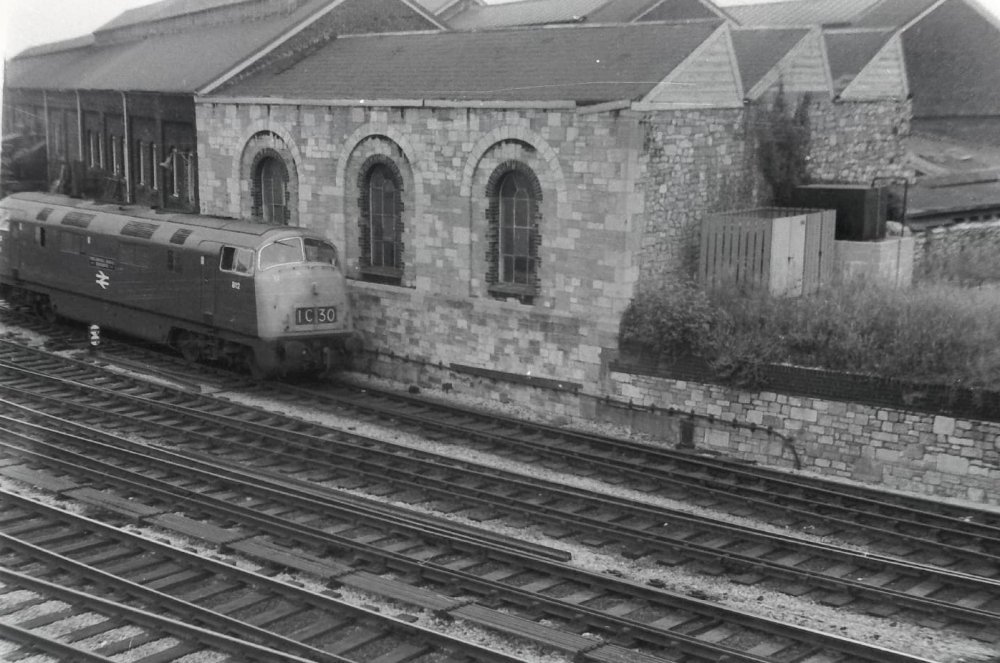 Warship 812 Royal Naval Reserve coming off 83A light engine on the 12th of June 1970.
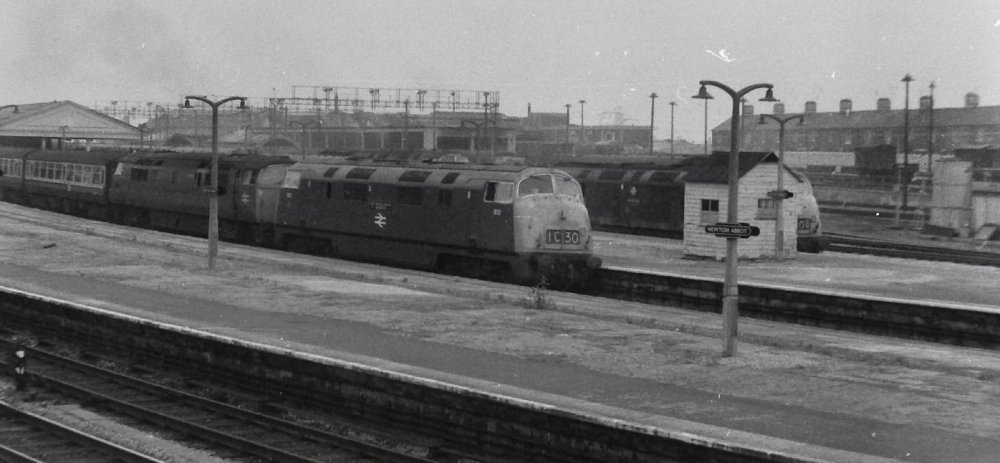 The reason for the previous shot - 812 is attached to D1030 Western Musketeer on the 1C30
(the Rivo?) to assist over the Devon banks.
D842 Royal Oak lurks in the background on the
6V09 waiting to follow them, presumably as far as Tavistock Junction yard.
The reason for the previous shot - 812 is attached to D1030 Western Musketeer on the 1C30
(the Rivo?) to assist over the Devon banks.
D842 Royal Oak lurks in the background on the
6V09 waiting to follow them, presumably as far as Tavistock Junction yard.
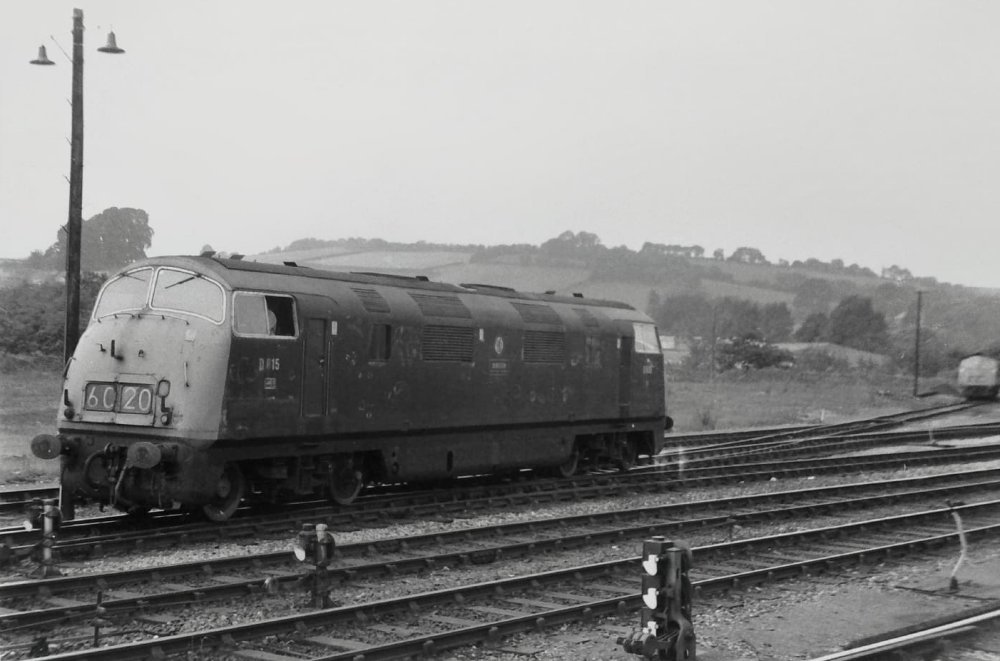 D815 Druid on Exeter stabling point in June 1970.
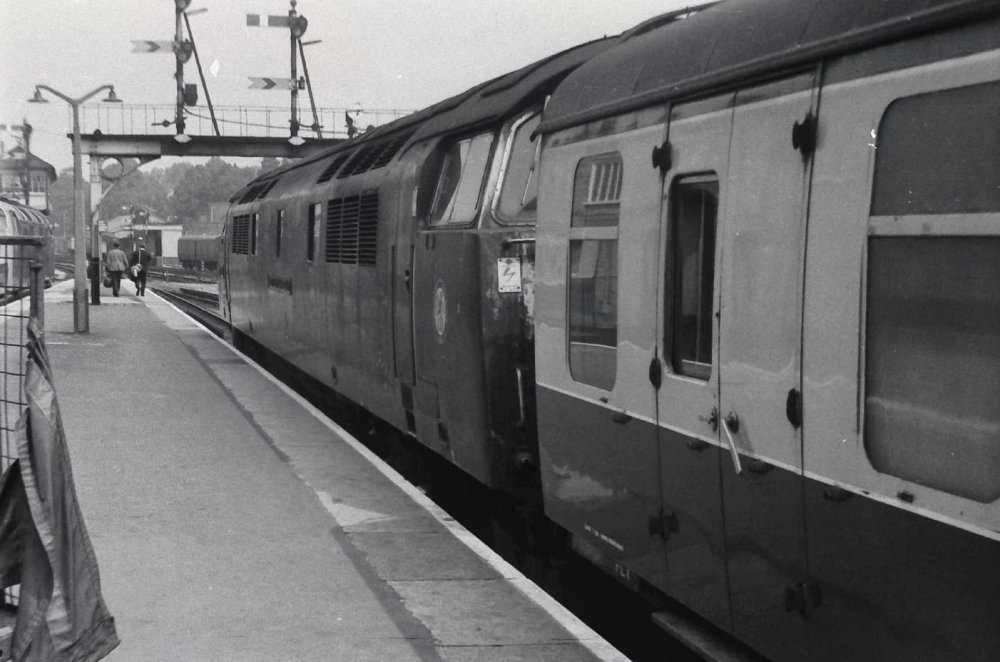 We've previously had a picture of this train from the front, this being D1046 Western Marquis
with the 1A35 at Exeter st Davids on the 9th of June 1970.
Westerns in maroon with small
yellow warning panels were my favourite livery variation, so I waited at Newton Abbot for
a service hauled by one, luckily I didn't have long to wait!
We've previously had a picture of this train from the front, this being D1046 Western Marquis
with the 1A35 at Exeter st Davids on the 9th of June 1970.
Westerns in maroon with small
yellow warning panels were my favourite livery variation, so I waited at Newton Abbot for
a service hauled by one, luckily I didn't have long to wait!
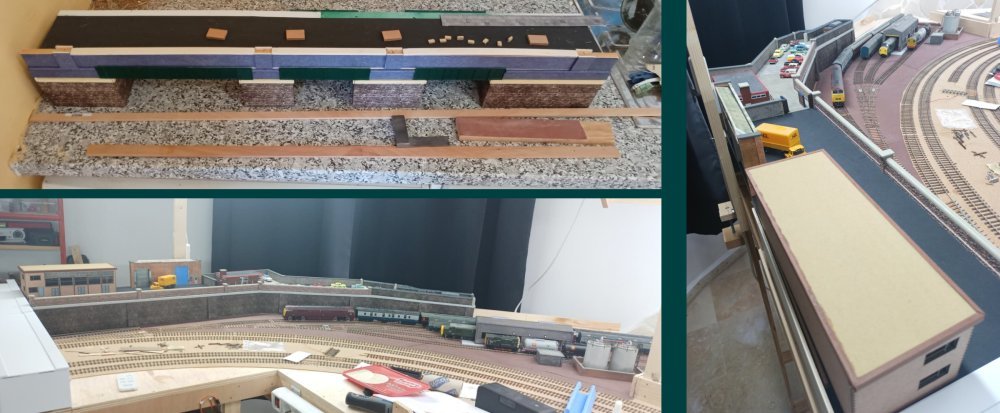 Just to show that there is actually development going on at Wibdenshaw.
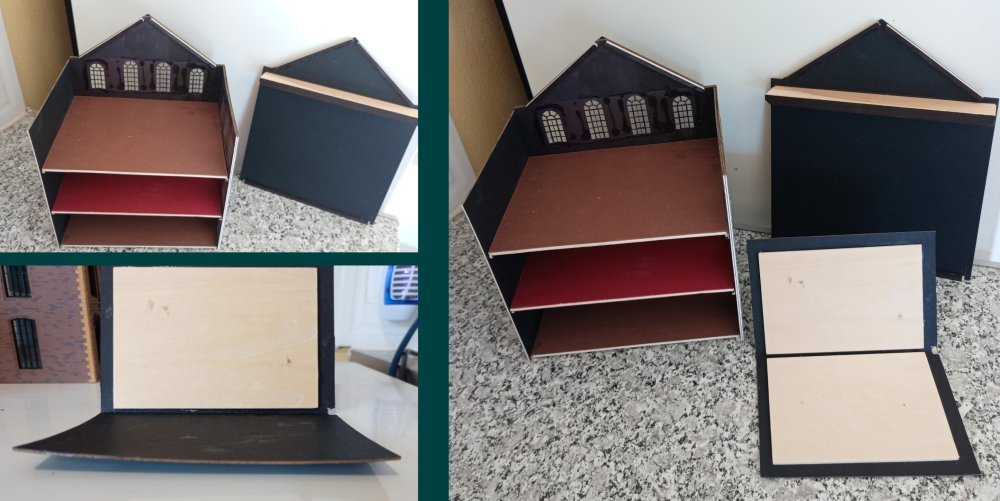 Although the heat and humidity plays havoc with the buildings, this is an indication of the
amount of timber and plywood bracing that has to go into one, to keep a degree of structural stability.
Although the heat and humidity plays havoc with the buildings, this is an indication of the
amount of timber and plywood bracing that has to go into one, to keep a degree of structural stability.

 I picked up a used Bachmann Class 37 in BR green with small yellow panels at the Buxton Show
recently and have converted it to EM gauge using Ultrascale wheels. Weathering is my usual
IPA washes and have gone for a blotchy patchy look to give a worn paint look. Next up is to
add Smiths couplings and pipework.
I picked up a used Bachmann Class 37 in BR green with small yellow panels at the Buxton Show
recently and have converted it to EM gauge using Ultrascale wheels. Weathering is my usual
IPA washes and have gone for a blotchy patchy look to give a worn paint look. Next up is to
add Smiths couplings and pipework.
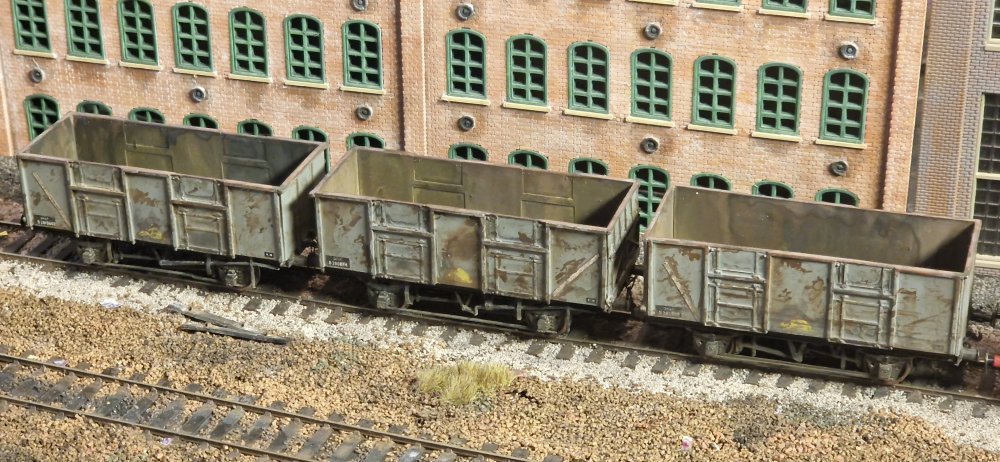 Three Parkside 24.5 ton mineral wagons (Bombers) have been built and Alan Gibson wheels fitted
as well as Smiths couplings. I have painted these to look very worn and rusty using 4 different
browns for the rust, and IPA washes to bleach the paint work and make it look very worn. All
painted with Railmatch, Tamiya and Archive X paints.
Three Parkside 24.5 ton mineral wagons (Bombers) have been built and Alan Gibson wheels fitted
as well as Smiths couplings. I have painted these to look very worn and rusty using 4 different
browns for the rust, and IPA washes to bleach the paint work and make it look very worn. All
painted with Railmatch, Tamiya and Archive X paints.

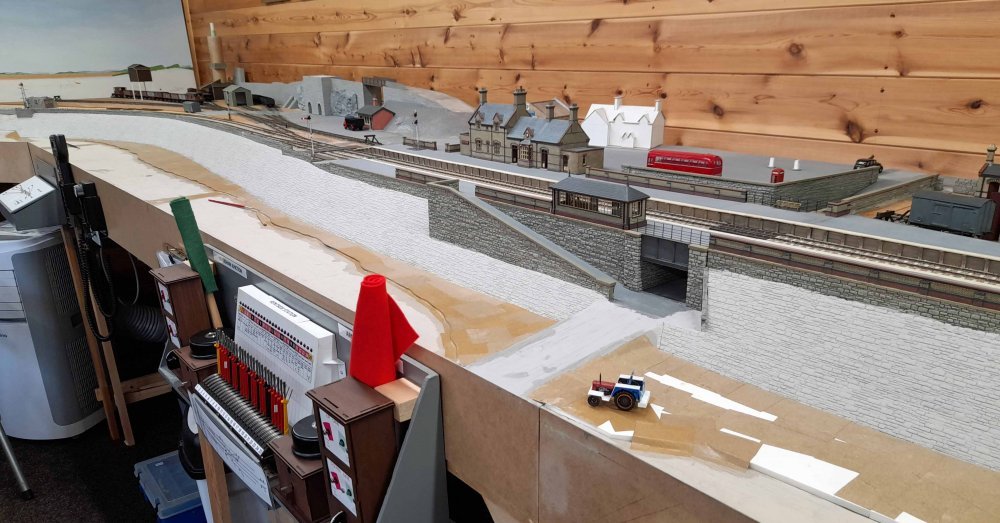 Progress this last month has been rather hampered by the hot weather and failing to keep the
shed cool despite the air-con being on full blast. This has meant that unfortunately our
regular evening running sessions in both May and June had to be cancelled. So, the main
thing to report is a start being made on modelling the saltmarsh edge along the waterfront
at Kentside, here made up from packing card with paper pieces glued on top with the usual PVA.
Progress this last month has been rather hampered by the hot weather and failing to keep the
shed cool despite the air-con being on full blast. This has meant that unfortunately our
regular evening running sessions in both May and June had to be cancelled. So, the main
thing to report is a start being made on modelling the saltmarsh edge along the waterfront
at Kentside, here made up from packing card with paper pieces glued on top with the usual PVA.
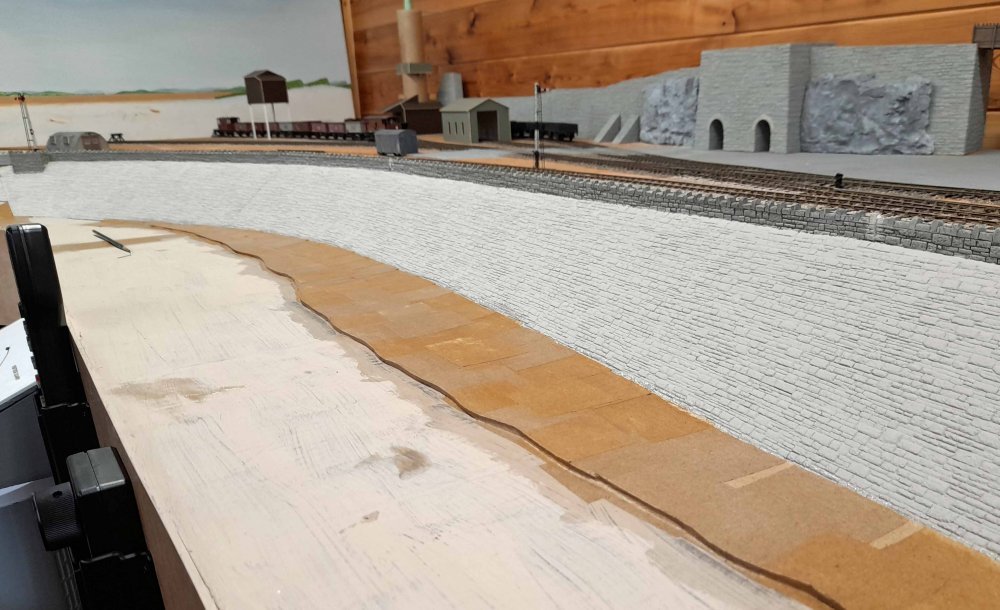 A closer view of the saltmarsh fringe – tailing off to zero as it approaches the viaduct and
at the other end of the station to completely occupy the intertidal area. This only the rough
outline of course with lots of detail to be included.
A closer view of the saltmarsh fringe – tailing off to zero as it approaches the viaduct and
at the other end of the station to completely occupy the intertidal area. This only the rough
outline of course with lots of detail to be included.
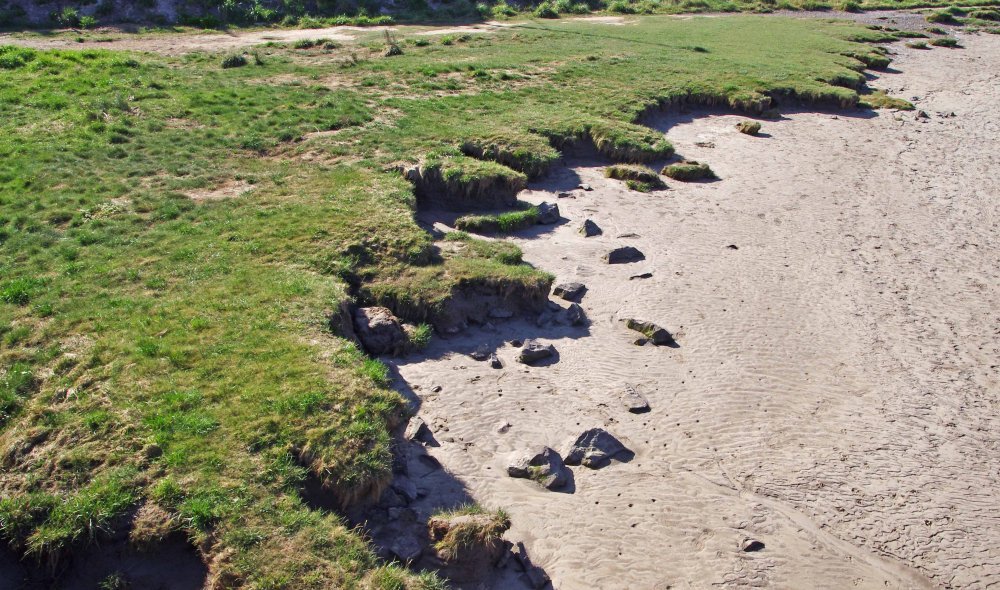 To look something like this – actually a rather trampled example from Arnside, but should give
some idea of the effect being aimed for.
To look something like this – actually a rather trampled example from Arnside, but should give
some idea of the effect being aimed for.
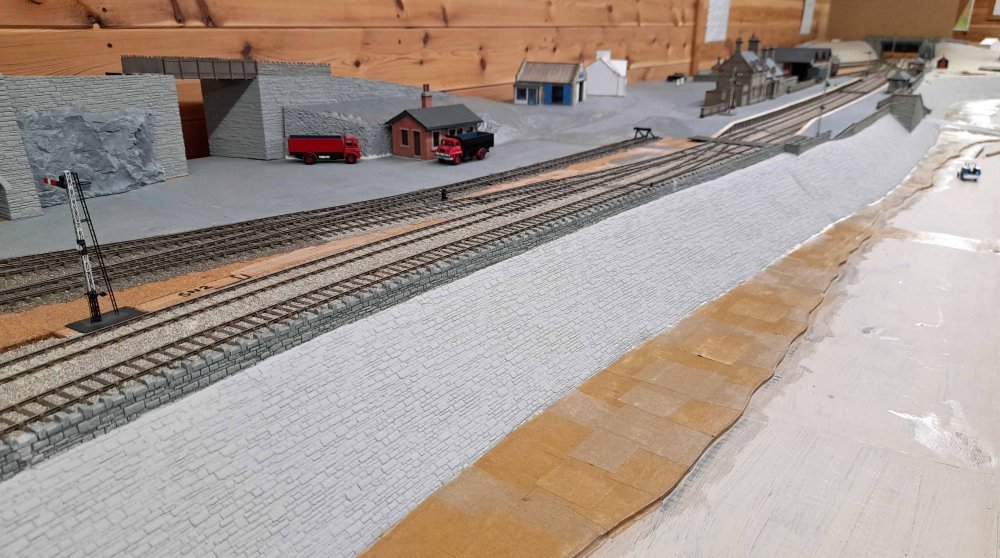 And looking in the opposite direction, the challenge being to get it looking sufficiently irregular.
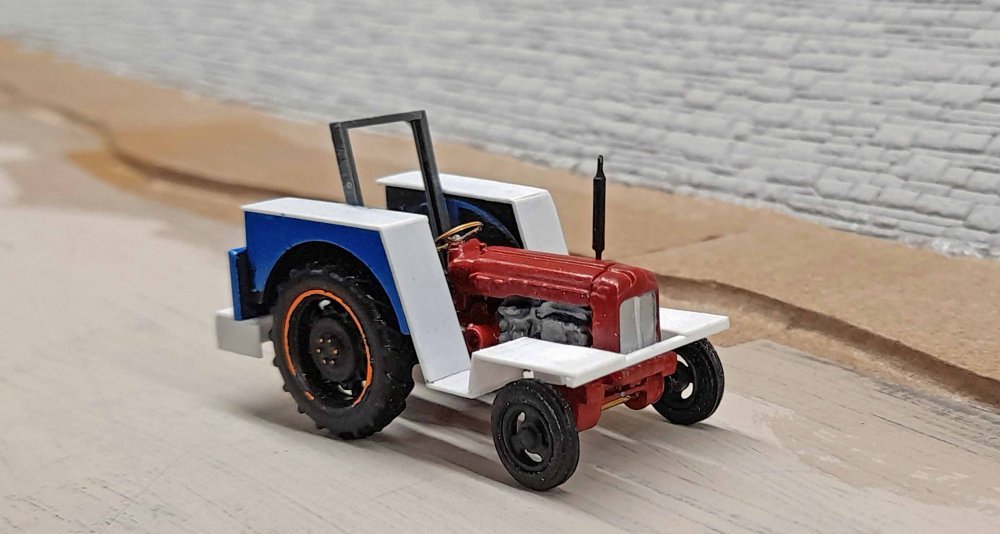 Having done the Cross Morecambe Bay guided walk for a third time last year, I was intrigued by
the bespoke tractor modifications used by our guides, themselves being fisherfolk within the
bay. Taking an Oxford Diecast Fordson vehicle in the form of a shunting tractor, I set about
developing it into something like what I observed – surely such as this would still have been
the preferred transport back in the 1960s? Having cut off the front ’shunting’ part, the wheel
arch section was retained and the additional platforms built up around this in Plastikard. The
new exhaust pipe is rod with some PVA wire sleeve threaded on, while the more delicate steering
wheel is a Colin Craig etching. Still a few more details to add…
Having done the Cross Morecambe Bay guided walk for a third time last year, I was intrigued by
the bespoke tractor modifications used by our guides, themselves being fisherfolk within the
bay. Taking an Oxford Diecast Fordson vehicle in the form of a shunting tractor, I set about
developing it into something like what I observed – surely such as this would still have been
the preferred transport back in the 1960s? Having cut off the front ’shunting’ part, the wheel
arch section was retained and the additional platforms built up around this in Plastikard. The
new exhaust pipe is rod with some PVA wire sleeve threaded on, while the more delicate steering
wheel is a Colin Craig etching. Still a few more details to add…
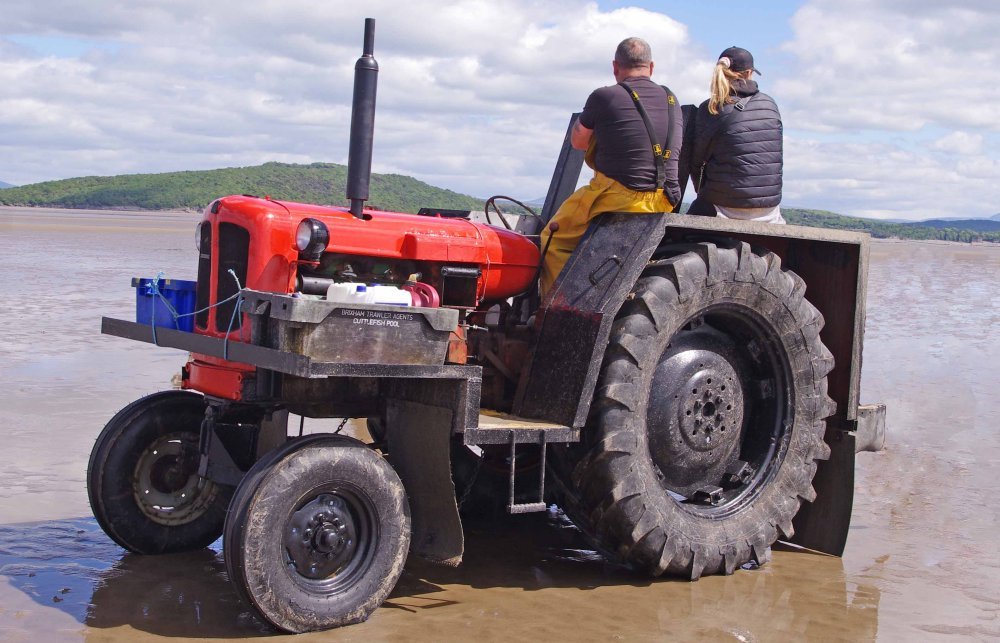 And here you can see my inspiration for this little project…
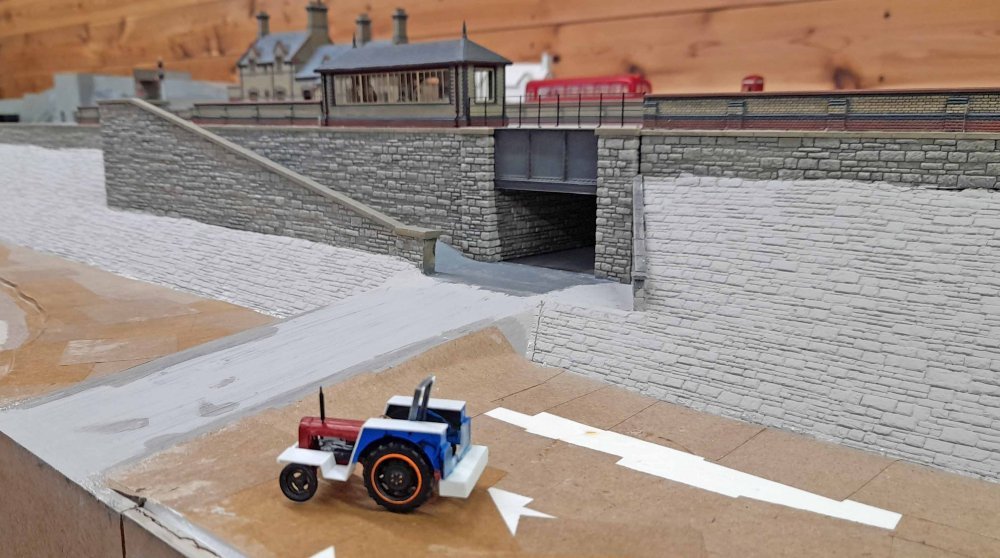 A final view of the little tractor standing on the nascent saltmarsh adjacent to the Kentside
station underpass. Here I’ve used foam board as the basis to give the feature a little more depth.
Hopefully it cools down so I can get on with things once again in time for next month…..
A final view of the little tractor standing on the nascent saltmarsh adjacent to the Kentside
station underpass. Here I’ve used foam board as the basis to give the feature a little more depth.
Hopefully it cools down so I can get on with things once again in time for next month…..

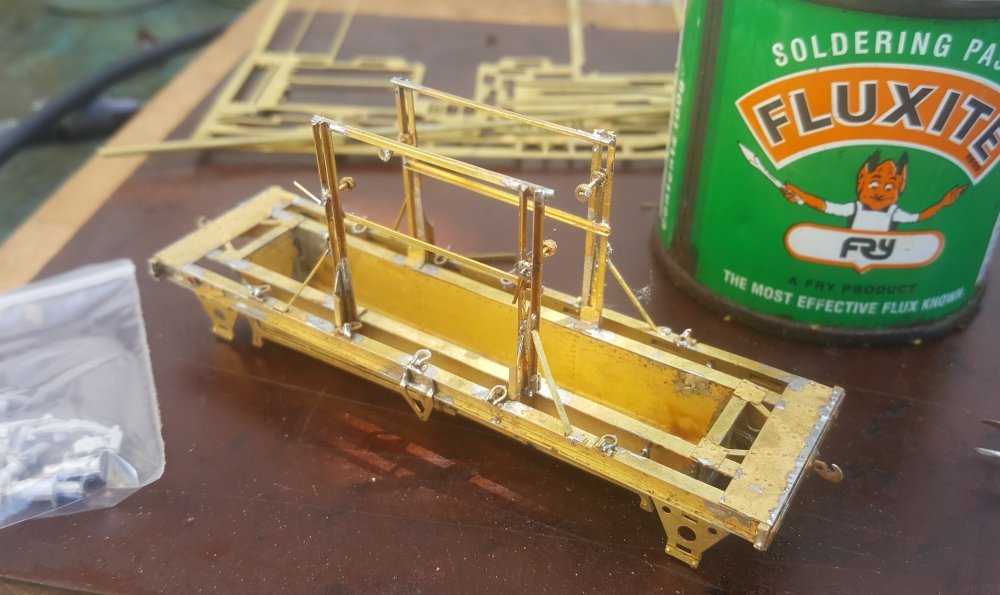 I spent the May heatwave and the miserably wet and windy early part of June engaged on two
equally different modelling projects. One was the test-build of a new Ian Macdonald kit for an
LMS Dia 2/171 Glass MD, the other was a simple cosmetic adaptation of a Heljan class 11 diesel shunter.
I spent the May heatwave and the miserably wet and windy early part of June engaged on two
equally different modelling projects. One was the test-build of a new Ian Macdonald kit for an
LMS Dia 2/171 Glass MD, the other was a simple cosmetic adaptation of a Heljan class 11 diesel shunter.
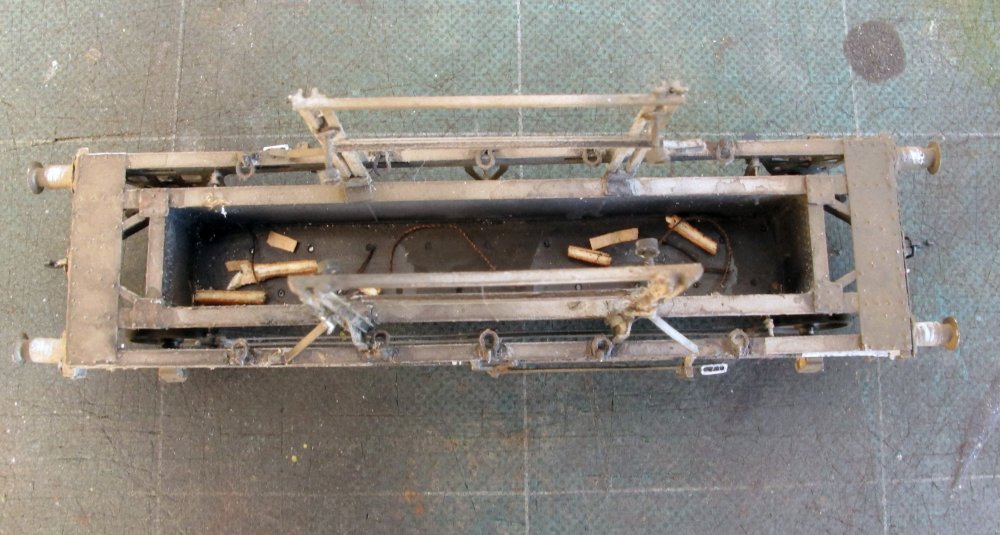 As I’ve done many times before, I was road-testing Ian’s draft instructions for the glass
wagon, and revising as necessary. There are instructions and there are instructions, and I
feel most of them are woefully inadequate and leave an awful lot to the imagination. All very
well if you’ve built similar models before and have some experience, but not so good if you’re
coming to a kit as complicated as this.
As I’ve done many times before, I was road-testing Ian’s draft instructions for the glass
wagon, and revising as necessary. There are instructions and there are instructions, and I
feel most of them are woefully inadequate and leave an awful lot to the imagination. All very
well if you’ve built similar models before and have some experience, but not so good if you’re
coming to a kit as complicated as this.
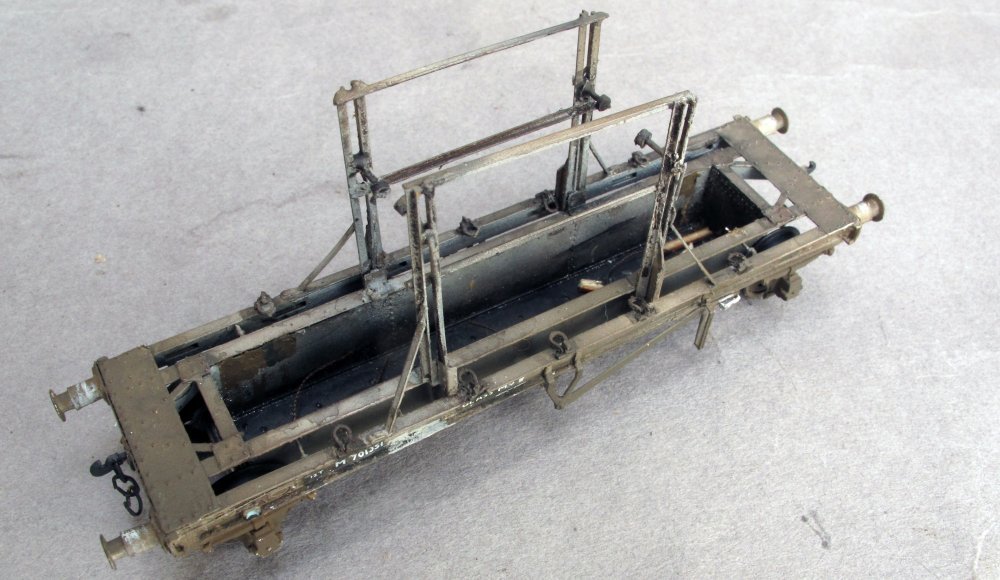 The knack is to assume nothing by way of prior knowledge or experience, which is why at least
two people need to look at these things. Once an integral part of finescale modelling, building
etched kits now seems to be very much on the decline, so if you really dislike the process, or
are no good at it, then being able to buy almost everything ready-to-run must be a relief. It has
to be said also that many of today’s R-T-R models are very good indeed, far better than anything
I could build, but for those of us who enjoy etched kit construction for its own sake, these are
worrying times as the number of manufacturers steadily diminishes.
The knack is to assume nothing by way of prior knowledge or experience, which is why at least
two people need to look at these things. Once an integral part of finescale modelling, building
etched kits now seems to be very much on the decline, so if you really dislike the process, or
are no good at it, then being able to buy almost everything ready-to-run must be a relief. It has
to be said also that many of today’s R-T-R models are very good indeed, far better than anything
I could build, but for those of us who enjoy etched kit construction for its own sake, these are
worrying times as the number of manufacturers steadily diminishes.
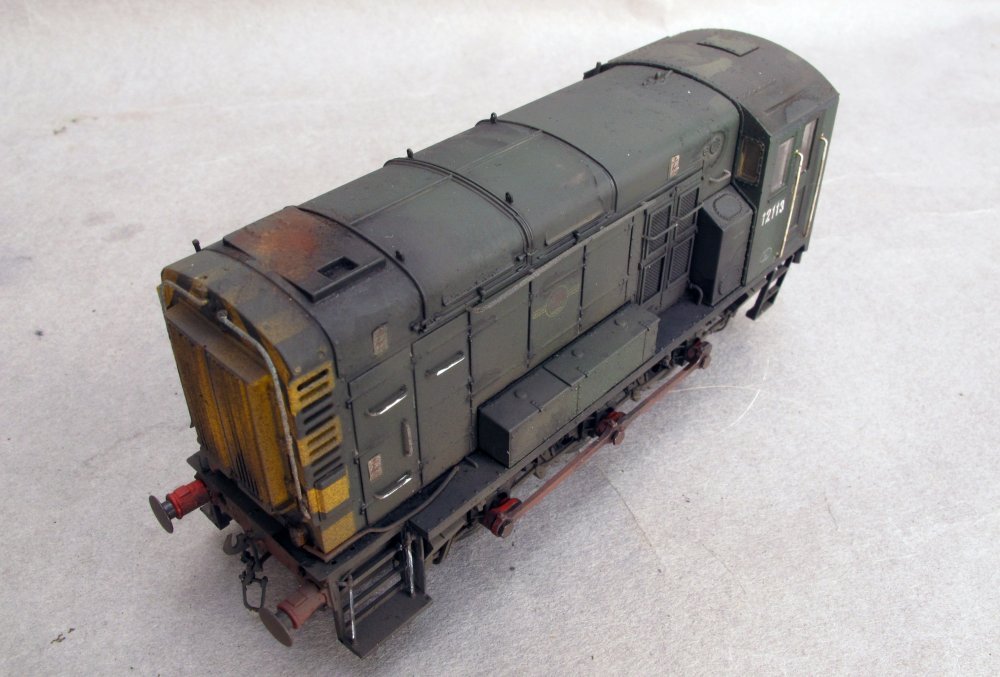 I remember these LMS / BR machines from Hull Dairycoates, but this example had moved in 1967 to
the ex-Midland shed at Royston, near Barnsley. It was withdrawn four years later but there were
no other class members there, although Royston had Class 08s allocated. As with all locomotive
classes, there were individual differences, and many of the Eastern and North Eastern Region
allocation later acquired these carriage-type commode handrails beside the cab doors in place of
the ‘handrail knob’ type originally fitted. I also removed the nose ladders that came with the
model, assuming that with the spread of overhead electrification they’d been removed so the
radiator tanks could be accessed in safety via newly-fitted blue filler pipes, but it seems a
few locos kept both for a short while.
I remember these LMS / BR machines from Hull Dairycoates, but this example had moved in 1967 to
the ex-Midland shed at Royston, near Barnsley. It was withdrawn four years later but there were
no other class members there, although Royston had Class 08s allocated. As with all locomotive
classes, there were individual differences, and many of the Eastern and North Eastern Region
allocation later acquired these carriage-type commode handrails beside the cab doors in place of
the ‘handrail knob’ type originally fitted. I also removed the nose ladders that came with the
model, assuming that with the spread of overhead electrification they’d been removed so the
radiator tanks could be accessed in safety via newly-fitted blue filler pipes, but it seems a
few locos kept both for a short while.
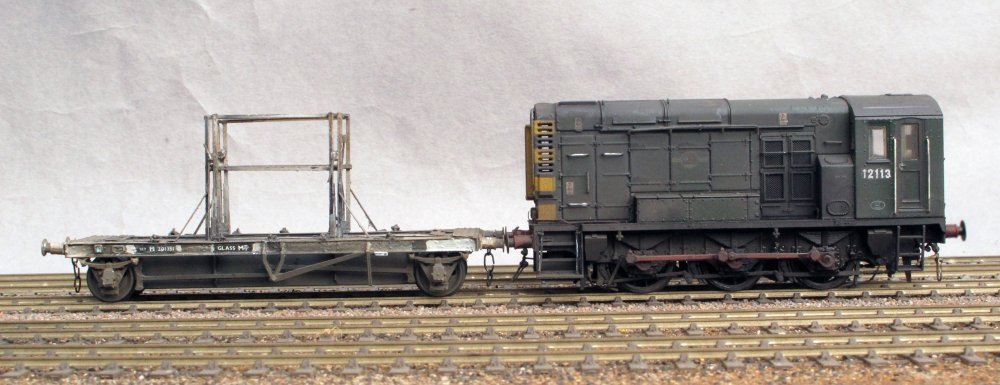 I renumbered the loco using individual characters taken from the Railtec transfers set 9611.
The early-pattern warning flashes (surprisingly omitted from the Heljan model) came from a
forty-year-old set of BR locomotive insignia produced by Nigel Annand of Woodhead Models – a
name now sadly missed. These old dried-out transfer sheets can be reactivated using a decal
setting solution from Humbrol or Ultimate, but avoiding Microsol or Microsoft which Steve Bell
of Railtec says will destroy his transfers. Weathering of both the loco and the wagon is routine,
using a general airbrushed discoloration using acrylic browns and greys followed by thin enamel
washes from the same colour palette, and finally a dab if powder here and there.
I renumbered the loco using individual characters taken from the Railtec transfers set 9611.
The early-pattern warning flashes (surprisingly omitted from the Heljan model) came from a
forty-year-old set of BR locomotive insignia produced by Nigel Annand of Woodhead Models – a
name now sadly missed. These old dried-out transfer sheets can be reactivated using a decal
setting solution from Humbrol or Ultimate, but avoiding Microsol or Microsoft which Steve Bell
of Railtec says will destroy his transfers. Weathering of both the loco and the wagon is routine,
using a general airbrushed discoloration using acrylic browns and greys followed by thin enamel
washes from the same colour palette, and finally a dab if powder here and there.

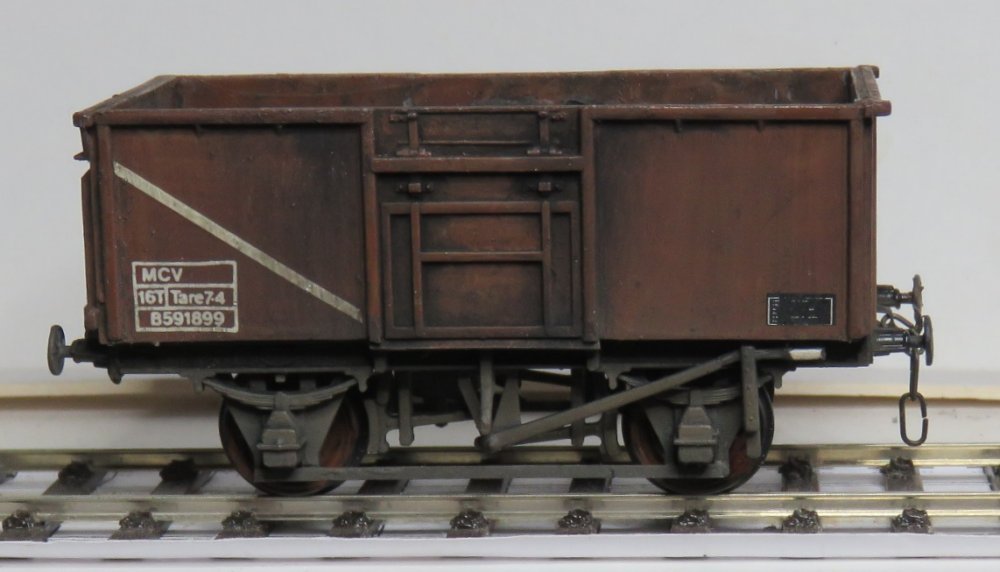 The humble 16t mineral from the Dapol nee Airfix kit. I'm sure I made one of these but it was
a very long time ago, and it's a well thought out kit and went together well. I've done mine
as a vacuum braked conversion of the Diag 108 and the kit kindly provides the second set of
brakes. The vacuum cylinder is from my spares box, pinpoint bearings, couplings and decals
finished the job. A bit of no nonsense modelling considering the kit first appeared in the
early 1960s and probably has its own bus pass!
The humble 16t mineral from the Dapol nee Airfix kit. I'm sure I made one of these but it was
a very long time ago, and it's a well thought out kit and went together well. I've done mine
as a vacuum braked conversion of the Diag 108 and the kit kindly provides the second set of
brakes. The vacuum cylinder is from my spares box, pinpoint bearings, couplings and decals
finished the job. A bit of no nonsense modelling considering the kit first appeared in the
early 1960s and probably has its own bus pass!
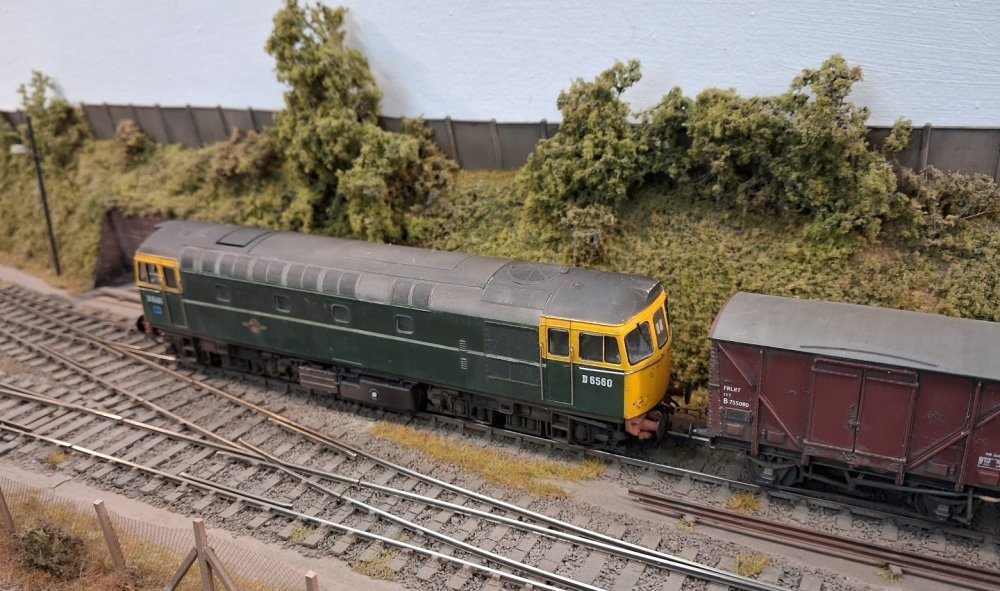 This is an early issue Heljan Crompton where I backdated the exhaust courtesy of a ModelRail
article of the time. Noted the current green Crompton release has the revised exhaust which a
handful of the last built were fitted with.
This is an early issue Heljan Crompton where I backdated the exhaust courtesy of a ModelRail
article of the time. Noted the current green Crompton release has the revised exhaust which a
handful of the last built were fitted with.
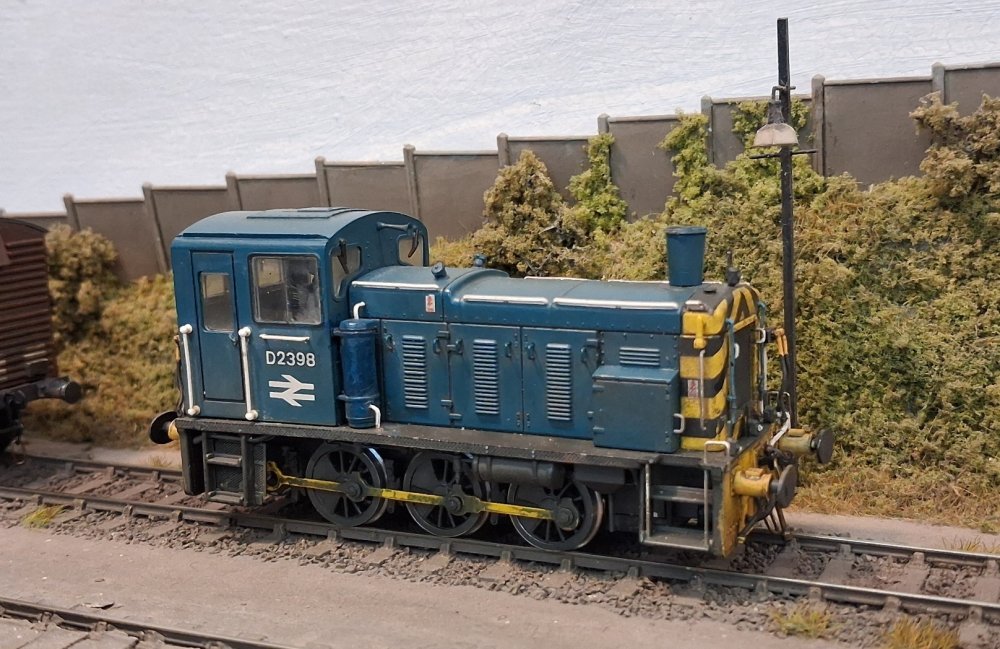 D2398 was one of the nine Class 03s converted to dual brake with the larger air tanks and high
level air pipes for the Southern Region. They were based mainly in the Bournemouth / Weymouth
area and were intended for use shunting TC units.
D2398 was one of the nine Class 03s converted to dual brake with the larger air tanks and high
level air pipes for the Southern Region. They were based mainly in the Bournemouth / Weymouth
area and were intended for use shunting TC units.
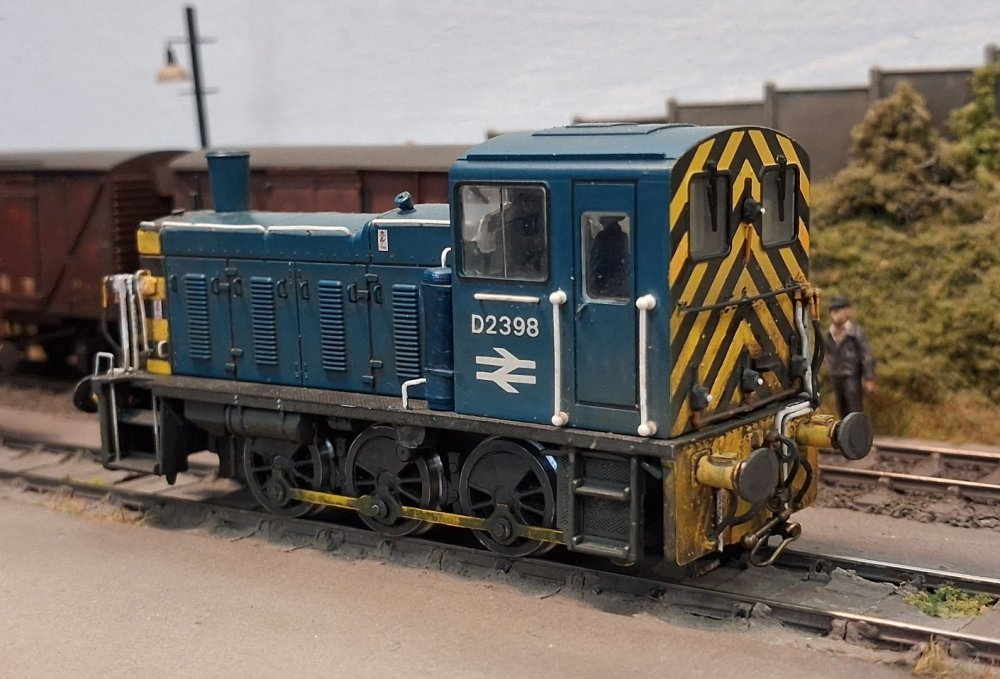 The conversion from the Bachmann model required the right hand footplate marker lights to be
moved inboard and the cab rear handrail shortening. The addition of the high level pipes came
from Heljan spares (from the TC fitted Crompton) and additional pipework from soft wire. The
larger tanks are the models own, cut and extended. For the EM conversion, Gibson wheels have been
fitted - It's not perfect, but I'm happy with it.
The conversion from the Bachmann model required the right hand footplate marker lights to be
moved inboard and the cab rear handrail shortening. The addition of the high level pipes came
from Heljan spares (from the TC fitted Crompton) and additional pipework from soft wire. The
larger tanks are the models own, cut and extended. For the EM conversion, Gibson wheels have been
fitted - It's not perfect, but I'm happy with it.
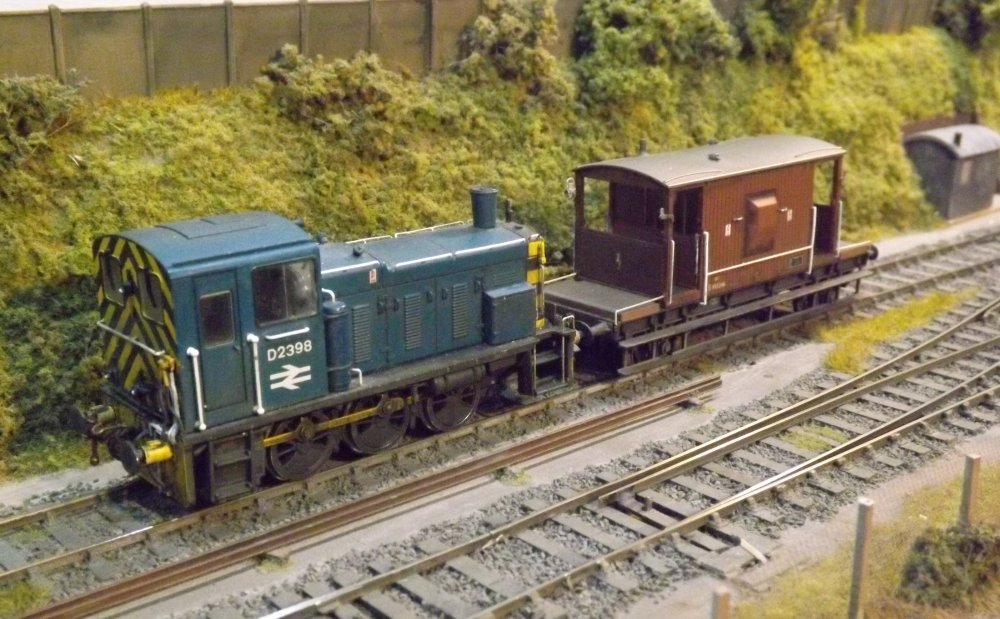 DCC fitted with a Lokpilot chip and Zimo STACO3A stay alive - it's a very reliable runner.
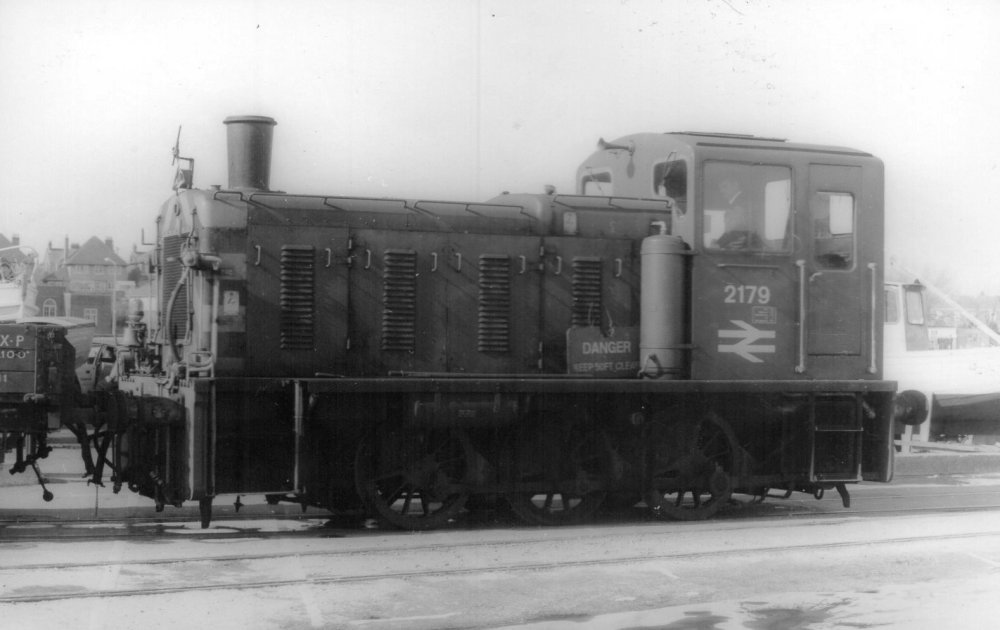 Apologies for the muddy photo showing 2197 in the Commercial Road loops on the Weymouth Tramway
in the late 1960s, and I've had a soft spot for them - and anything else than ran down the
Tramway. It was there shunting departmental wagons whilst they removing some of the redundant
trackwork, a bit of a change from hauling the boat train. My late father was a Weymouth driver
and we could see the Tramway from where we lived.
Apologies for the muddy photo showing 2197 in the Commercial Road loops on the Weymouth Tramway
in the late 1960s, and I've had a soft spot for them - and anything else than ran down the
Tramway. It was there shunting departmental wagons whilst they removing some of the redundant
trackwork, a bit of a change from hauling the boat train. My late father was a Weymouth driver
and we could see the Tramway from where we lived.
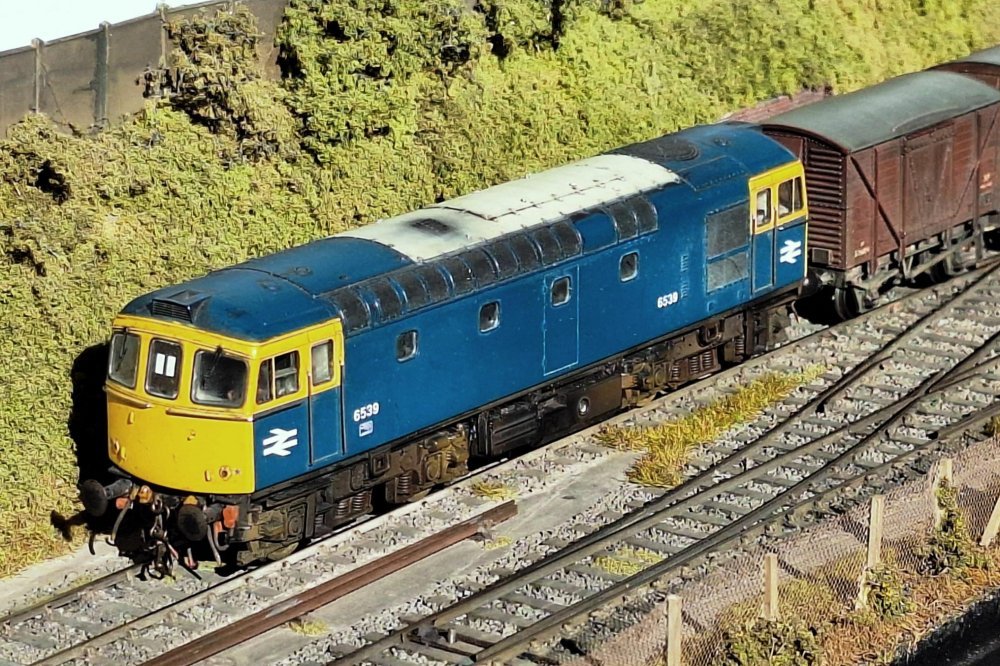 Advance notice that the layout will be appearing at the Chatham show on the 18th & 19th of
July 2026. Crompton 6539 is seen here shunting at Sheepcroft.
Advance notice that the layout will be appearing at the Chatham show on the 18th & 19th of
July 2026. Crompton 6539 is seen here shunting at Sheepcroft.